20 Cozy Baby Room Design Ideas for a Blissful Nursery
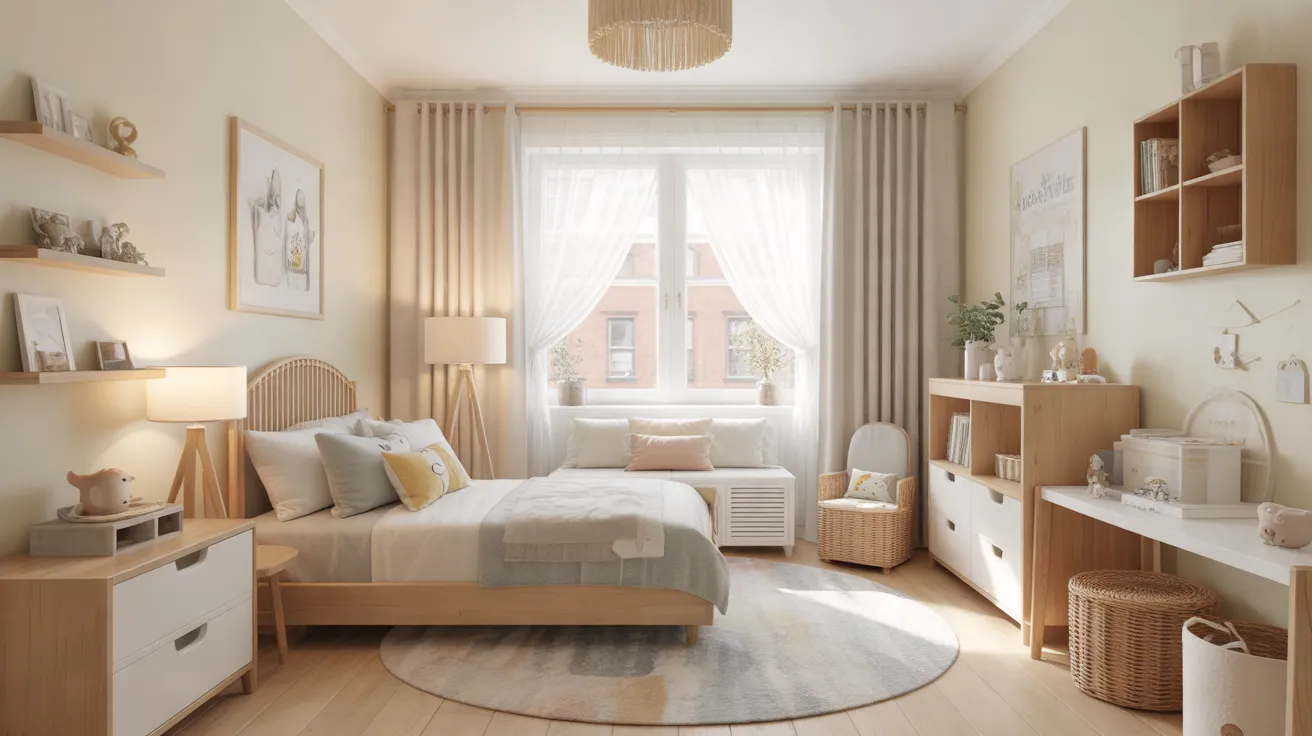
Creating a nursery should feel exciting, not overwhelming. These Cozy Baby Room Design Ideas will help you build a warm, practical, and beautiful space where both you and your baby can feel comfortable from the very beginning.
From soft neutral palettes and clever storage to warm lighting, natural textures, and peaceful reading corners, this collection focuses on ideas that are realistic for everyday family life. In my experience, the most inviting nurseries are not the ones filled with the most decor. They are the rooms where color, comfort, storage, and function work together naturally. Whether you are starting with an empty room or refreshing a small nursery, these ideas will give you clear inspiration you can actually use.
Soft Neutral Nursery
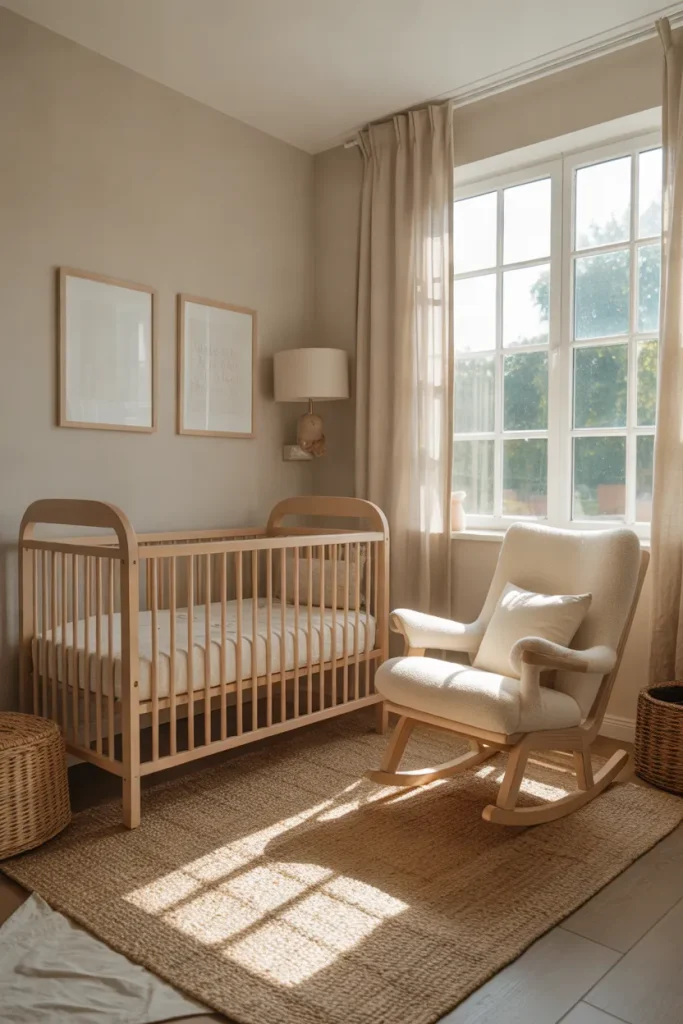
Soft neutrals create a calm foundation that feels soothing without making the nursery look plain. Choose warm white walls, light wood furniture, and creamy textiles, then layer subtle shades of beige, oatmeal, and taupe. The gentle palette keeps the room bright while making it easier to introduce small decorative details later.
In my experience, neutral rooms feel most inviting when texture replaces strong color. A chunky knit blanket, woven basket, linen curtain, and soft wool rug add depth without visual clutter. Keep large furniture simple, then use removable art or cushions for easy updates as your baby grows.
“These baby room design ideas help create a peaceful nursery with warm neutrals, natural textures, and timeless furniture.”
Cozy Reading Corner
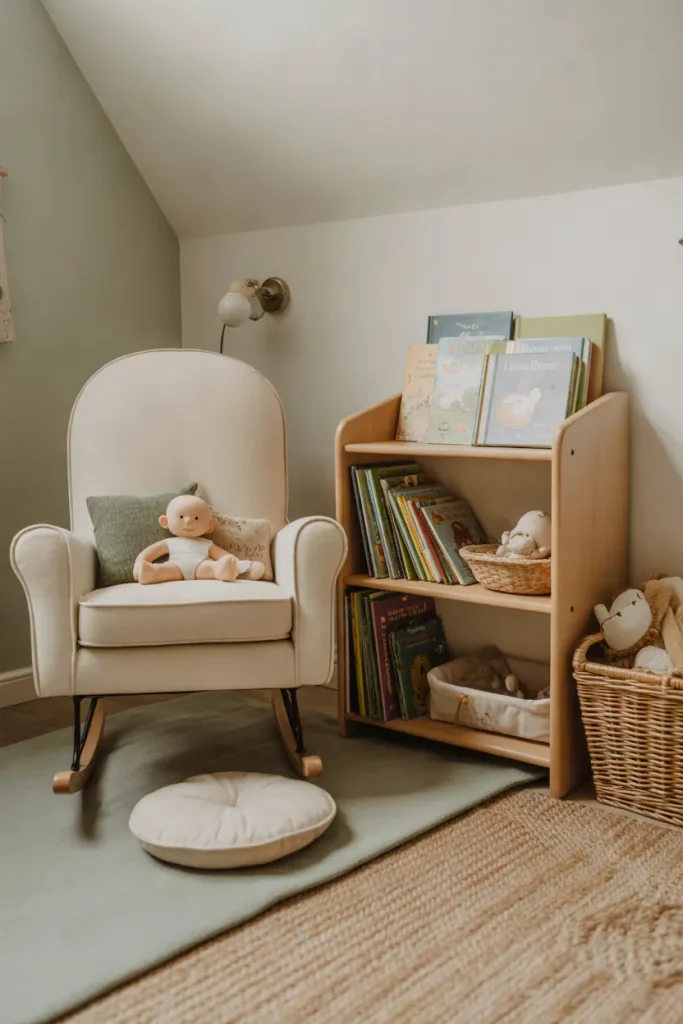
- Place a comfortable rocker or compact armchair beside the bookshelf so feeding and story time can happen in the same spot.
- Keep favorite board books on low shelves where they are easy to reach as your child grows.
- Add a washable rug or padded floor mat to make the area softer for future play.
- Use a small basket for blankets, toys, and extra books instead of overcrowding shelves.
- Choose a warm wall light or shaded lamp for softer evening reading.
A dedicated reading corner gives the nursery a purpose beyond sleeping and changing. It also creates a quiet routine that can grow with your child. I’ve seen this work especially well in smaller rooms where one thoughtfully arranged corner can handle feeding, cuddling, reading, and calm play without requiring extra furniture.
Also View:
22 Tiny Studio Apartment Layout Ideas for Wow Factor
Warm Wood Accents
Quick Tip:
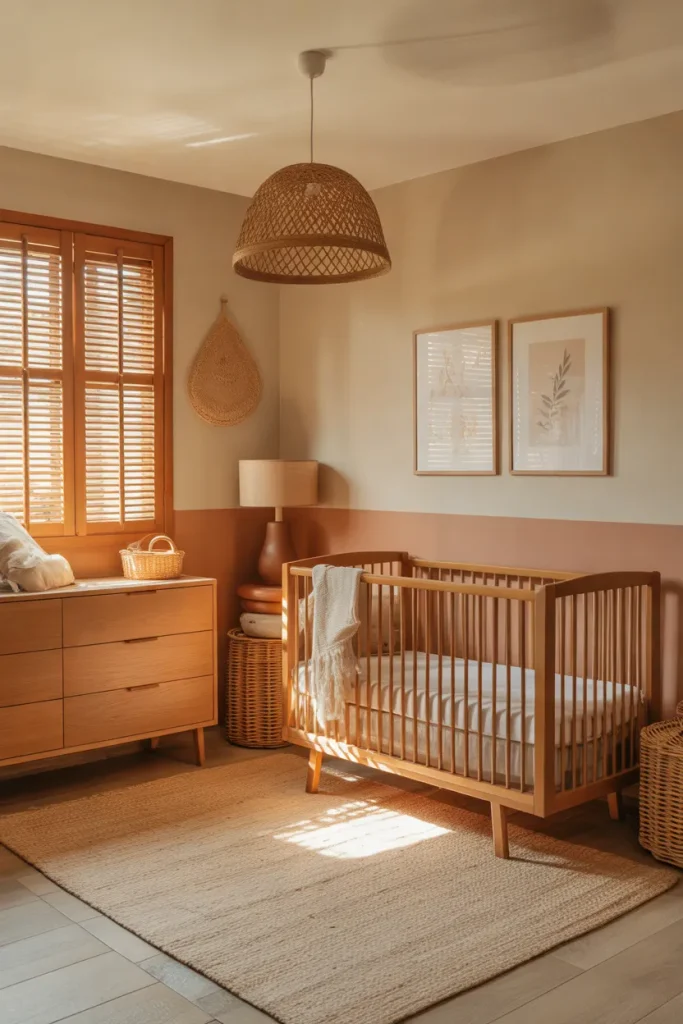
Limit warm wood to two or three main pieces so the room stays balanced. Match the undertones of the crib, dresser, and shelves rather than mixing very orange wood with cool grey finishes.
Warm wood brings instant softness to baby room design ideas because it adds natural color without relying on bright decor. Pair oak, maple, or walnut finishes with cream bedding and muted fabrics. Keep the walls lighter so the grain remains visible. A few woven accessories can connect the materials without making the nursery feel overly rustic.
Cloud Accent Wall

BEFORE:
A plain nursery wall can make the room feel unfinished, especially when the crib becomes the main focal point. Too many small decorations often create visual clutter without giving the space a clear identity.
AFTER:
A soft cloud wall creates one defined feature area while keeping the room calm. The crib gains a gentle backdrop, and the rest of the nursery can stay simple with fewer accessories.
The key is restraint. Choose oversized, softly blended clouds rather than busy cartoon shapes, and keep the surrounding furniture neutral. This approach works especially well in compact rooms because one decorative wall adds personality without taking up floor space or requiring extra furniture.
“These baby room design ideas add personality to nursery walls without overwhelming the overall design.”
Layered Soft Textures
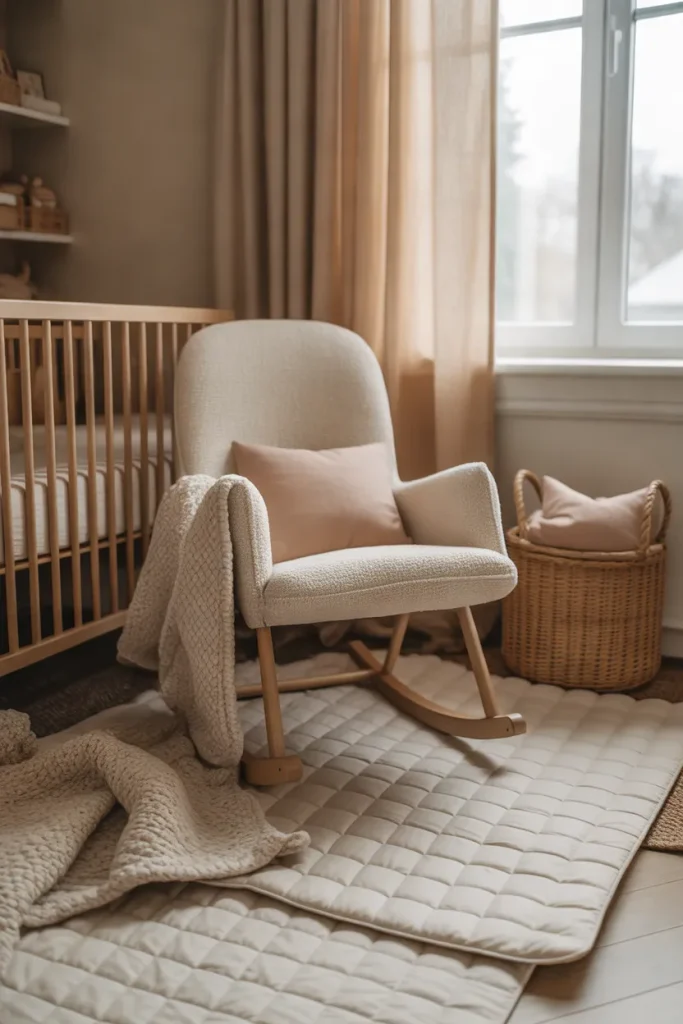
- Start with a washable low-pile rug in a soft neutral tone.
- Add linen or cotton curtains to introduce gentle movement and texture.
- Layer a knit blanket over the rocker rather than placing loose textiles inside the crib.
- Use woven baskets and a boucle or upholstered chair for contrasting surfaces.
- Keep the palette tight so the different textures feel coordinated.
Texture is what stops a neutral nursery from feeling flat. I’ve noticed that three or four distinct materials usually create enough depth without making the room busy. Focus soft layers around the chair, floor, windows, and storage areas while keeping the baby’s sleep space clear and uncluttered.
Open Shelf Display
| Detail | Crowded Shelves | Better Display |
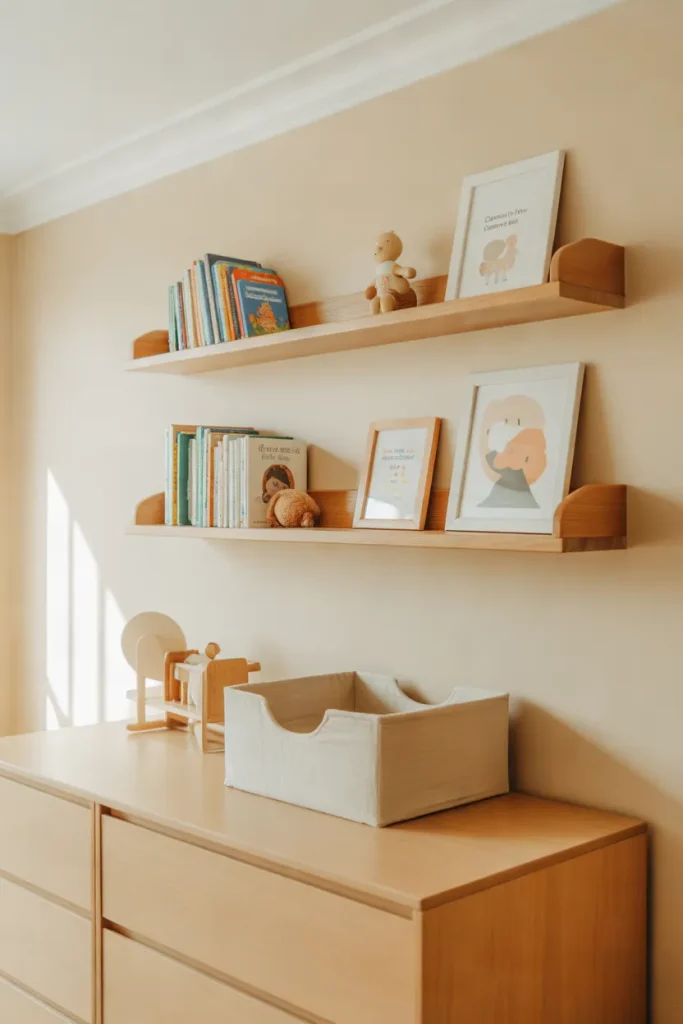
| Number of items | Many small objects | 3 to 5 pieces per shelf |
| Color palette | Mixed bright colors | Repeated soft tones |
| Storage | Everything exposed | Small items hidden in boxes |
| Visual balance | Same-height objects | Mixed books, art, and decor |
Open shelves work best when they provide both storage and breathing room. Keep everyday essentials inside drawers, then reserve the shelves for books, framed art, and a few meaningful objects. Grouping pieces by color makes the display feel intentional and prevents the wall from competing with the crib or changing area.
Sage Green Nursery
DO
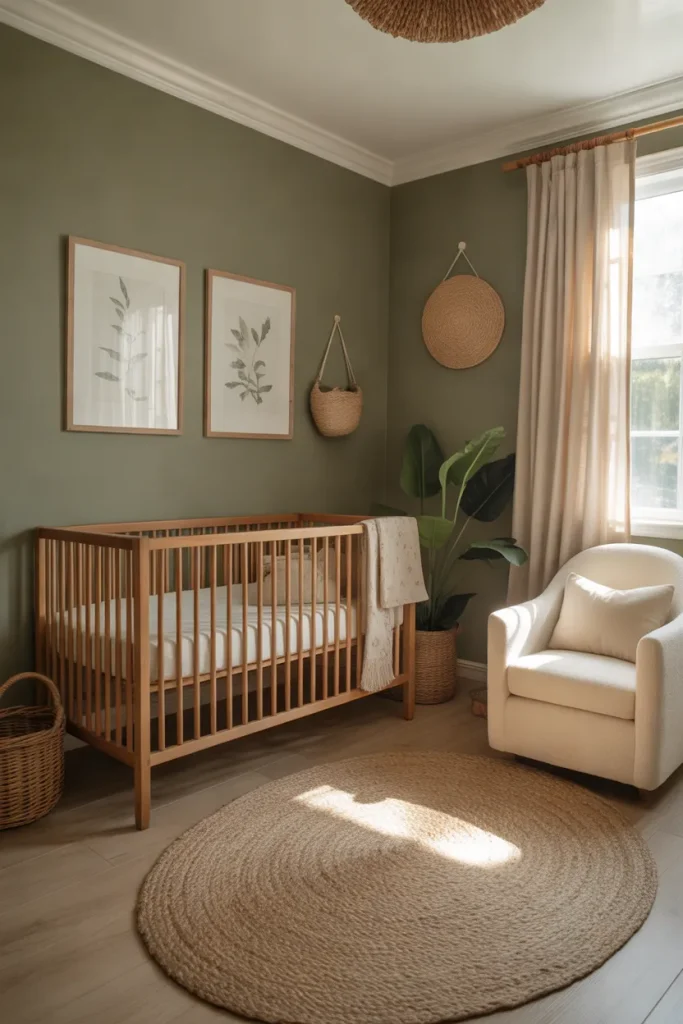
- Pair sage walls with warm white or cream furniture for a softer contrast.
- Repeat the green tone in one or two small accessories.
- Choose natural oak, rattan, or woven textures to warm the palette.
- Test paint samples during both daylight and evening lighting.
DON’T
- Combine several competing shades of green in one small nursery.
- Use very dark sage on every surface if natural light is limited.
- Cover every wall with themed botanical decorations.
- Place decorative items where your baby can eventually reach them.
Sage works because it adds color while still behaving almost like a neutral. Its muted quality pairs easily with cream, beige, and natural timber. For a balanced result, keep larger furniture simple and let the wall color provide most of the visual personality, especially in smaller nurseries with limited decorating space.
“Among popular baby room design ideas, sage green stands out for its calming appearance and versatility.”
Under-Crib Storage
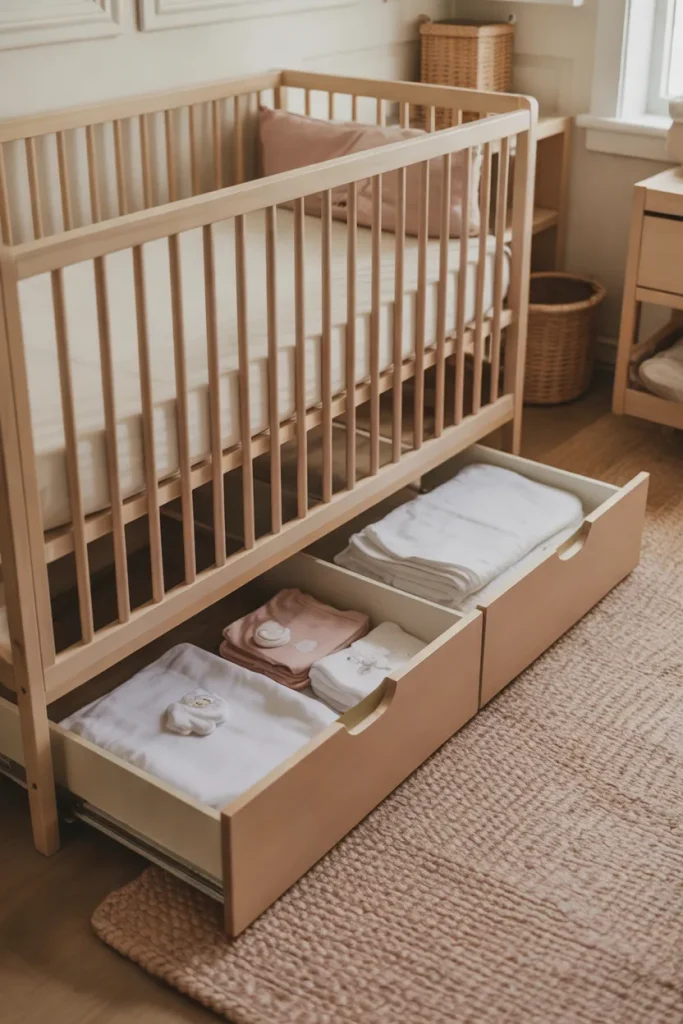
Cost: Low to Moderate
Best For: Small baby rooms
Skill Level: Beginner
Result: Hidden storage with less visible clutter
Limited floor space makes hidden storage especially valuable. Use shallow drawers or fitted containers beneath the crib for spare sheets, sleep sacks, and outgrown clothing. Choose lidded options to reduce dust, label each category, and avoid overfilling. The room stays calmer because necessary items remain nearby without occupying open shelving.
Soft Blush Details
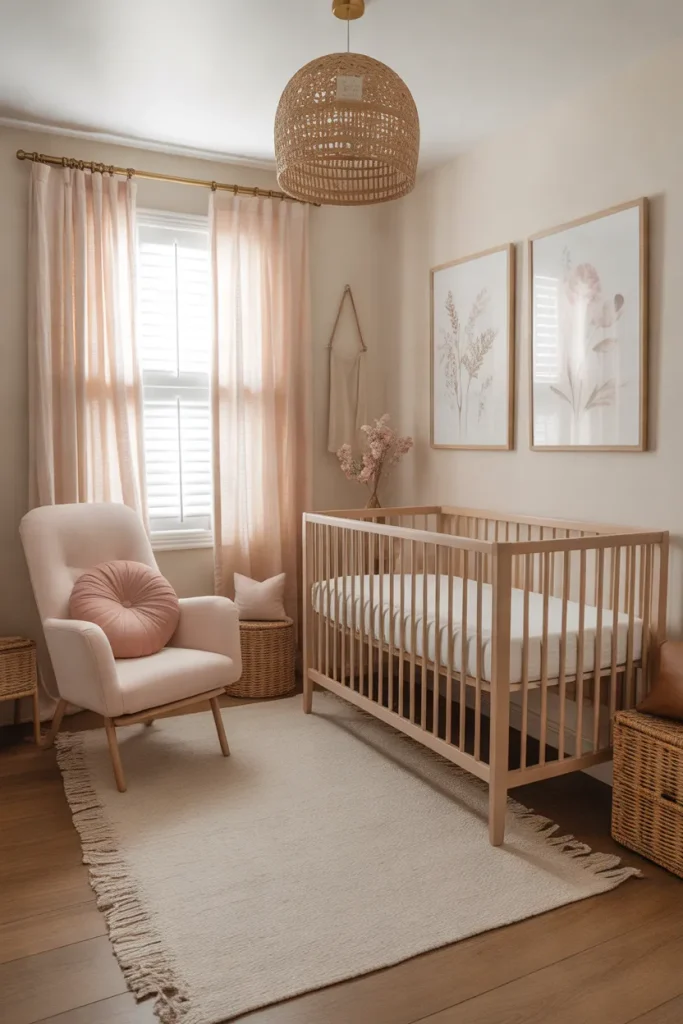
Blush works best as a supporting color rather than the entire theme. Start with a neutral backdrop, then introduce dusty pink through curtains, artwork, a changing pad cover, or one upholstered accent. Keeping the shade muted prevents the nursery from becoming overly sweet and makes future updates much easier.
For balanced baby room design ideas, repeat the same blush tone in two or three areas instead of scattering many pink shades around the room. In my experience, this creates a more polished look. Natural wood and warm white soften the palette further, while small brass details can add gentle contrast without feeling formal.
Canopy Reading Nook
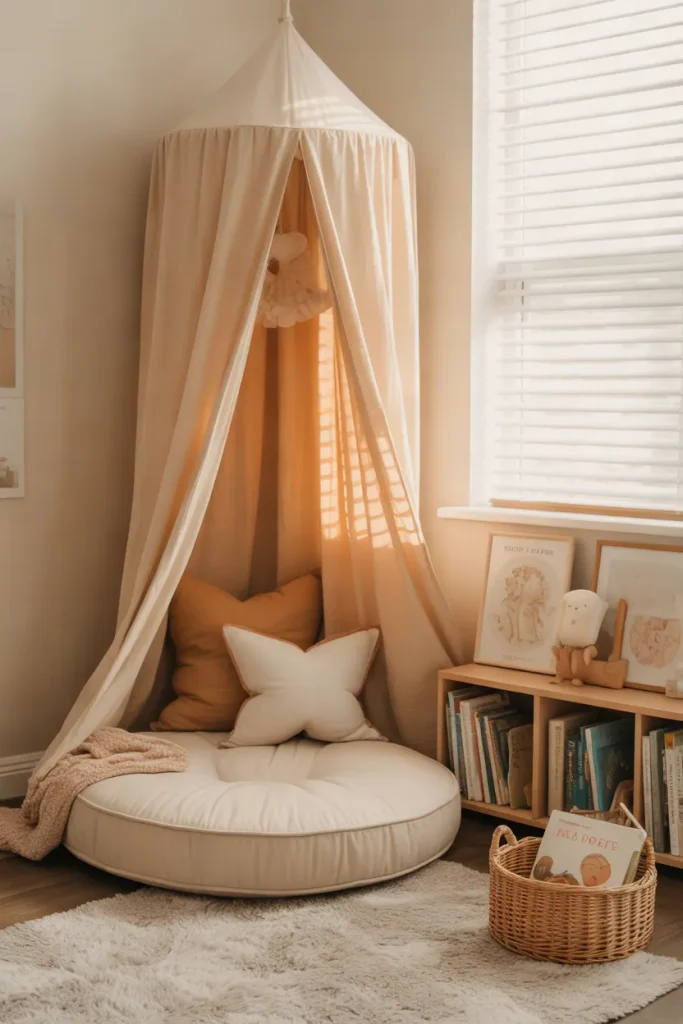
- Choose a lightweight canopy in breathable cotton or linen for a softer look.
- Position it over a floor cushion or reading mat rather than directly above the crib.
- Add a low book ledge so covers stay visible and easy to reach.
- Keep the surrounding palette simple with cream, beige, or muted pastel accents.
- Leave enough open floor space so the nook does not feel cramped.
A canopy creates a clear little reading zone without needing bulky furniture. It works especially well in larger nurseries where an empty corner feels unfinished. Keep the setup practical by choosing washable fabrics and securing the canopy properly, then let books and soft textures provide most of the decoration.
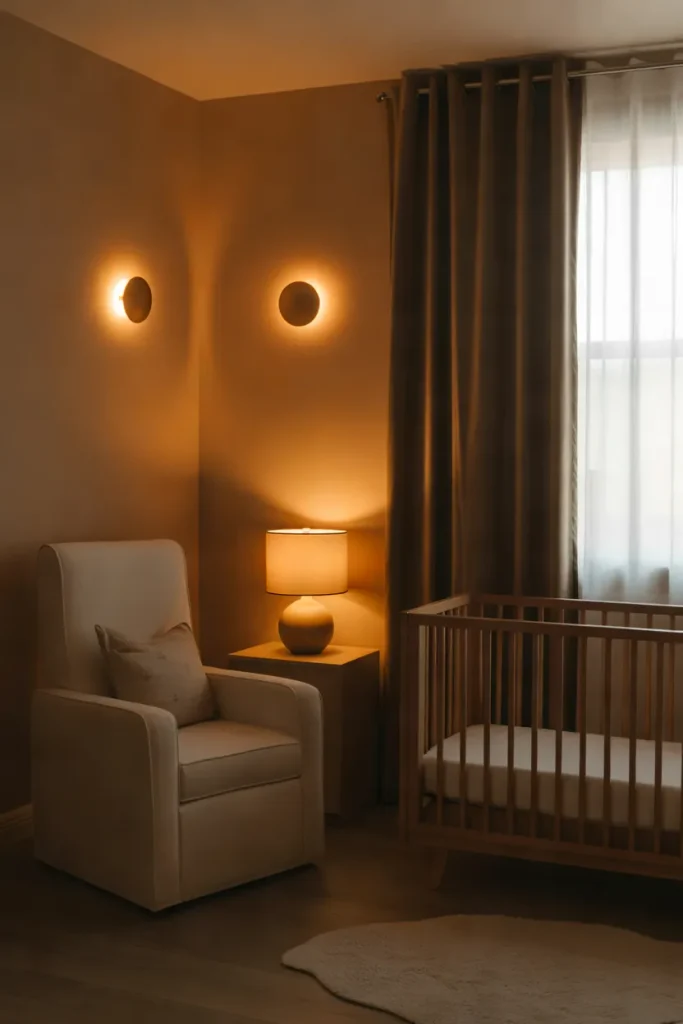
Warm Night Lighting
.
Quick Tip:
Choose warm bulbs with a soft glow instead of cool white lighting. Place one low-level light near the feeding chair and another near the changing area so nighttime tasks can be handled without fully brightening the room.
Lighting changes how a nursery feels after sunset. A layered setup with a ceiling fixture, dimmable lamp, and soft wall light gives you more control during feeds and diaper changes. I’ve noticed that low, warm lighting also helps the room remain calmer at night, especially when brighter overhead lights are avoided.
“Practical baby room design ideas include layered lighting that makes nighttime feeding and diaper changes easier.”
Compact Changing Station
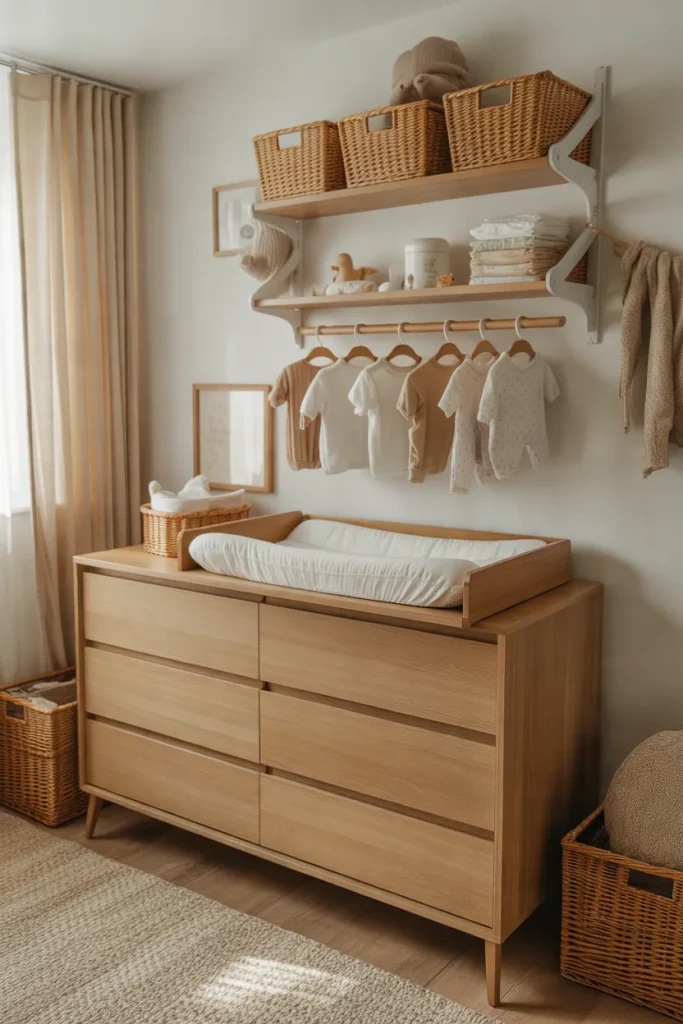
BEFORE:
A separate changing table can consume valuable floor space and create another piece of furniture that may only be useful for a short period. Small essentials also tend to spread across open surfaces.
AFTER:
A sturdy dresser with a secured changing pad creates one practical zone for diapers, clothes, and care items. Drawers keep supplies hidden while the furniture remains useful long after the diaper stage.
This setup works best when everything needed for a change stays within arm’s reach. Store daily supplies in the top drawer and backups below. Choose a dresser at a comfortable height, anchor it securely, and avoid placing loose decor around the changing surface where it can get in the way.
Nature-Inspired Decor
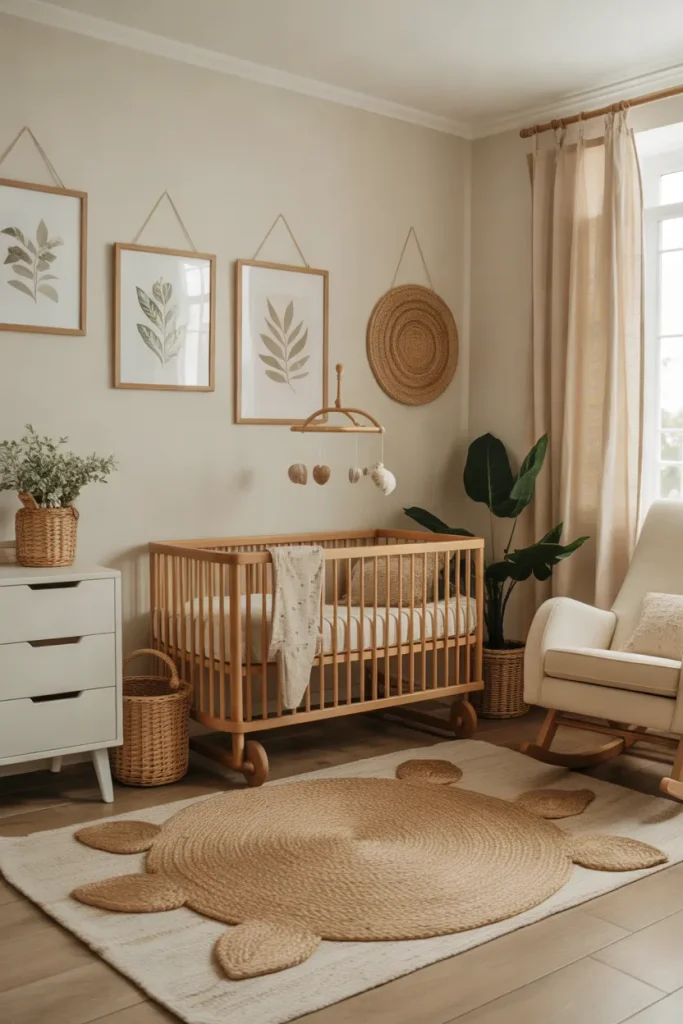
- Choose two or three nature tones such as sage, sand, and warm cream.
- Add botanical artwork or simple leaf prints instead of filling every wall.
- Bring in natural materials through wood, rattan, cotton, and linen.
- Use animal or woodland accents sparingly so the theme stays refined.
- Repeat one natural texture in several areas for better visual consistency.
Nature-inspired rooms feel calming because the palette is soft and familiar. I’ve seen this work especially well when the theme stays subtle rather than literal. A few botanical prints, natural fibers, and warm wood pieces create enough character while leaving room for the nursery to grow with your child.
“Nature-inspired baby room design ideas combine botanical details, natural wood, and calming colors for a timeless nursery.”
Blackout Curtain Setup
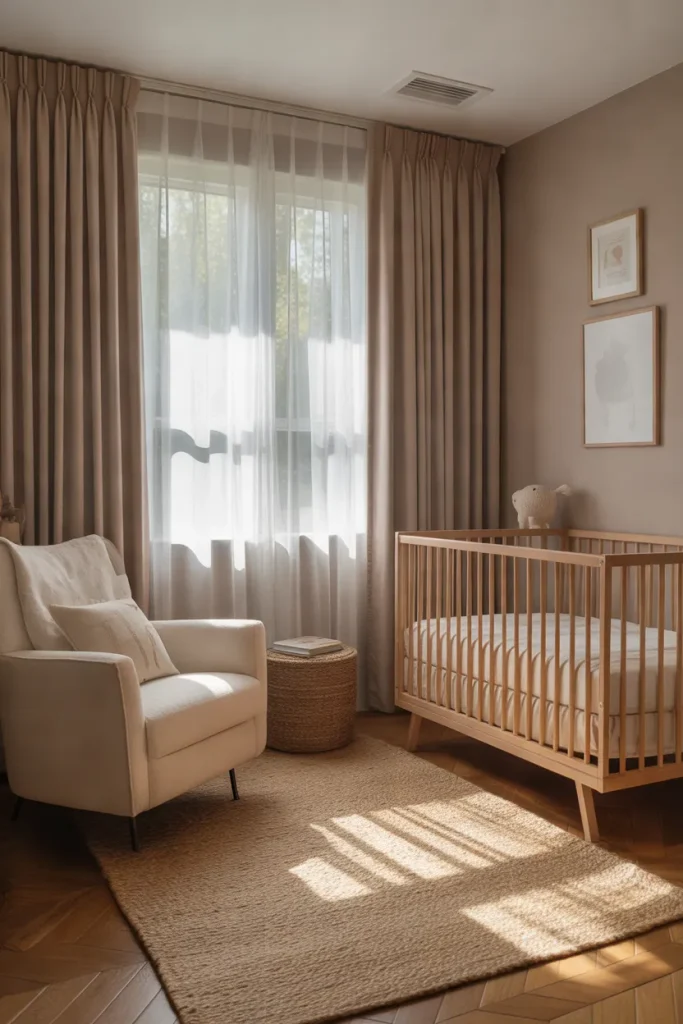
| Detail | Standard Curtains | Blackout Setup |
| Light Control | Partial filtering | Strong room darkening |
| Daytime Naps | Brighter room | More controlled environment |
| Layering | Single fabric panel | Sheer plus blackout layer |
| Visual Effect | Simple window treatment | Fuller, softer appearance |
Blackout curtains are practical, but they can still feel decorative. Mount the rod slightly higher and wider than the window so the fabric frames the wall neatly. Layering sheers underneath keeps daytime light soft, while the heavier panels can close fully when a darker room is needed for rest.
Minimal Crib Styling
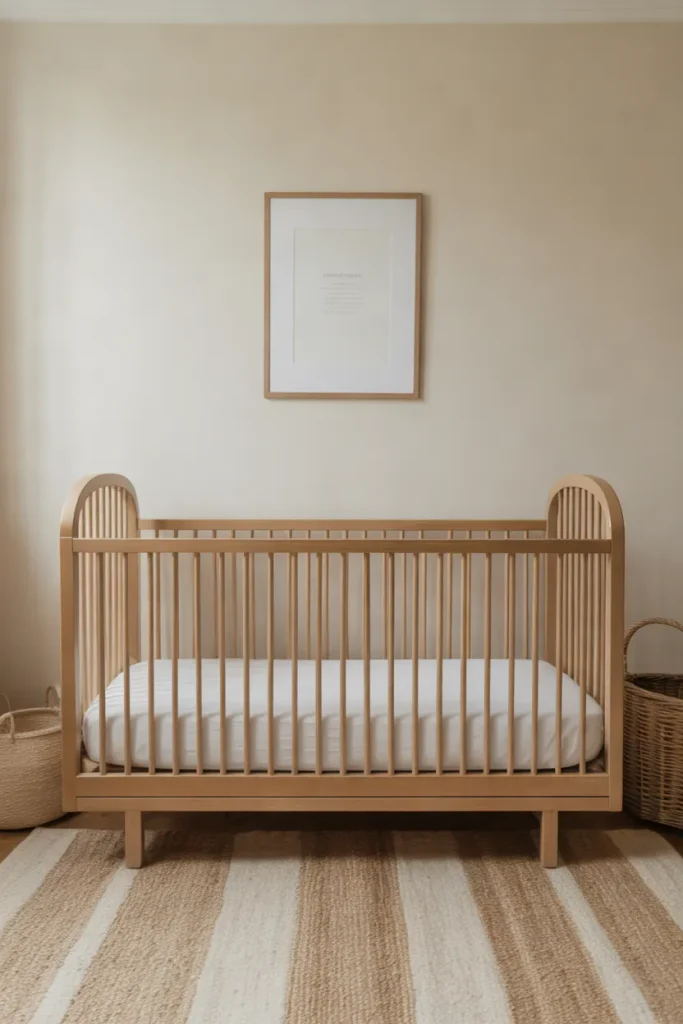
DO
- Use a fitted crib sheet that sits smoothly and securely.
- Keep the area around the crib visually simple and easy to clean.
- Add personality through wall art, rugs, or nearby storage instead.
- Choose one consistent color palette for bedding and surrounding decor.
DON’T
- Fill the crib with decorative pillows, loose blankets, or stuffed toys.
- Hang heavy decor directly where it could fall into the sleep area.
- Use oversized crib accessories just for styling photos.
- Let surrounding furniture crowd the crib.
Minimal crib styling keeps the nursery calmer and puts function first. The visual interest can come from the wall behind the crib, nearby textiles, and natural materials instead. For both appearance and practicality, a simple setup is easier to maintain and keeps attention on the room rather than decorative clutter.
For a safer nursery setup, follow the American Academy of Pediatrics‘ recommendations for a safe baby sleep environment.
Soft Floor Layers
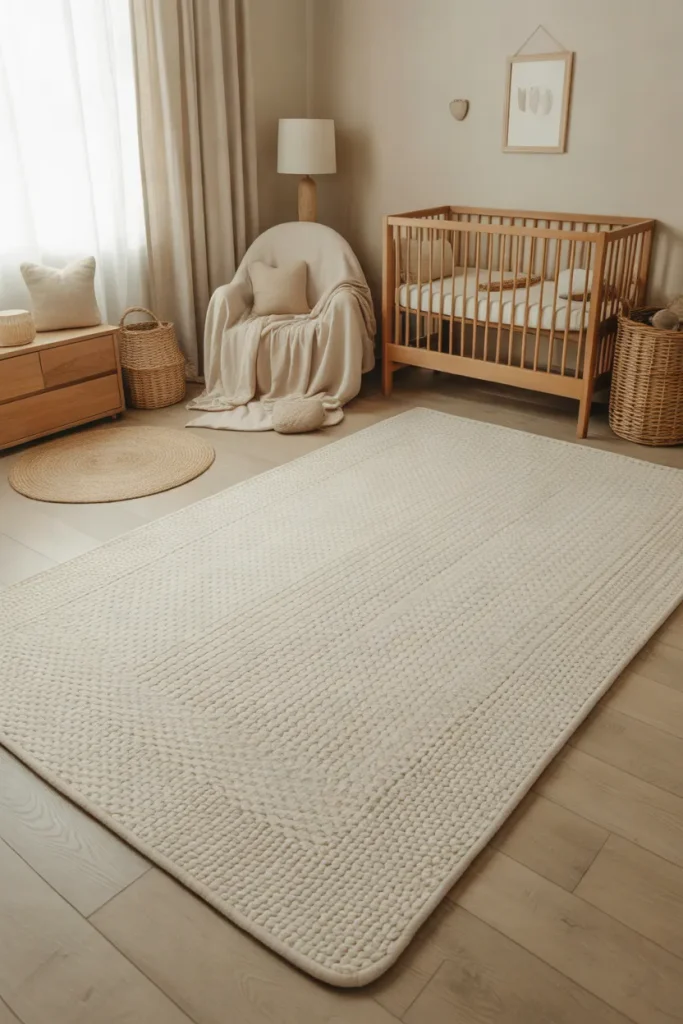
Cost: Low to Moderate
Best For: Hardwood or laminate floors
Works In: Small and large nurseries
Result: Softer, warmer floor space
Floor layers help a nursery feel more comfortable without adding extra furniture. Start with a low-pile rug that extends beyond the crib or seating area, then add a washable play mat where floor time happens most often. Keep edges flat and secure so the room stays practical as daily routines change.
Two-Tone Walls
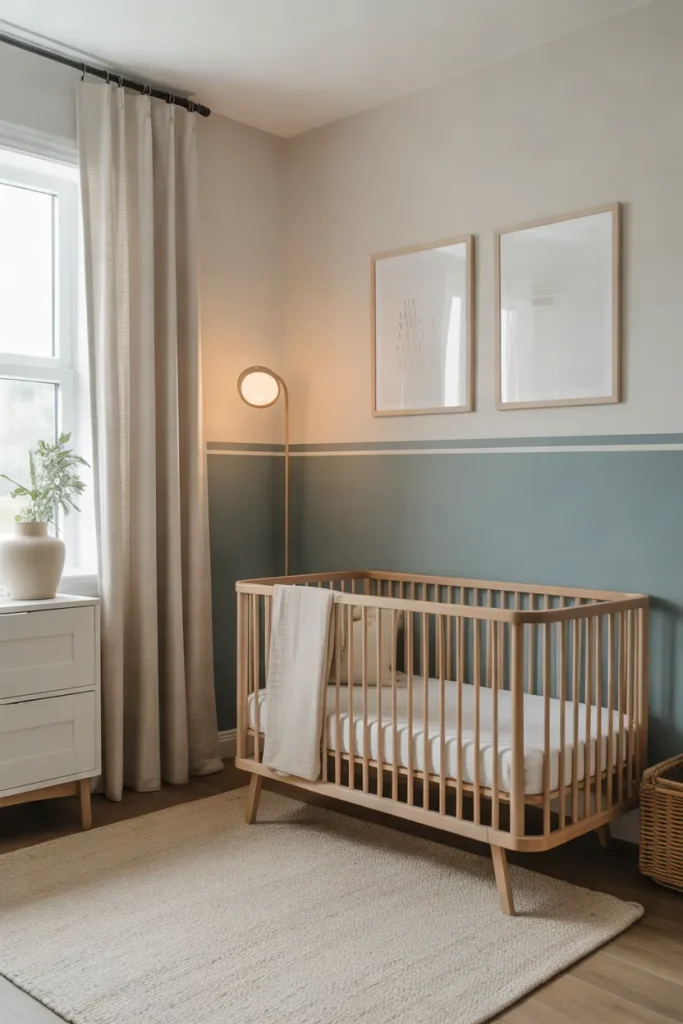
Two-tone walls add structure without requiring wallpaper or heavy decoration. Keep the darker shade on the lower section and use warm white above to preserve brightness. A crisp horizontal divide can visually widen the room, especially when the furniture stays simple and the color contrast remains soft rather than dramatic.
I’ve noticed this works best when the lower shade connects with one other element, such as a rug, curtain, or storage basket. That repetition makes the palette feel intentional. Choose washable paint for the lower portion, since it is more likely to collect marks once the nursery becomes an active toddler space.
Hidden Toy Storage
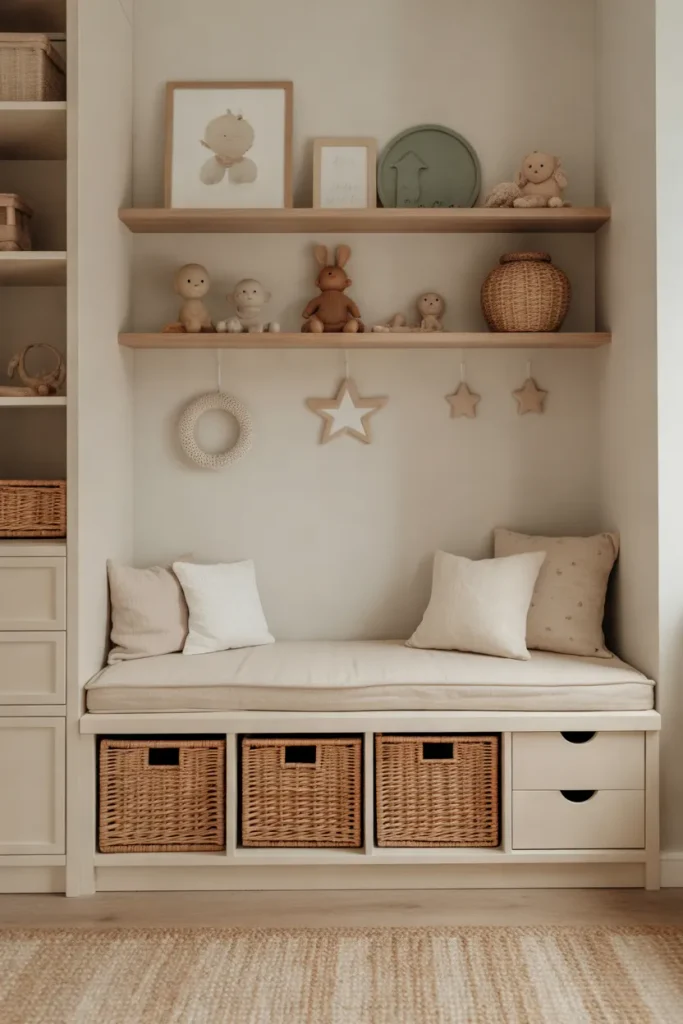
- Use lidded baskets for soft toys, blankets, and items that create visual clutter.
- Choose a bench with drawers to combine seating and storage in one footprint.
- Keep everyday toys in low bins that will be easy for a child to reach later.
- Label hidden storage by category so cleanup stays simple.
- Leave some shelves intentionally empty to keep the room visually calm.
Hidden storage helps a nursery stay organized even when supplies and toys increase quickly. The goal is not to hide everything, but to reduce the number of objects competing for attention. Closed baskets and drawers work especially well beside open shelves because they create a cleaner balance between display and practical storage.
“Smart baby room design ideas focus on keeping toys and essentials organized without making the nursery feel crowded.”
Personalized Name Wall
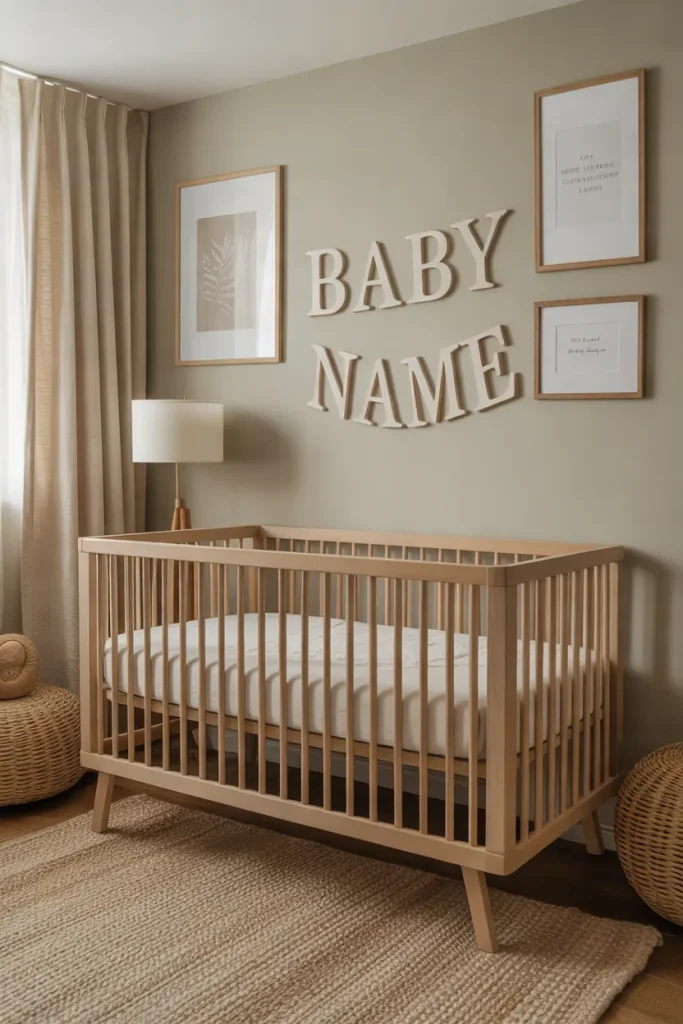
Quick Tip:
Keep personalized wall decor simple so it remains timeless. Use one name sign as the focal point, then leave enough blank wall around it to prevent the area from feeling crowded.
Personal details make a nursery feel more meaningful without requiring a full theme. Choose wooden lettering, a framed initial, or a subtle name plaque that matches the room’s existing palette. Secure wall decor carefully and keep heavier pieces away from the crib area for a cleaner, safer, and more polished result.
“Personalized baby room design ideas make the nursery feel special while maintaining a clean and balanced appearance.”
Cozy Window Corner
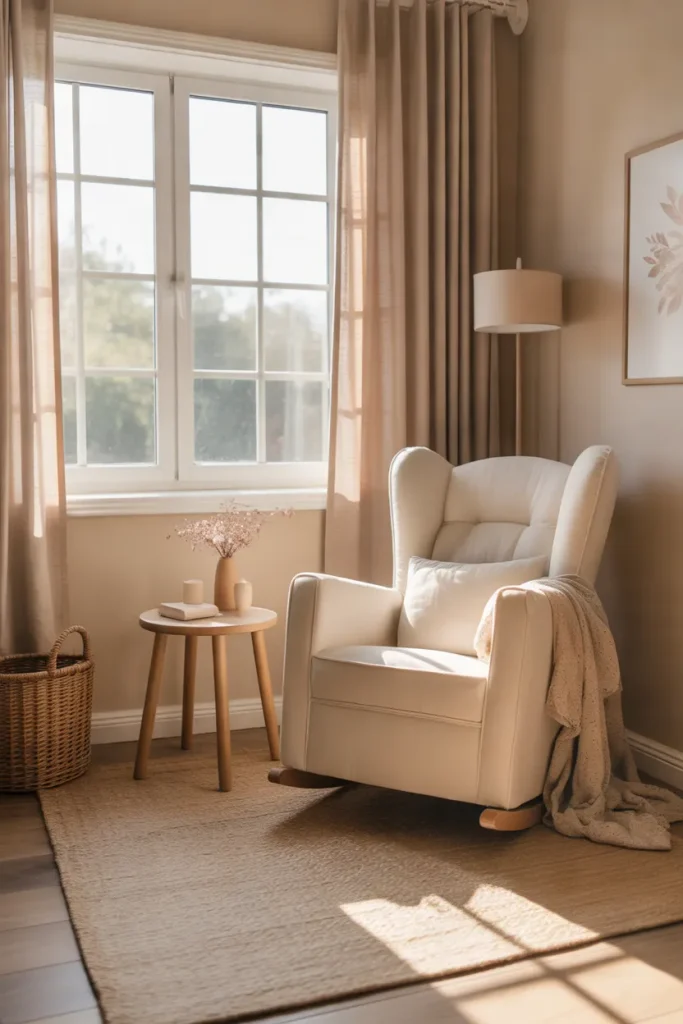
BEFORE:
An unused window corner often becomes empty space or a place where baskets and miscellaneous items collect. The room can feel less balanced, especially when most furniture sits against one wall.
AFTER:
A comfortable chair, soft rug, and small side table turn the same corner into a useful feeding and cuddling zone. Natural light makes the area feel brighter during the day while creating a clear purpose for previously unused space.
Position the chair where daylight is pleasant without creating direct glare. Keep the table compact enough for a drink, book, or feeding essentials, and use curtains to control brightness. This final touch works especially well in cozy nurseries where every corner needs to serve a practical purpose.
“Creative baby room design ideas can turn a simple corner into a comfortable space for reading, feeding, and bonding.”
Conclusion
A cozy nursery does not require a huge budget or a complicated makeover. Thoughtful colors, soft textures, practical storage, gentle lighting, and a few personal details can completely change how the room feels. These Cozy Baby Room Design Ideas give you plenty of ways to create a space that feels calm, useful, and welcoming.
I’ve seen how even small updates can make a nursery feel more intentional and comfortable. Save this post on Pinterest so you can return to your favorite ideas, try one or two in your own space, and share the article with another parent planning a beautiful nursery.