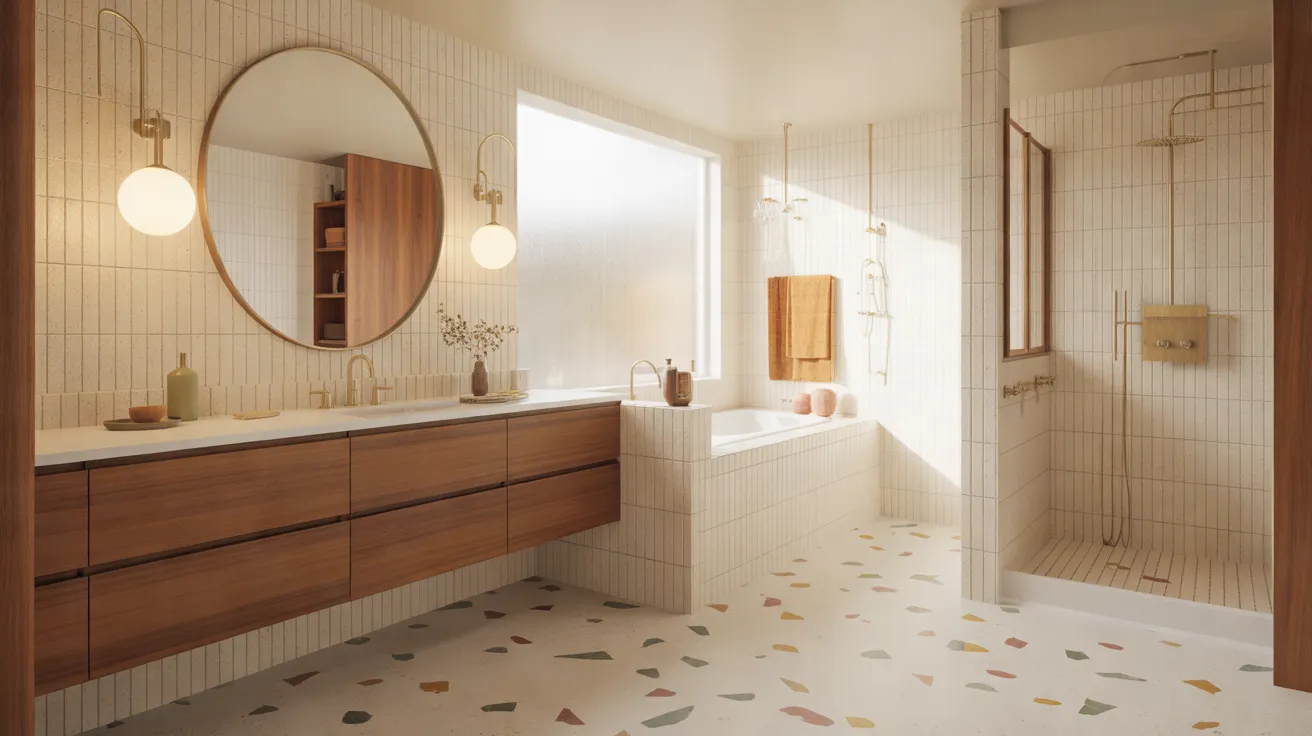
21 MCM Bathroom Renovation Ideas for Stunning Results
A timeless bathroom can still have plenty of personality. The best MCM bathroom renovation ideas combine warm woods, retro colors, clean geometry, and practical details without making your home feel stuck in another decade.
Whether you are planning a full remodel or refreshing a dated bathroom on a smaller budget, thoughtful choices can completely change the result. In my experience, the strongest mid century spaces rarely rely on one dramatic feature. Instead, walnut cabinetry, terrazzo, warm lighting, geometric tile, and simple fixtures work together. These 21 ideas will help you find practical inspiration, create a balanced design, and choose details that can still feel stylish years from now.
Warm Walnut Vanity
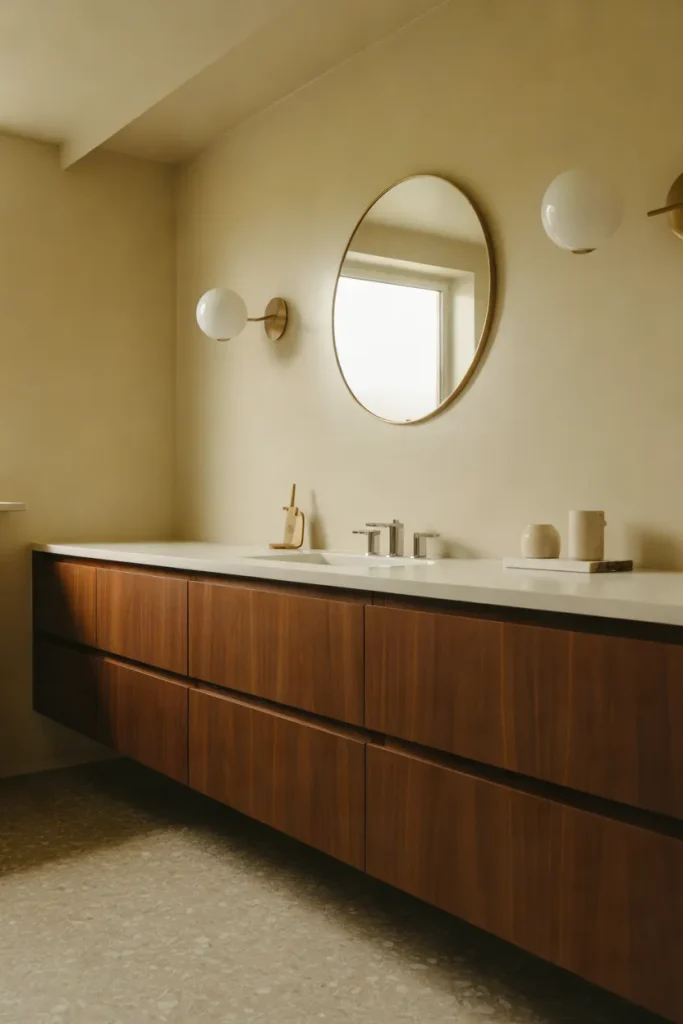
Warm walnut instantly gives a bathroom that recognizable mid century character without making the room feel themed. Choose a vanity with clean lines, minimal hardware, and visible wood grain. A floating design also exposes more flooring, which can make a compact bathroom feel noticeably larger and less visually crowded.
Pair the wood with white or cream countertops to keep the palette fresh. In my experience, walnut works especially well when repeated only once or twice, such as on a small shelf or mirror detail. Too many competing wood finishes can weaken the simple, intentional look that makes MCM bathrooms so appealing.
A warm walnut vanity remains a favorite among MCM bathroom renovation ideas because it combines natural beauty with clean, functional design.
Terrazzo Floor Tiles
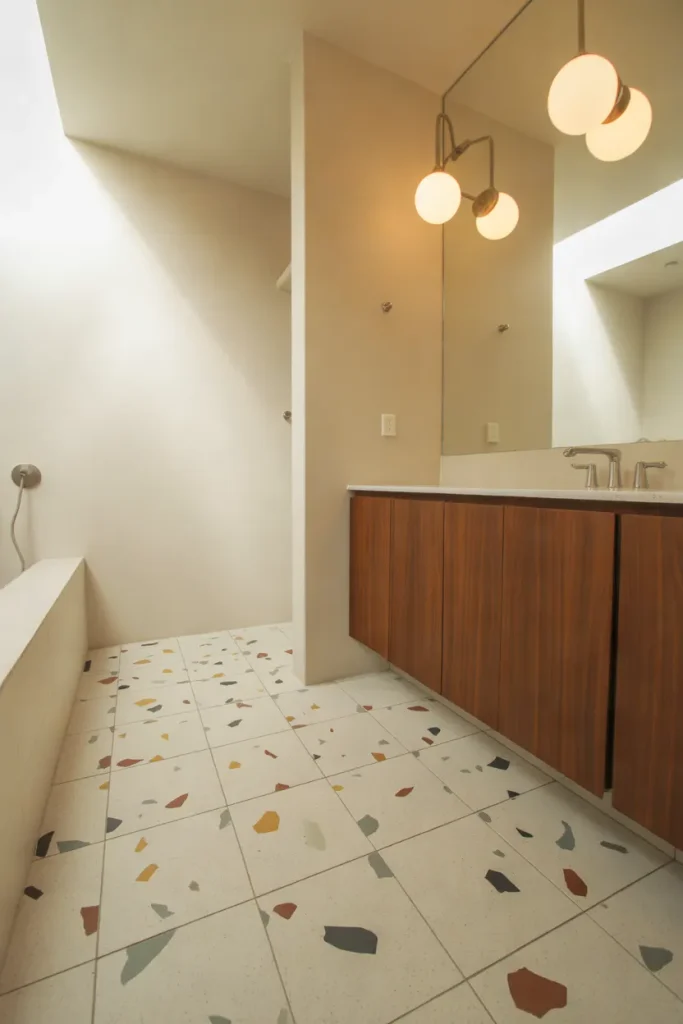
Terrazzo flooring is one of the most practical MCM bathroom renovation ideas for creating a timeless retro look.
A terrazzo floor brings pattern and vintage personality into the room while keeping surfaces practical.
- Choose a warm cream base with rust, mustard, sage, or charcoal chips for an authentic retro palette.
- Use larger tiles to reduce grout lines and create a cleaner visual flow.
- Select a matte or softly honed finish rather than a highly reflective surface.
- Keep surrounding walls relatively simple so the flooring remains the strongest pattern.
- Repeat one terrazzo color in towels, cabinetry, or accessories to connect the room visually.
Among practical mcm bathroom renovation ideas, terrazzo works because it combines decoration with a hardworking surface. I’ve noticed that restrained terrazzo patterns tend to age better than extremely colorful versions. Choose smaller, balanced chips if you want the bathroom to retain its character without becoming visually busy several years later.
Mustard Accent Tile
Quick Tip:
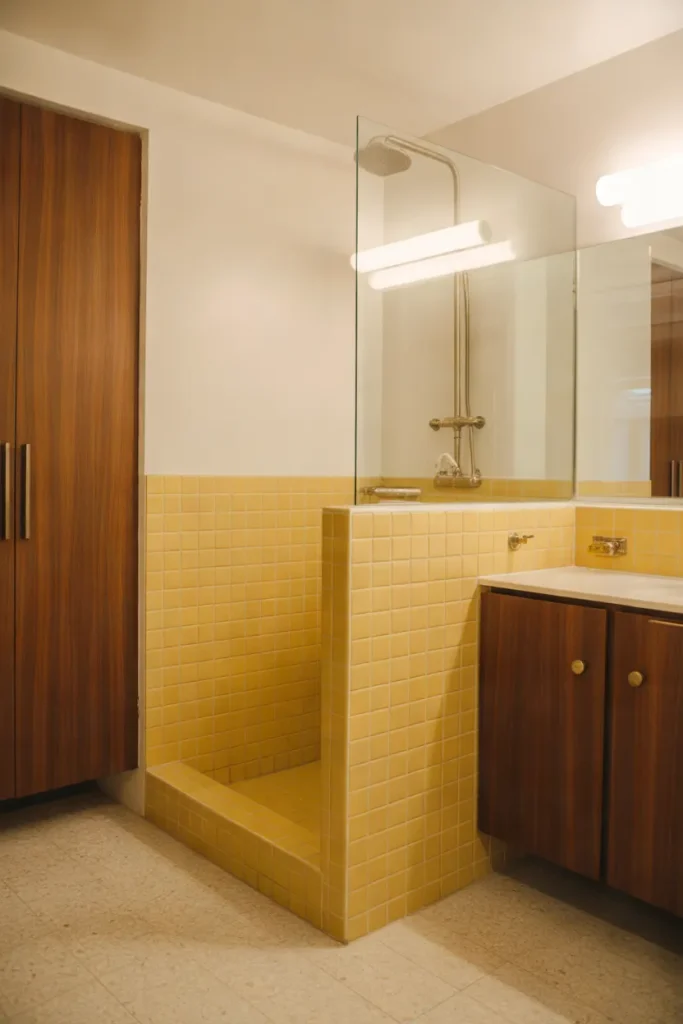
Use mustard as an accent rather than covering every wall. A shower niche, vanity backsplash, or single tiled wall provides enough color to establish the retro palette while leaving room for warm wood, cream, and neutral finishes.
Mustard tile feels especially convincing beside walnut, off white, and muted brown. Choose a slightly earthy yellow instead of a bright lemon shade, then use simple grout lines and understated fixtures. The result feels connected to classic mid century interiors while remaining comfortable for a bathroom designed to last.
Also View:
20 Cozy Baby Room Design Ideas for a Blissful Nursery
22 Tiny Studio Apartment Layout Ideas for Wow Factor
Geometric Shower Tile
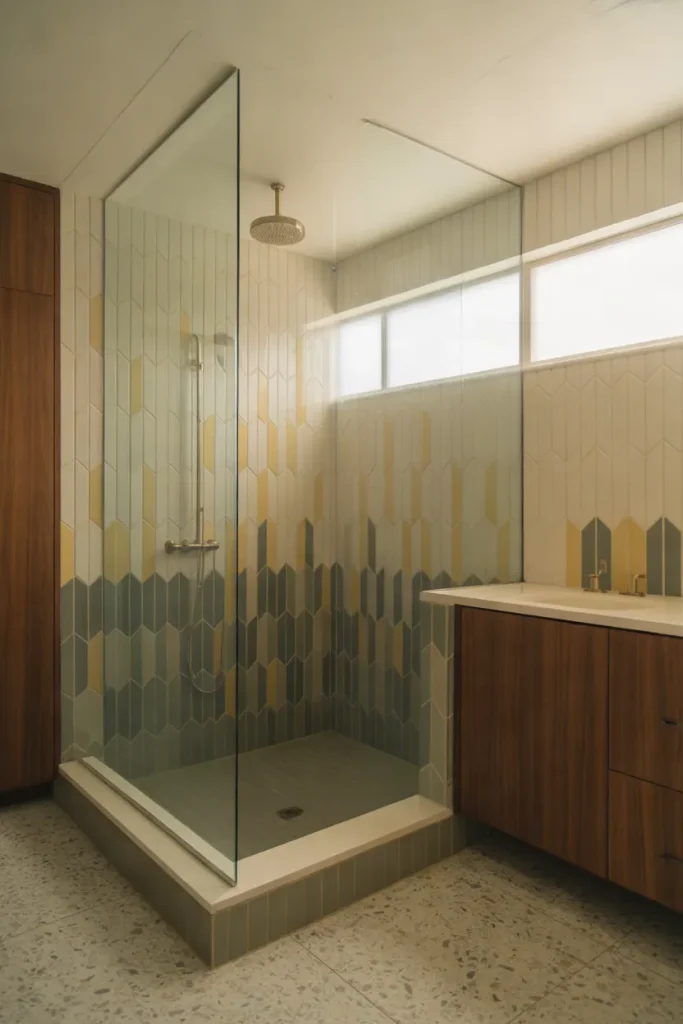
BEFORE:
A plain shower covered in basic white tile can feel disconnected from the rest of an MCM renovation. Busy decorative patterns, however, may quickly overwhelm a small bathroom.
AFTER:
A controlled geometric tile pattern creates a clear retro focal point. Muted colors and simple surrounding finishes keep the shower visually balanced rather than overly decorative.
Geometry works best when there is somewhere for the eye to rest. I’ve seen this work well when patterned tile stays inside the shower while nearby walls remain warm white or cream. Repeat just one tile color elsewhere, perhaps in towels or accessories, to create connection without making every surface compete.
Geometric shower tiles are popular MCM bathroom renovation ideas for introducing subtle patterns and retro charm.
Floating Wood Shelves
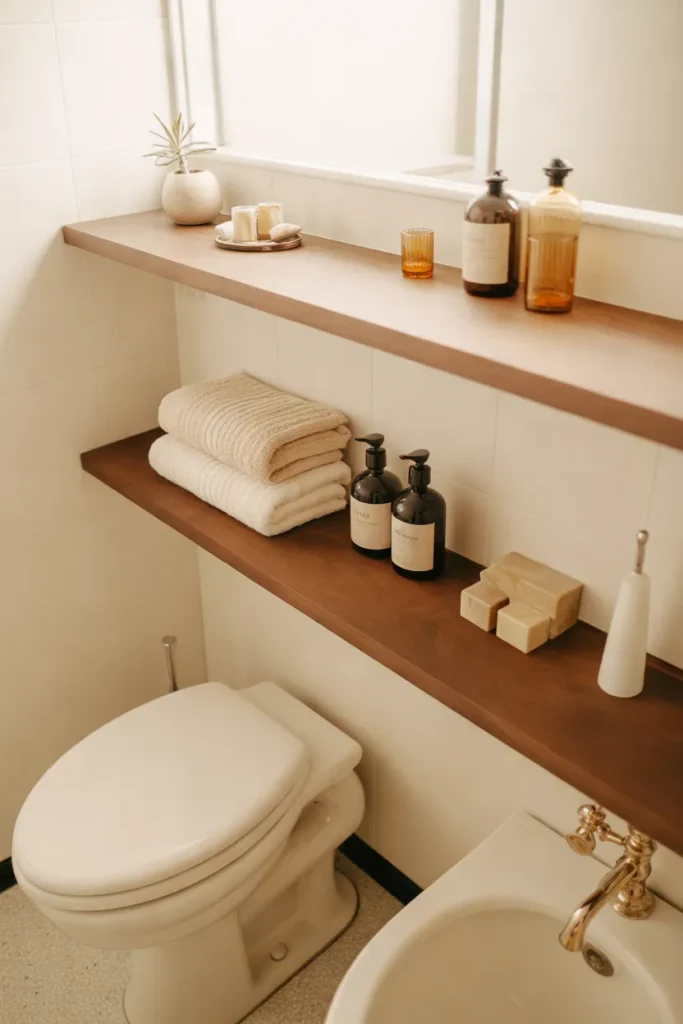
- Choose matching wood: Select walnut or teak that relates closely to the vanity finish.
- Keep shelves slim: Use clean rectangular boards without ornate brackets or decorative edging.
- Plan practical spacing: Leave enough vertical room for folded towels, bottles, and everyday bathroom essentials.
- Limit the styling: Combine useful storage with only one or two decorative objects.
Floating shelves solve storage problems without introducing bulky cabinetry, especially above a toilet or beside a vanity. Keep frequently used items within easy reach and hide visual clutter in drawers or baskets. Matching the shelf tone to existing woodwork makes separate elements feel intentional and keeps the bathroom’s retro influence consistent.
Globe Vanity Lighting
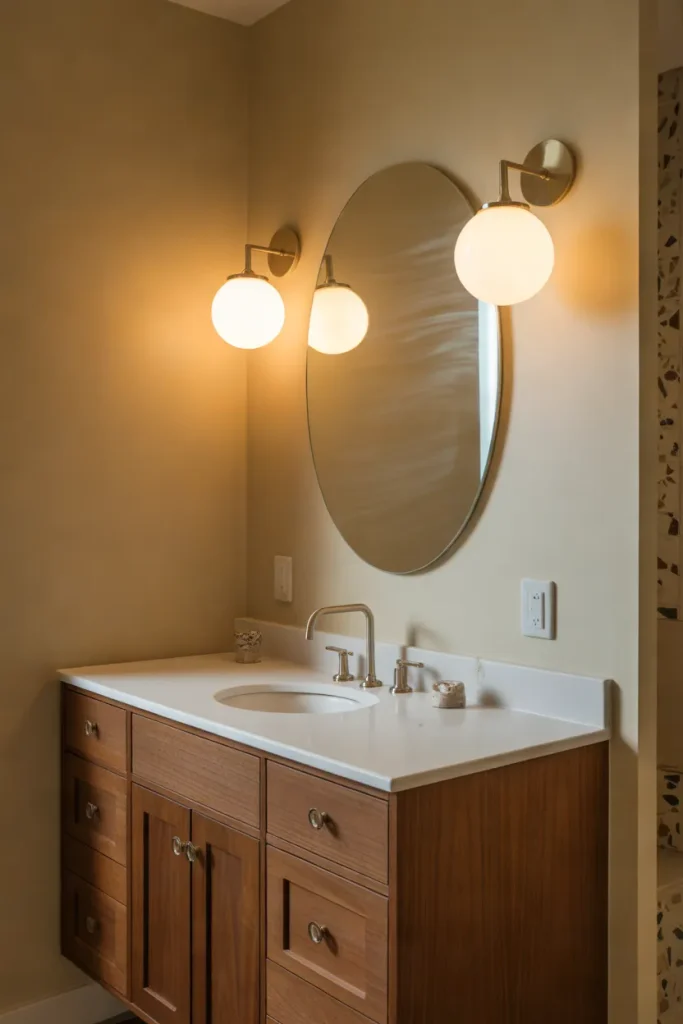
| Detail | Standard Lighting | MCM Globe Lighting |
| Shape | Angular or basic | Soft spherical globes |
| Light quality | Often direct | Gentle diffused glow |
| Visual character | Mostly functional | Retro and sculptural |
| Best pairing | Mixed finishes | Walnut, brass, terrazzo |
Lighting can establish the period without requiring a major structural change. Opal globes soften glare around the mirror while introducing the rounded forms associated with mid century design. For practical grooming, position sconces near face level and choose warm, accurate light rather than relying on one decorative ceiling fixture alone.
For better results, follow recommended bathroom lighting guidelines when choosing your fixtures.
Teak Wall Paneling
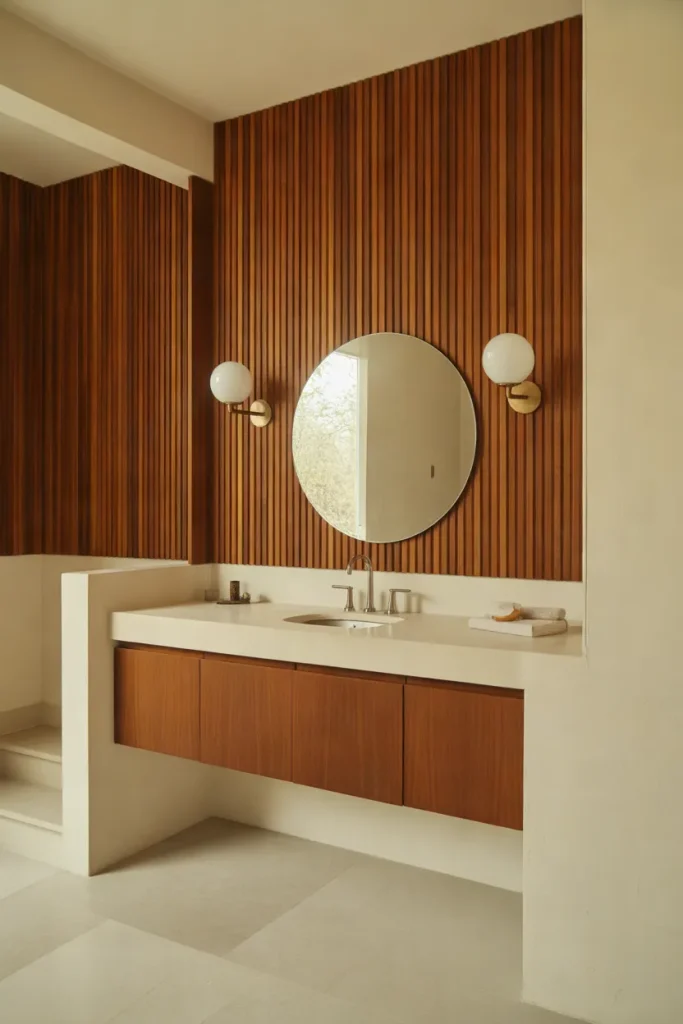
DO
- Use teak on one controlled feature wall.
- Choose narrow vertical panels with consistent spacing.
- Protect bathroom wood with a moisture-resistant finish.
- Balance the darker timber with cream or warm white surfaces.
DON’T
- Cover every bathroom wall with dark wood.
- Install untreated timber beside frequent water splashes.
- Mix several unrelated wood tones.
- Add ornate molding that fights the clean MCM lines.
Wood paneling creates warmth that tile alone often cannot provide. In my experience, limiting teak to the vanity wall gives the strongest result because the grain becomes an architectural feature rather than visual clutter. Good ventilation and proper sealing matter too, especially in bathrooms where humidity can damage natural materials over time.
Sunken Color Palette
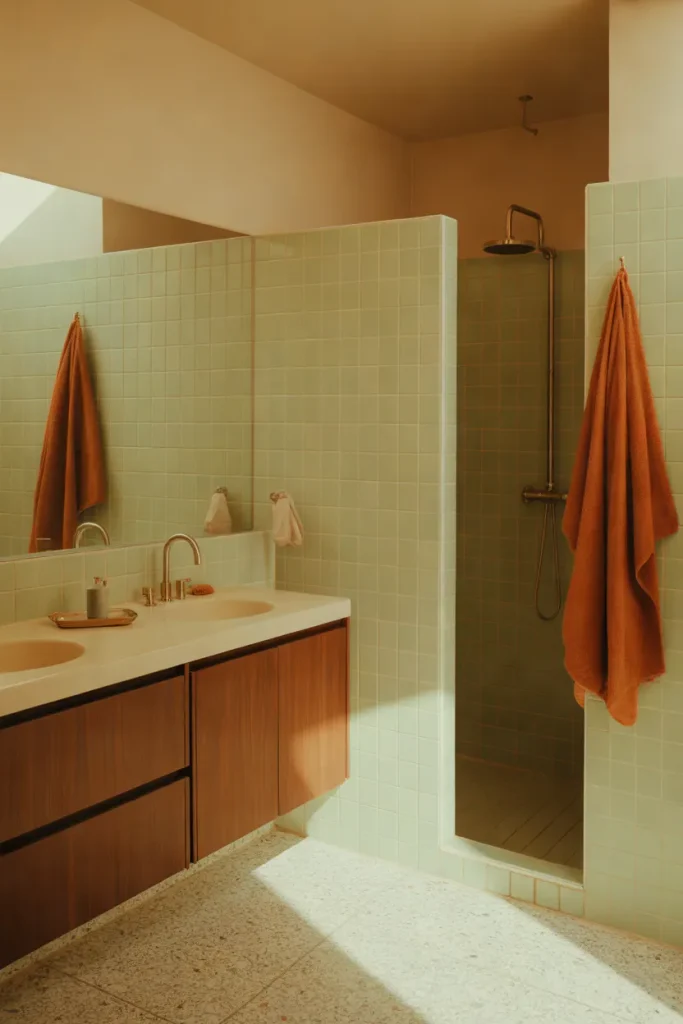
Best For: Warm, character-rich renovations
Works In: Small bathrooms, ensuites, and larger primary bathrooms
Skill Level: Beginner-friendly color planning
Result: Retro warmth without a dated appearance
Color often determines whether retro styling feels intentional or simply old. Start with warm beige or cream as the dominant shade, then introduce avocado, rust, ochre, or muted orange in smaller amounts. Keeping the strongest colors to tile, towels, or artwork makes future updates easier while preserving recognizable mid century character.
Round Statement Mirror
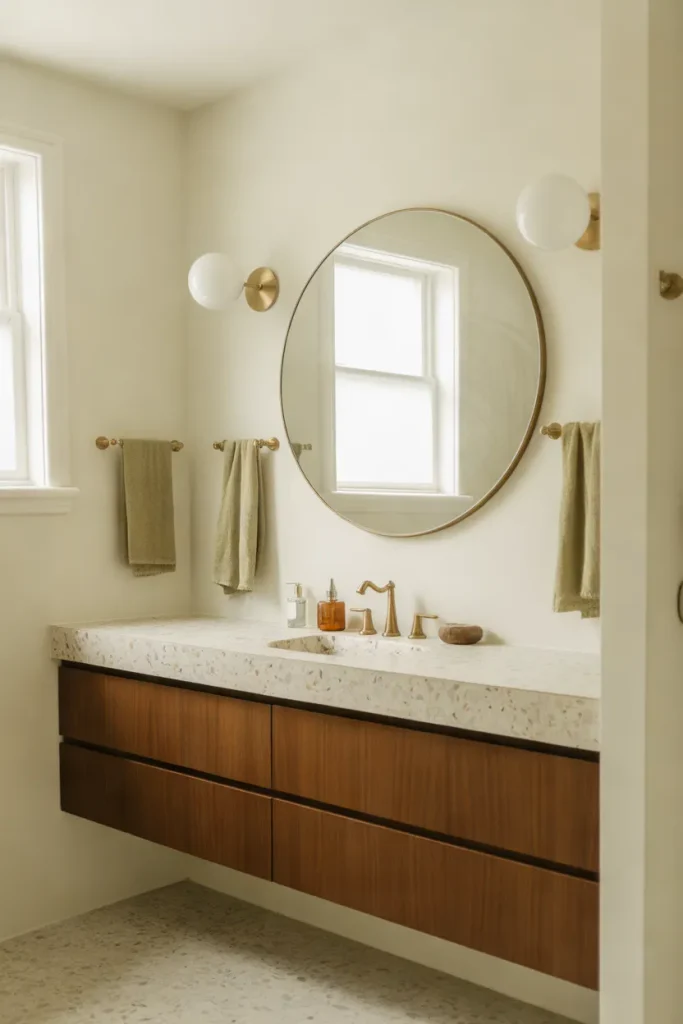
A round mirror softens the straight cabinetry, rectangular tile, and crisp architectural lines commonly found in bathrooms. Choose one that is slightly narrower than the vanity so the proportions remain balanced. A thin brass, black, or walnut frame adds definition without making the mirror feel heavy or overly decorative.
Among timeless mcm bathroom renovation ideas, circular mirrors are particularly easy to adapt to different budgets. I’ve noticed they work best when nearby lighting follows the same restrained approach, such as two small globe sconces. Keep the surrounding wall relatively open so the curved silhouette has enough visual breathing room.
Olive Green Cabinetry
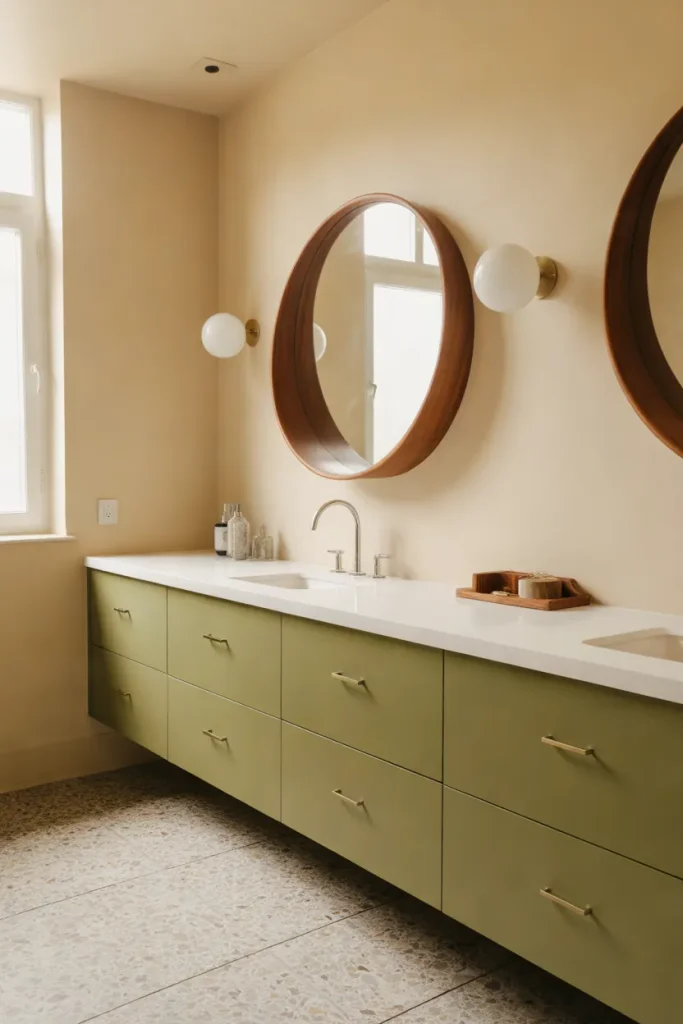
- Choose a muted olive with brown or gray undertones instead of a bright green.
- Pair painted cabinetry with cream, ivory, or warm white walls for contrast.
- Add slim brass pulls to reinforce the vintage influence without excessive ornament.
- Keep countertops pale and minimally patterned so the cabinet color remains visually dominant.
- Repeat olive subtly through one towel, planter, or small accessory rather than matching everything.
Olive cabinetry gives an MCM bathroom personality while remaining surprisingly adaptable. It works particularly well if replacing the vanity is outside your budget because existing wood cabinetry can often be prepared and painted. Test the color beside your tile first, since cool lighting can make some olive shades appear unexpectedly gray.
Among affordable MCM bathroom renovation ideas, olive green cabinetry adds warmth and vintage personality.
Vertical Stack Tile
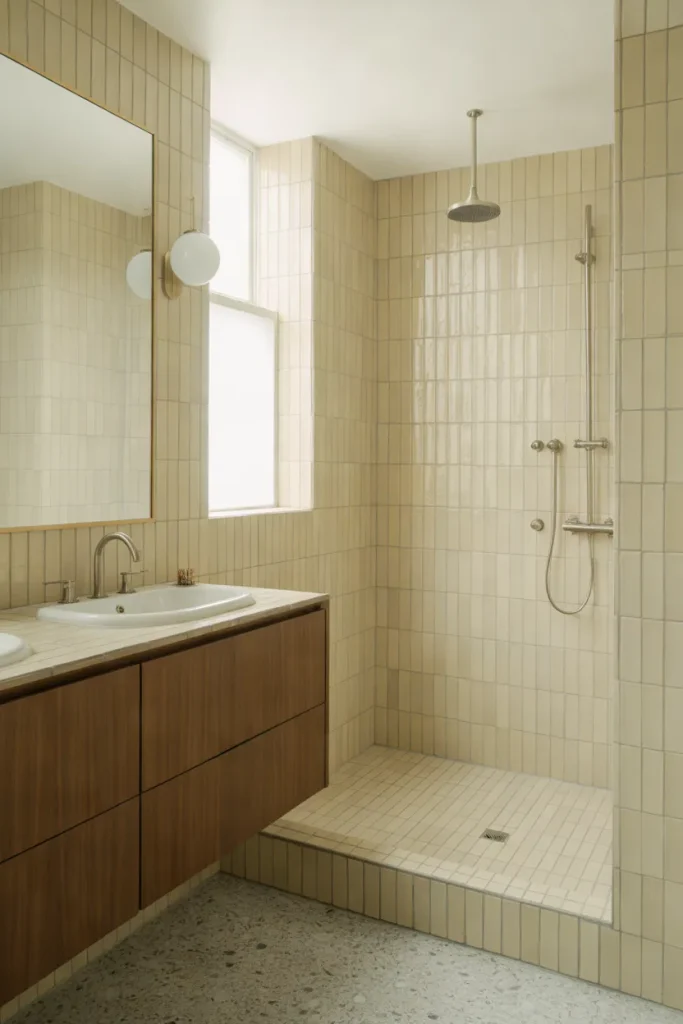
Quick Tip:
Keep grout lines thin and consistent to emphasize the clean vertical rhythm. For a softer finish, select grout close to the tile color rather than creating strong contrast between every individual piece.
Vertical tile draws the eye upward, which can make a low or compact bathroom feel taller. It also gives familiar rectangular tile a more distinctive mid century character without relying on bold patterns. I’ve seen this work especially well behind vanities, where a narrow tiled section creates texture without requiring full wall coverage.
Vertical stack tiles are excellent MCM bathroom renovation ideas for making compact bathrooms feel taller.
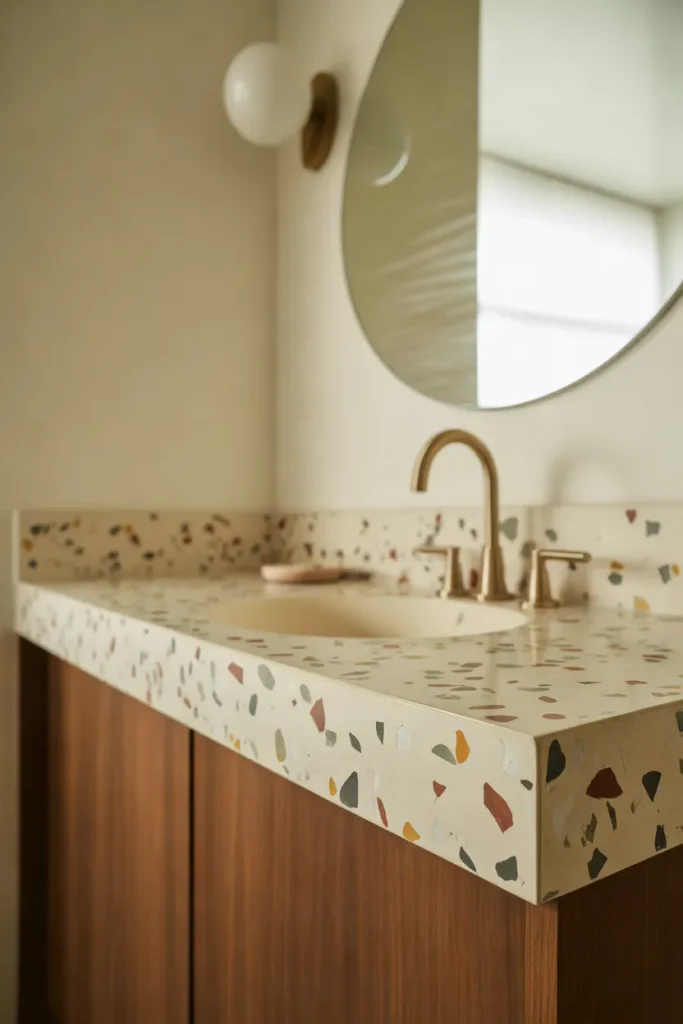
Terrazzo Vanity Refresh
BEFORE:
A plain laminate or heavily veined countertop can compete with the warm woods and simple geometry of an MCM bathroom. Dark surfaces may also make a compact vanity zone feel heavier.
AFTER:
A light terrazzo counter introduces controlled pattern, color, and vintage character. Small aggregate chips connect naturally with walnut cabinetry, warm metals, and muted accent colors.
Countertops occupy valuable visual space, so choose terrazzo with a restrained chip mixture rather than an extremely busy pattern. A cream base keeps the vanity bright, while rust, olive, or charcoal fragments can reference colors already used elsewhere. For tighter budgets, prioritize the vanity top instead of extending terrazzo across multiple surfaces.
Frameless Glass Shower
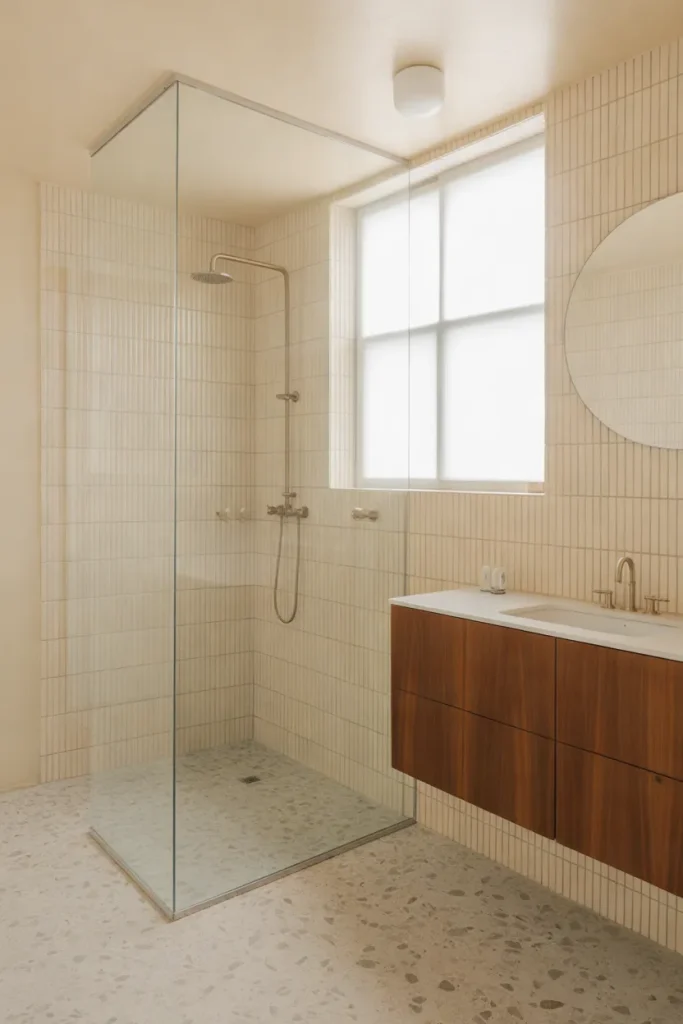
- Simplify the enclosure: Replace bulky framed doors or curtains with clear frameless glass where the bathroom layout allows.
- Continue the flooring: Use visually consistent flooring around the shower to reduce abrupt transitions.
- Coordinate hardware: Match hinges and shower fixtures with the bathroom’s brass, chrome, or matte black finish.
- Control privacy: Use fluted or lightly frosted glass where greater screening is necessary.
Clear glass keeps tile and architectural details visible instead of dividing the bathroom into smaller visual zones. This is especially useful in compact renovations where every sightline matters. Measure door clearance carefully before ordering glass, and confirm that nearby towel rails, toilets, or vanities will not interfere with the shower opening.
Brass Fixture Details
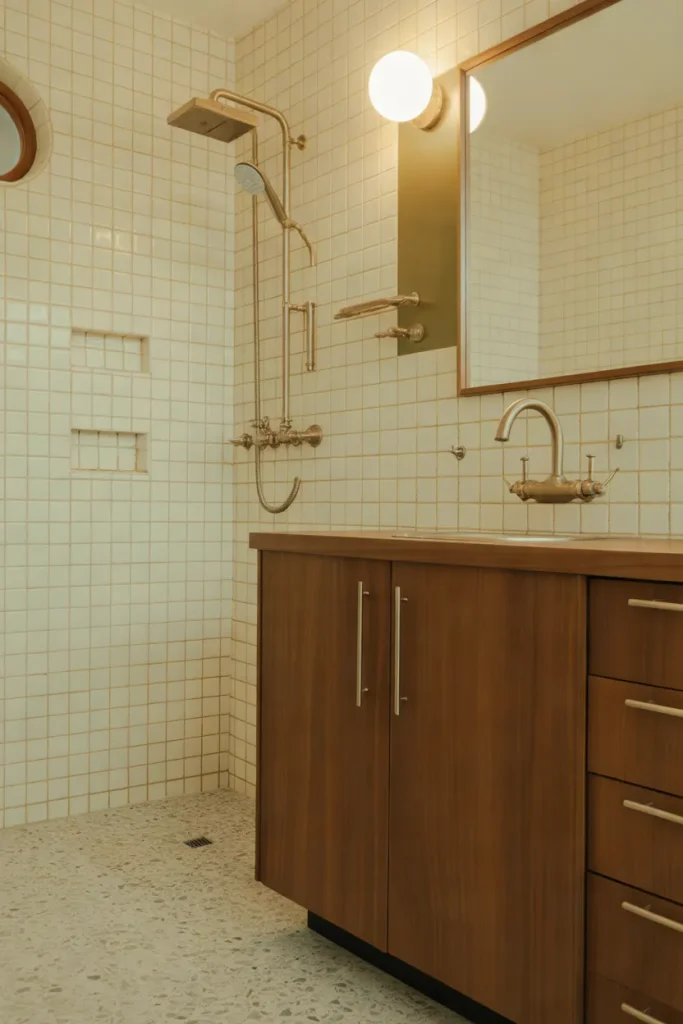
| Detail | Polished Brass | Brushed Brass |
| Surface | Bright and reflective | Soft and muted |
| Visual impact | Bold and glamorous | Warm and understated |
| Maintenance | Shows marks easily | Hides fingerprints better |
| MCM pairing | Best as an accent | Works across several fixtures |
Warm metal details complement walnut, terrazzo, olive, and earthy tile without requiring another strong pattern. Brushed brass usually feels calmer than highly polished finishes, making it easier to repeat across faucets and hardware. Keep the finish consistent on nearby pieces, but avoid forcing every metal object in the bathroom to match exactly.
Retro Color Blocking
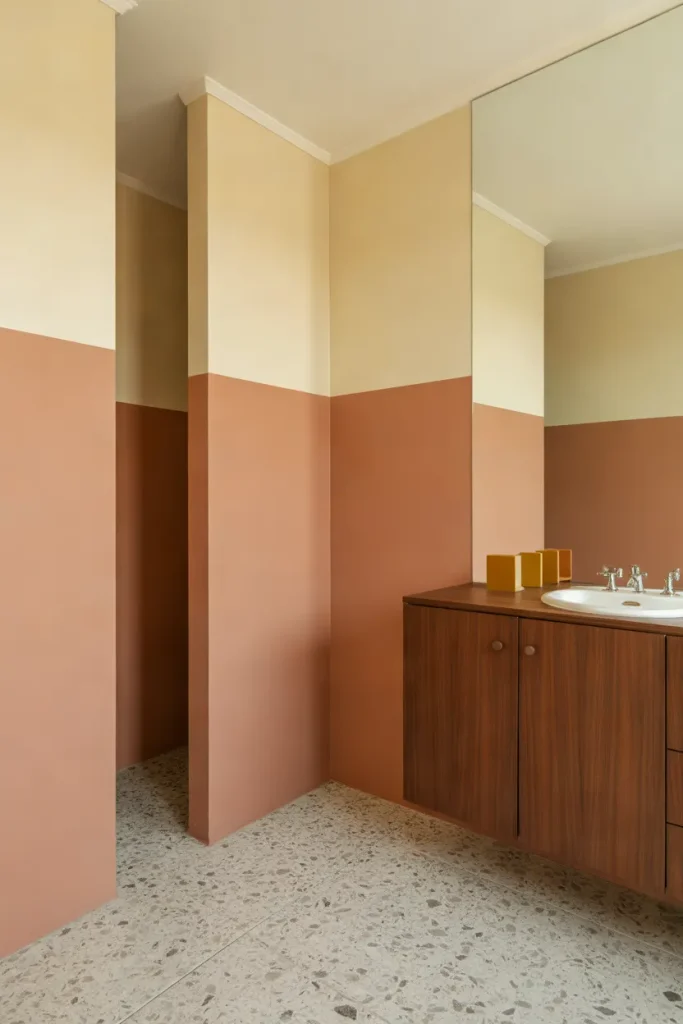
DO
- Choose two or three muted colors with similar warmth.
- Place color changes along clear architectural lines.
- Keep permanent fixtures relatively neutral.
- Test large paint samples in morning and evening light.
DON’T
- Combine several highly saturated retro colors.
- Divide every wall into multiple competing shapes.
- Ignore existing tile and countertop undertones.
- Use intricate patterns beside strong color blocking.
Color blocking brings retro energy into a renovation without committing to expensive patterned surfaces. Terracotta with cream, olive with beige, or mustard with warm white can establish the period quickly. That’s why many designers rely on restrained palettes: strong color feels more intentional when neutral areas provide enough visual breathing room around it.
Floating Double Vanity
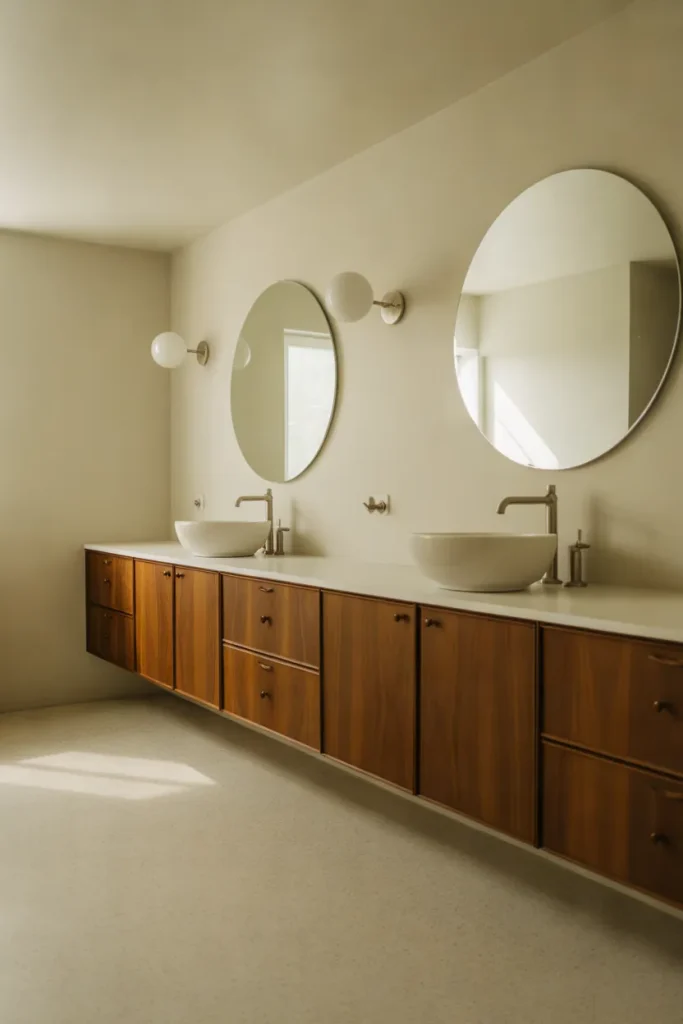
Best For: Shared primary bathrooms and larger family spaces
Cost: Medium to high, depending on cabinetry and plumbing
Skill Level: Professional installation recommended
Result: More storage, clearer floor space, and balanced symmetry
A floating double vanity combines everyday function with the horizontal lines associated with mid century interiors. Keep drawer fronts flat and hardware minimal, then leave visible flooring underneath to reduce visual weight. Before ordering cabinetry, confirm plumbing positions carefully because moving two sets of supply and drain lines can increase renovation costs quickly.
Cream Mosaic Flooring
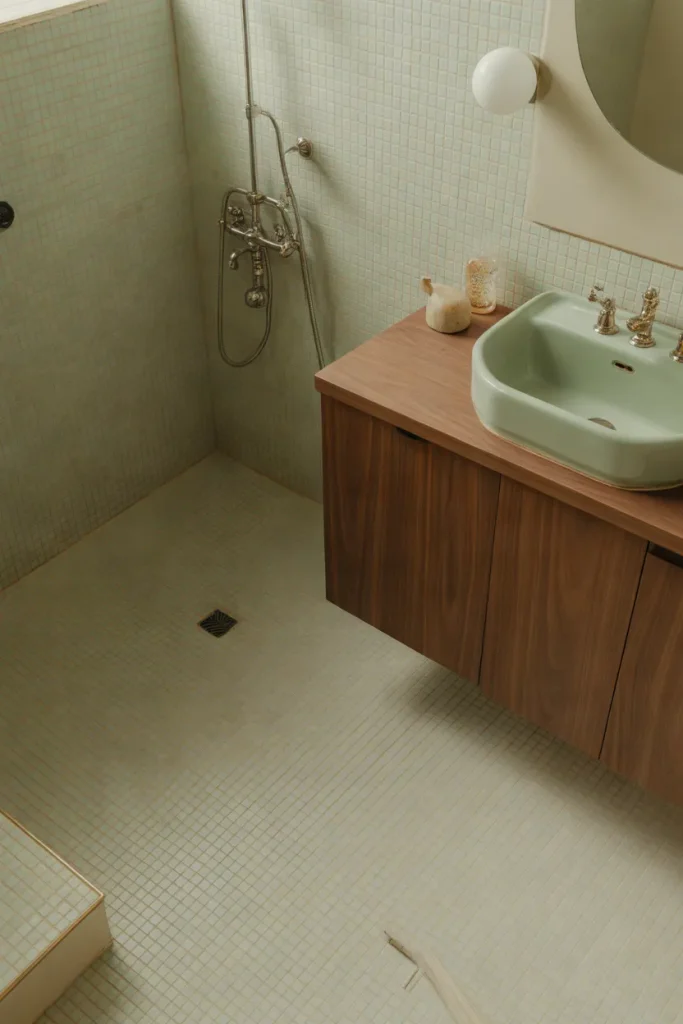
Small mosaic flooring brings texture to a bathroom without demanding a bold color commitment. Choose cream, ivory, or warm beige tiles in simple hexagonal or square shapes. The extra grout lines can also provide useful traction, making this approach particularly practical around vanities, tubs, and other frequently wet areas.
I’ve noticed quieter flooring often gives vintage-inspired bathrooms greater longevity because cabinetry, lighting, and accessories can change around it. Select a grout shade slightly darker than the tile if easy maintenance matters. Avoid stark white grout on busy bathroom floors, where everyday dust and discoloration may become visible surprisingly quickly.
For homeowners seeking timeless MCM bathroom renovation ideas, cream mosaic flooring offers a beautiful balance of texture and simplicity.
Wood Slat Divider
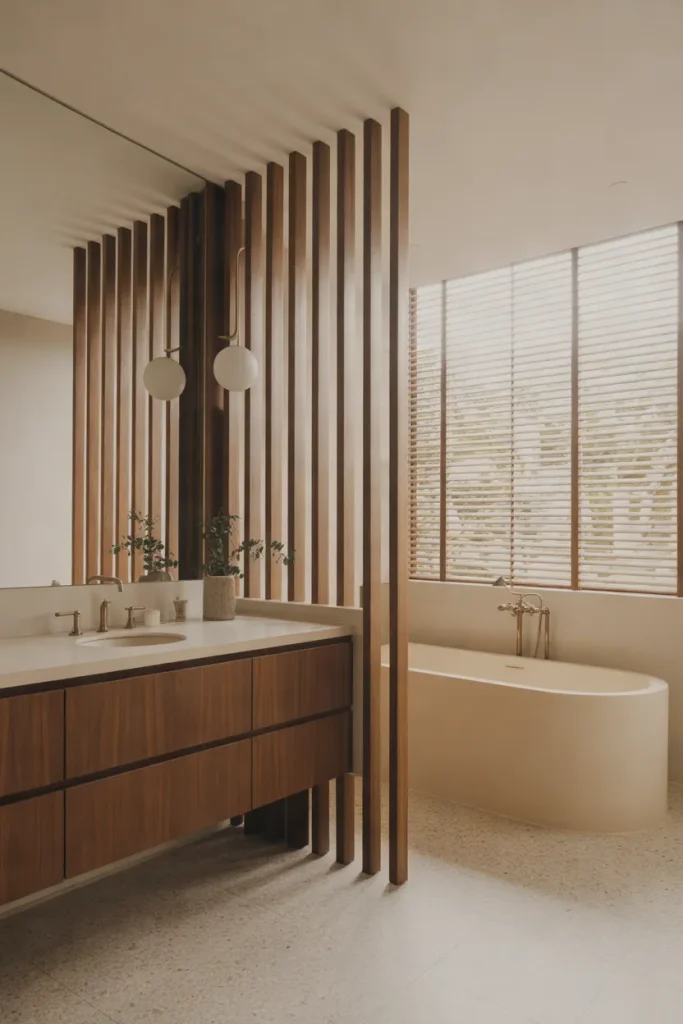
- Choose narrow walnut or teak slats for a light architectural appearance.
- Leave consistent gaps between boards so daylight can pass through the divider.
- Position the screen between functional zones rather than blocking an important walkway.
- Seal every exposed wood surface against bathroom humidity and occasional splashes.
- Keep nearby walls and flooring simple so the vertical woodwork remains the focal feature.
A slatted divider creates separation without the heaviness of a full wall, making it useful between a vanity, tub, or dressing area. Its repeating vertical lines also add authentic architectural character. Plan placement carefully, since wood should not obstruct ventilation, natural light, cleaning access, or comfortable movement through the room.
Fluted Glass Screen
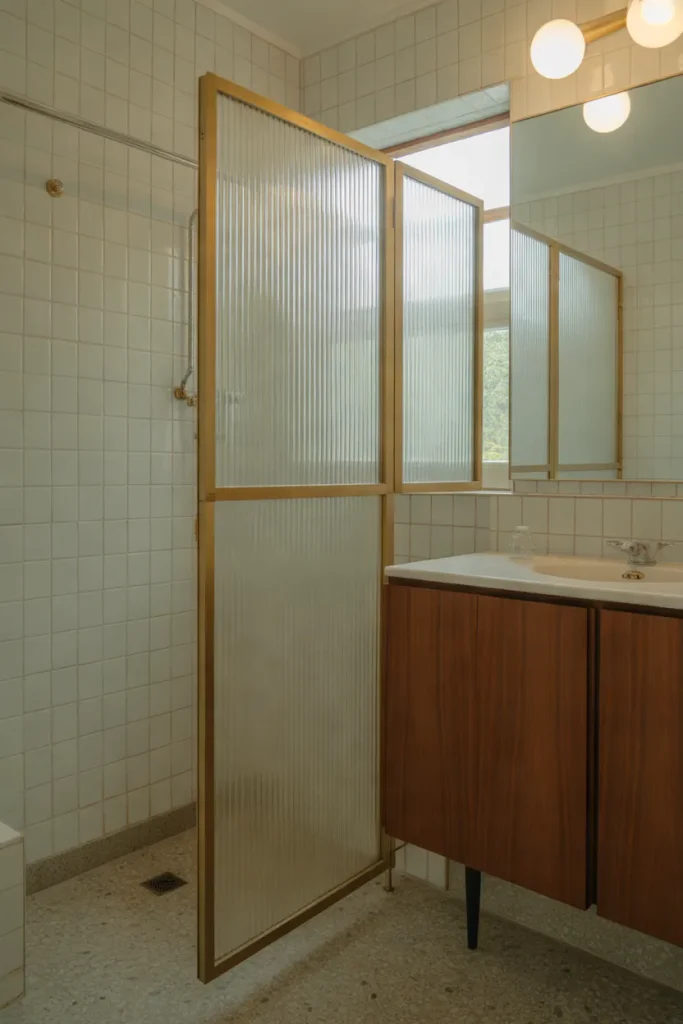
Best For: Compact showers and privacy-focused bathrooms
Cost: Medium to high
Difficulty: Professional installation recommended
Result: Filtered privacy with brighter, more open sightlines
Fluted glass introduces texture while allowing light to move between bathroom zones. Its vertical pattern pairs naturally with flat-front cabinetry and simple tile layouts. Choose clear or lightly frosted ribbed glass rather than heavily tinted panels, especially in a small room. Keep framing slim so the screen stays visually light.
Wall Mounted Faucet
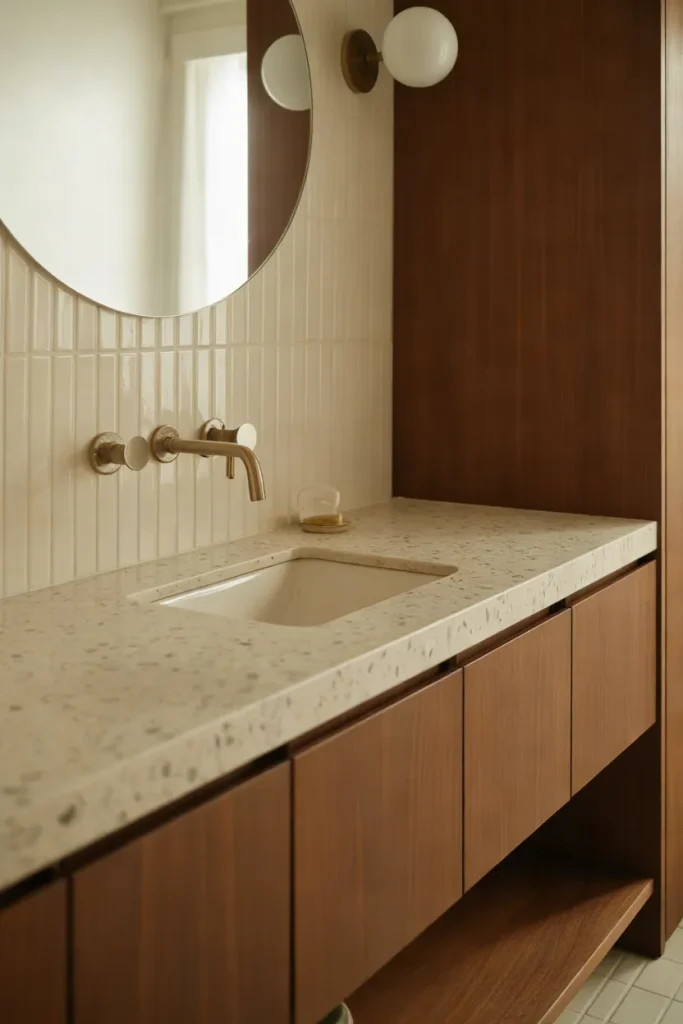
A wall mounted faucet clears valuable countertop space and gives the vanity a cleaner architectural finish. Pair it with a simple basin and restrained backsplash rather than ornate stone. Careful measurements matter because the spout must project far enough over the sink to prevent splashing without interfering with comfortable handwashing.
For renovations, decide on faucet placement before closing the wall because the plumbing body sits behind the finished surface. I’ve seen this detail work especially well with floating vanities, where fewer visible components strengthen the uncluttered look. Choose serviceable, high-quality hardware since future access can be more complicated than with deck-mounted taps.
Statement Pendant Lighting
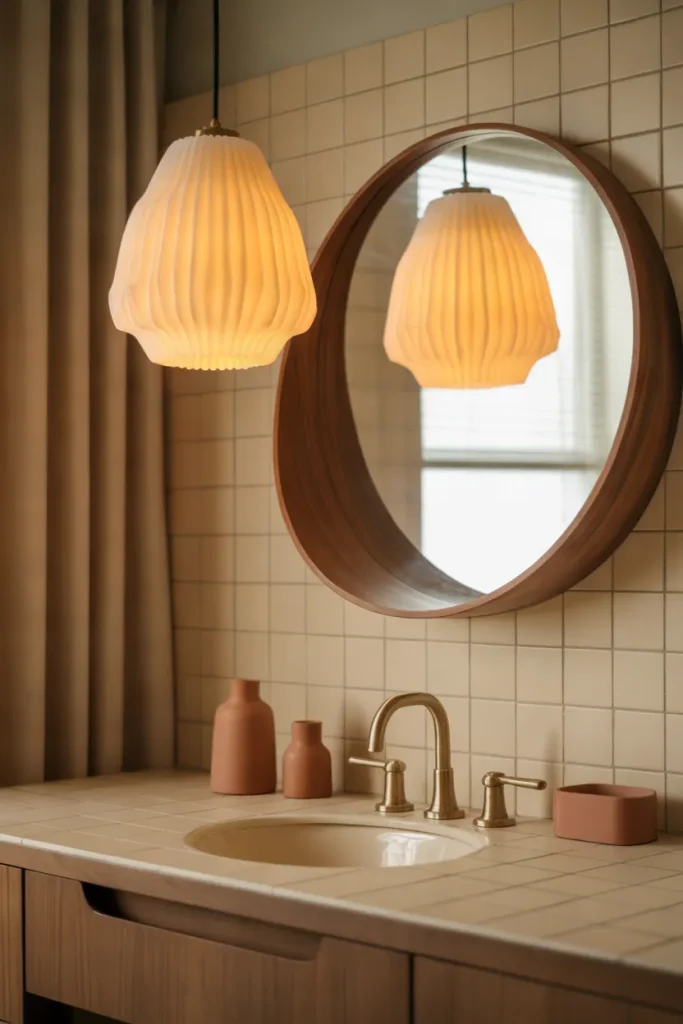
- Select a globe, cone, or simple sculptural pendant with clean geometry.
- Hang it where it adds visual interest without interfering with mirror use.
- Choose warm diffused light that flatters wood, terrazzo, and earthy colors.
- Coordinate the fixture finish with one or two nearby hardware details.
- Use dedicated task lighting if the pendant does not adequately illuminate the face.
Pendant lighting adds personality while preserving the restrained character behind the best mcm bathroom renovation ideas. Treat it as an accent rather than the room’s only practical light source. Before installation, check electrical and wet-location requirements carefully, particularly when a fixture sits near a bathtub, shower, or other water source.
Conclusion
Creating a timeless mid century bathroom is less about copying a specific decade and more about choosing warm materials, clean shapes, practical layouts, and carefully controlled color. These MCM bathroom renovation ideas give you plenty of ways to start, whether you change the lighting, update the vanity, introduce retro tile, or plan a complete renovation.
I’ve seen how a few thoughtful details can shift the entire character of a bathroom. Save this post on Pinterest for your renovation board, try the ideas that suit your space and budget, and share it with someone planning their own bathroom refresh.