22 Earth Tone Bedroom Ideas for a Serene, Cozy Retreat
Your bedroom should feel like a peaceful escape, not just another room filled with furniture. A beautiful earth tone bedroom brings warmth, comfort, and natural elegance into your home without requiring an expensive makeover.
From soft sage green bedding and warm terracotta walls to rustic wooden furniture and cozy layered textures, earthy colors create a relaxing atmosphere that feels welcoming throughout the year.
The best part? You don’t need to redesign everything to achieve this look. Sometimes, changing your bedding, introducing natural materials, or painting a single accent wall can refresh the entire room.
Whether you love minimalist interiors, cozy bohemian details, or sophisticated organic decor, these 22 inspiring ideas will help you create a bedroom that feels stylish, comfortable, and uniquely yours.
Warm Terracotta Walls
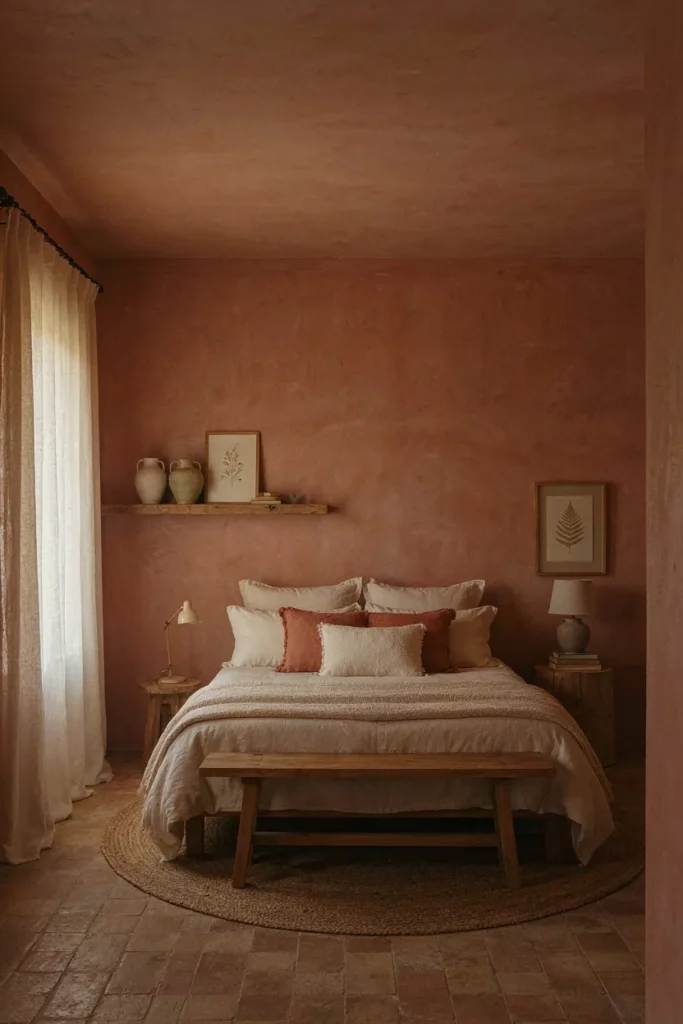
Terracotta walls bring an inviting, sunbaked warmth that makes a bedroom feel cozy without appearing dark or crowded. Choose a muted clay shade with soft brown undertones rather than bright orange. Pair it with an oak bed frame, ivory bedding, and a textured cream throw to create a balanced, earthy color palette.
For smaller bedrooms, paint the wall behind your bed and keep the remaining walls warm white. This creates a beautiful focal point without overwhelming the room. Test paint samples in morning and evening light before committing, since terracotta can appear noticeably different throughout the day.
For more inspiration, explore the beautiful paint color collections from Sherwin-Williams.
Sage Green Bedding
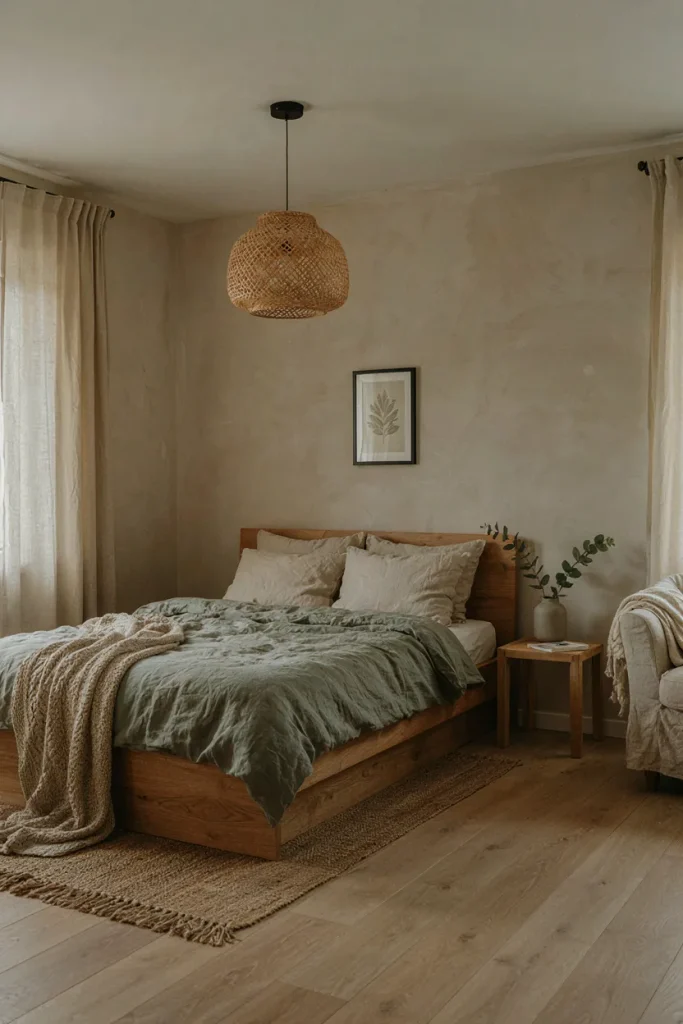
Sage green bedding brings a refreshing botanical touch to a neutral bedroom without requiring new furniture or wall paint. Build a coordinated look with these simple styling choices:
- Choose a muted sage green duvet cover in breathable cotton or washed linen for a relaxed, comfortable finish.
- Layer cream pillowcases with two sage green accent cushions to create subtle contrast.
- Add an oatmeal or warm beige throw across the foot of the bed for extra texture.
- Pair the bedding with light oak furniture and woven baskets to maintain a natural color palette.
- Keep decorative accessories minimal, allowing the soft green bedding to become the main visual feature.
Sage green bedding is a simple way to create a calming earth tone bedroom without changing your existing furniture.
An earth tone bedroom feels especially peaceful when colors are repeated in small, thoughtful details. Match your bedding with a sage ceramic vase or botanical artwork rather than introducing several different greens. This approach creates visual harmony while keeping the room fresh, uncluttered, and easy to update between seasons.
Also View:15 Whimsical Bedroom Ideas You’ll Absolutely Adore
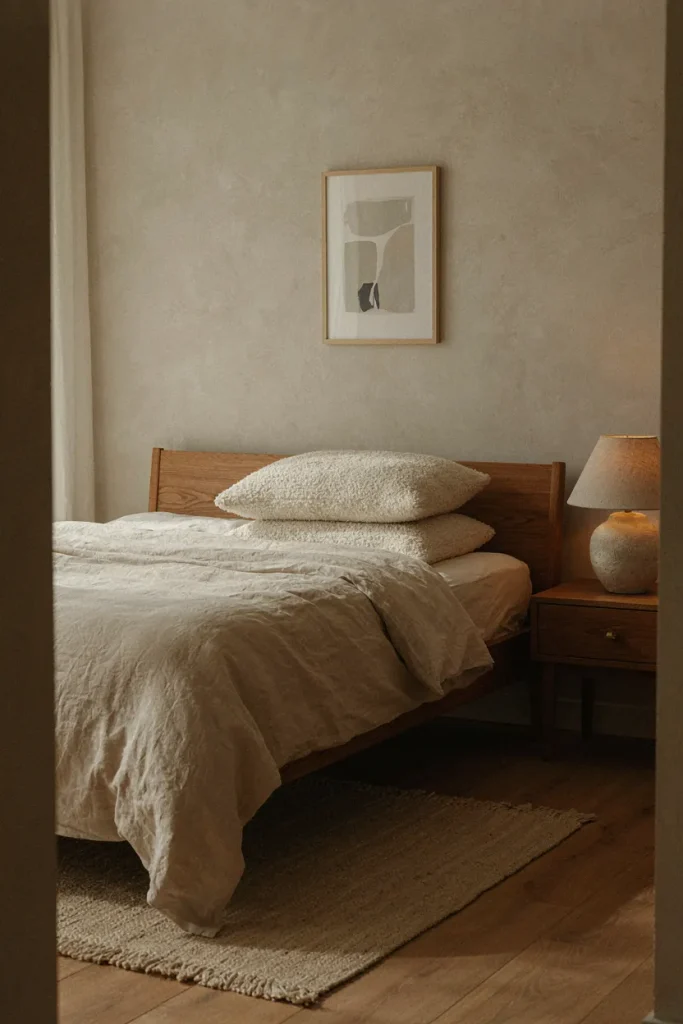
Cream and Walnut Layers
Quick Tip:
Choose cream fabrics with warm undertones to complement walnut furniture. Avoid mixing bright white bedding with yellow toned cream accessories, as the contrast can make the overall color palette feel disconnected. Repeat the walnut finish in at least two furniture pieces for balance.
Cream and walnut create a timeless combination that feels sophisticated without sacrificing comfort. Start with a walnut bed frame and layer cream sheets, a textured duvet, and oatmeal pillows. Introduce a soft woven rug to lighten the darker furniture. Warm lighting enhances the wood grain and makes the bedroom feel welcoming after sunset.
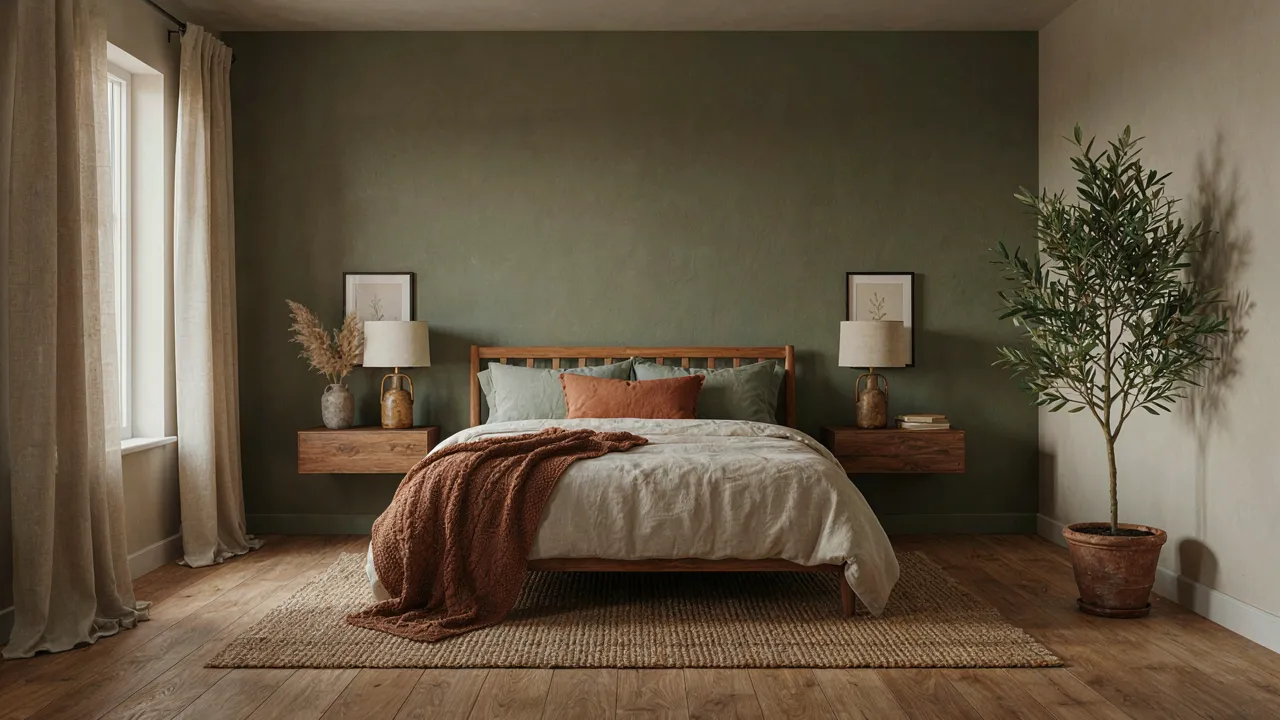
Olive Green Accent Wall

BEFORE: A bedroom with plain white walls and neutral furniture can feel flat, especially when the bed lacks a defined backdrop. Without contrast, even attractive decorative pieces may blend into the surroundings.
AFTER: A rich olive green accent wall creates depth and makes the bed stand out beautifully. Warm wood furniture and cream textiles soften the darker color, giving the room a grounded, welcoming appearance.
Choose an olive shade with muted brown undertones for a natural finish. Paint only the wall behind your headboard, then repeat the green through one cushion or ceramic accessory. Keep the ceiling and remaining walls warm white. This combination works particularly well in bedrooms with plenty of natural daylight.
Layered Natural Textures
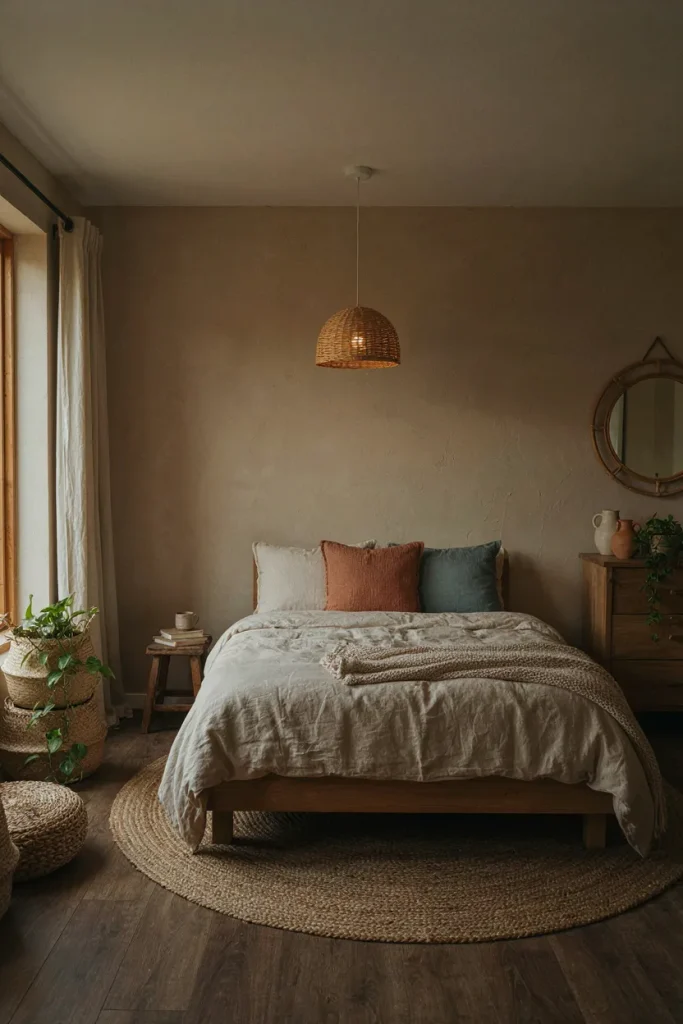
A bedroom filled with similar beige shades can feel surprisingly flat unless different textures create visual interest. Layering natural materials introduces warmth and depth without adding unnecessary colors.
1. Start with linen bedding: Choose an ivory or oatmeal duvet cover with a relaxed, slightly wrinkled texture.
2. Introduce a knitted throw: Fold a chunky cotton blanket across the lower third of your bed for noticeable softness.
3. Add a woven rug: Place a natural jute or wool blend rug beneath the bed, extending beyond both sides.
4. Mix decorative materials: Combine a rattan lampshade, smooth ceramic vase, and wooden bedside table for balanced contrast.
5. Finish with soft cushions: Layer two textured cotton pillows in different neutral shades without overcrowding the headboard.
Natural textures make a neutral bedroom feel thoughtfully decorated rather than unfinished. Mix rough and smooth surfaces, such as woven baskets beside polished wooden furniture. For daily comfort, choose a soft rug where your feet land each morning, since natural jute can feel coarse against bare skin.
Desert Sand Neutrals
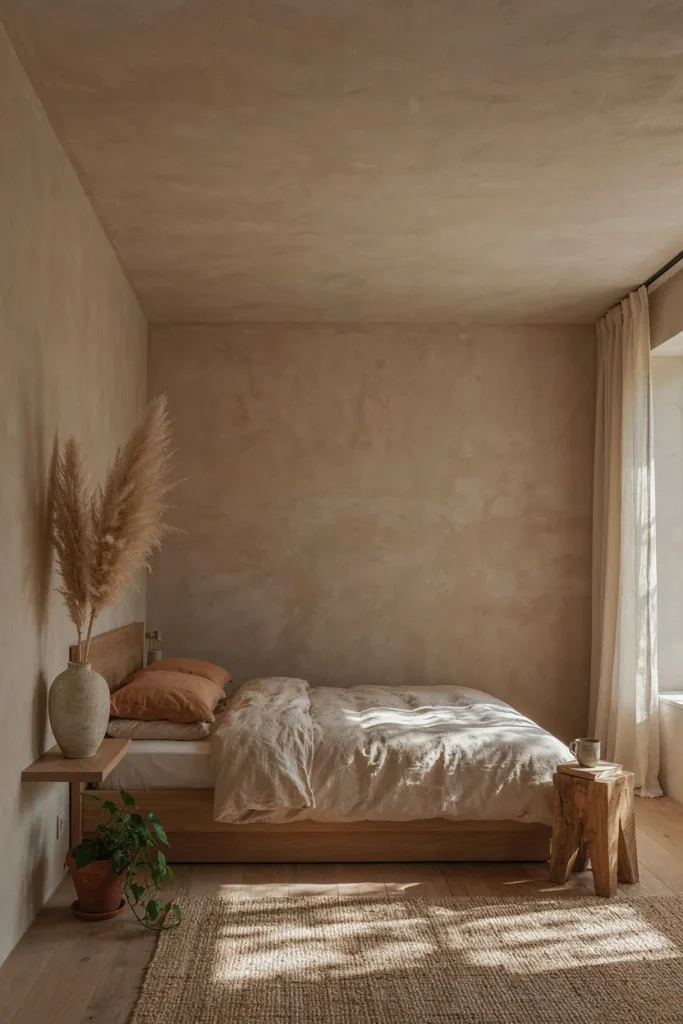
A desert inspired color palette brings a gentle, sunlit character to the bedroom through sandy beige, warm taupe, soft camel, and creamy ivory. The key is choosing coordinated shades with enough contrast to keep the space visually interesting.
| Design Element | Option A: Light Sand | Option B: Warm Desert |
| Wall color | Soft sandy beige | Warm clay beige |
| Bedding | Ivory cotton | Oatmeal linen |
| Furniture | Light natural oak | Medium walnut |
| Accent colors | Cream and pale taupe | Camel and muted rust |
| Overall appearance | Airy and understated | Warm and grounded |
For smaller rooms, lighter sand tones help maintain an open, spacious appearance, especially with good natural light. Larger bedrooms can accommodate deeper camel accents and darker wood finishes. Keep the main surfaces neutral, then introduce subtle contrast through cushions, artwork, and pottery. Avoid overly yellow beige shades that can appear dated.
Rustic Wooden Headboard
DO:
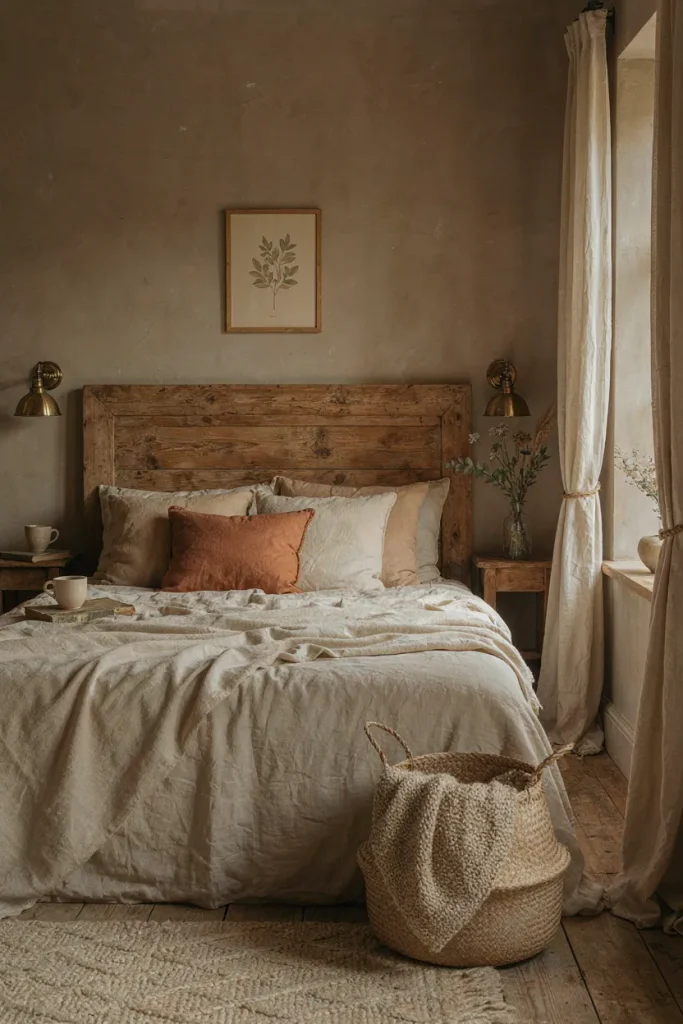
- Choose a solid oak or reclaimed wood headboard with visible natural grain.
- Pair rustic wood with soft ivory bedding for balanced contrast.
- Repeat warm wood tones through bedside tables or picture frames.
- Add subtle brass lighting for a cozy evening glow.
DON’T:
- Mix too many unrelated wood finishes in one small bedroom.
- Choose heavily distressed furniture that overwhelms the space.
- Cover the headboard with oversized decorative pillows.
- Use cool gray walls that clash with warm wooden surfaces.
A rustic headboard gives your bedroom a strong focal point while introducing natural character. I’ve noticed that simple wooden furniture often works best when paired with softer, lighter fabrics. Keep surrounding decor understated and let the wood grain provide interest. Sand rough reclaimed surfaces to prevent snagging delicate pillowcases.
Mocha Brown Bedding
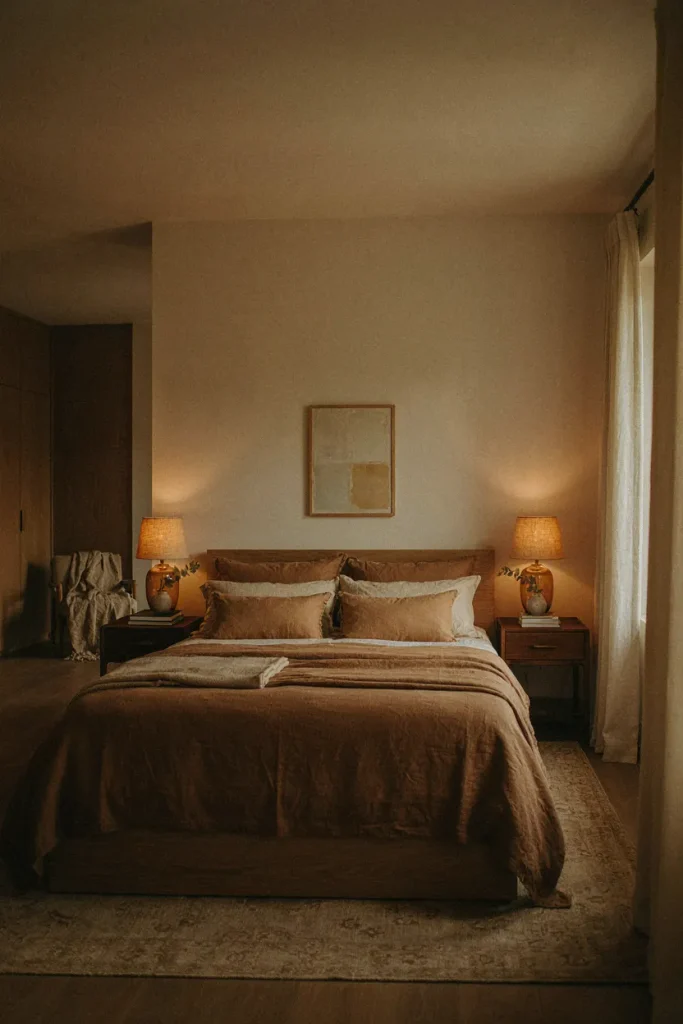
Mocha brown bedding creates a rich, comforting foundation that feels especially inviting during colder months. Unlike black or charcoal, this warm shade adds depth while maintaining the softness of a nature inspired bedroom.
Cost: Moderate, depending on fabric quality and bedding size.
Time: Around 20 to 30 minutes to restyle an existing bed.
Skill Level: Beginner friendly.
Best For: Neutral bedrooms needing richer color without repainting.
Balance deep mocha bedding with cream pillowcases and a lighter throw to prevent the bed from appearing too heavy. Choose washed cotton or linen for a relaxed finish. If your bedroom receives limited daylight, keep surrounding walls light and introduce warm bedside lighting to maintain an inviting atmosphere.
Dusty Rose Accents
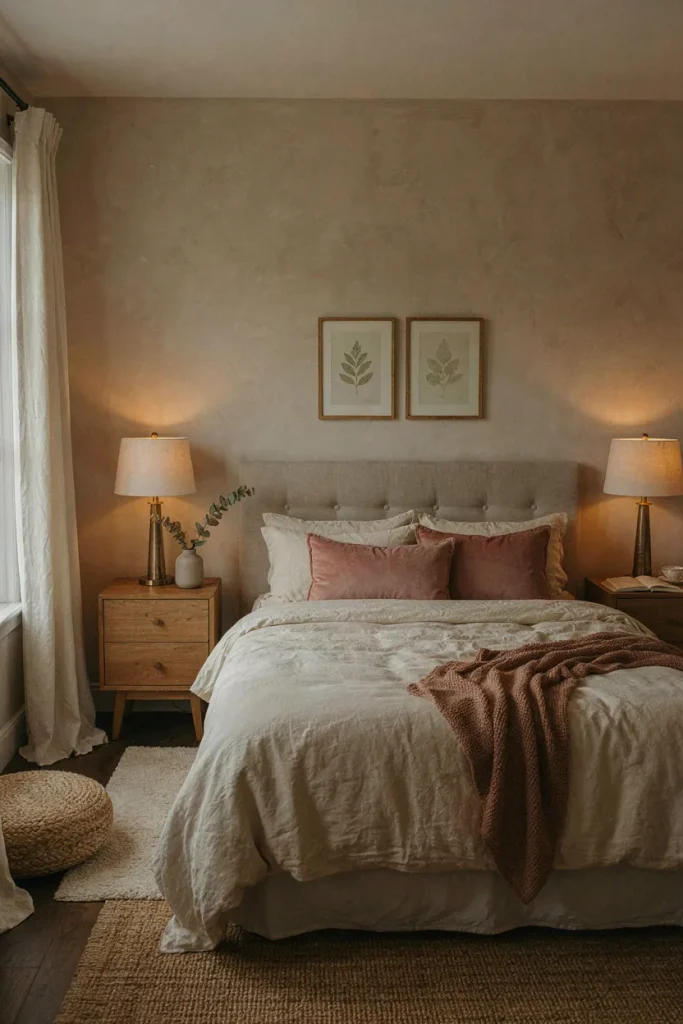
Dusty rose brings a gentle hint of color to earthy bedroom decor without making the space feel overly feminine or bright. Choose a muted pink with brown undertones rather than a sugary pastel. Introduce the shade through two velvet cushions, a lightweight throw, or framed botanical artwork against warm beige walls.
To keep the palette sophisticated, combine dusty rose with terracotta, walnut, and creamy neutrals. Limit pink accents to a few carefully chosen pieces so the room remains balanced. This approach works beautifully for renters who want a softer bedroom aesthetic without painting walls or replacing expensive furniture.
Burnt Orange Accents

- Choose burnt orange cushions with muted reddish brown undertones to complement warm neutral bedding.
- Layer a rust colored cotton throw across the foot of the bed for a cozy, inviting finish.
- Introduce terracotta pottery or abstract artwork to repeat the accent color naturally.
- Keep larger furniture pieces in oak, walnut, or warm beige to avoid overwhelming the room.
- Balance orange accents with cream textiles and soft lighting for a relaxed appearance.
Burnt orange adds personality to an earth tone bedroom without requiring dramatic changes. Start with two cushions and a throw before investing in larger decorative pieces. This rich color works especially well with wooden furniture and woven textures, creating a warm, inviting bedroom that feels comfortable throughout the year.
Soft Taupe Walls
Quick Tip:
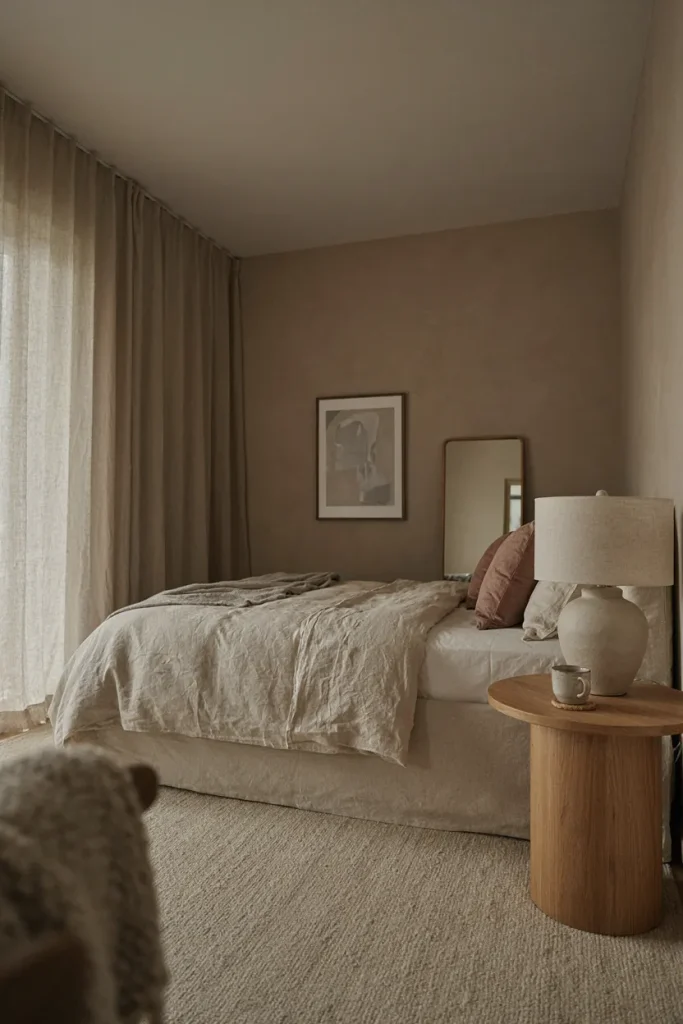
Test taupe paint samples beside your bedding and furniture before painting the entire room. Some taupe shades have purple or gray undertones that become more noticeable under artificial lighting. Choose a warmer, brown based taupe for a softer earthy appearance.
Soft taupe walls provide more depth than plain white while keeping the bedroom light and welcoming. Pair them with ivory bedding, mushroom colored pillows, and natural oak furniture. For a cohesive finish, choose curtains close to the wall color. This creates a gentle backdrop that allows textured fabrics to stand out.
Earthy Gallery Wall
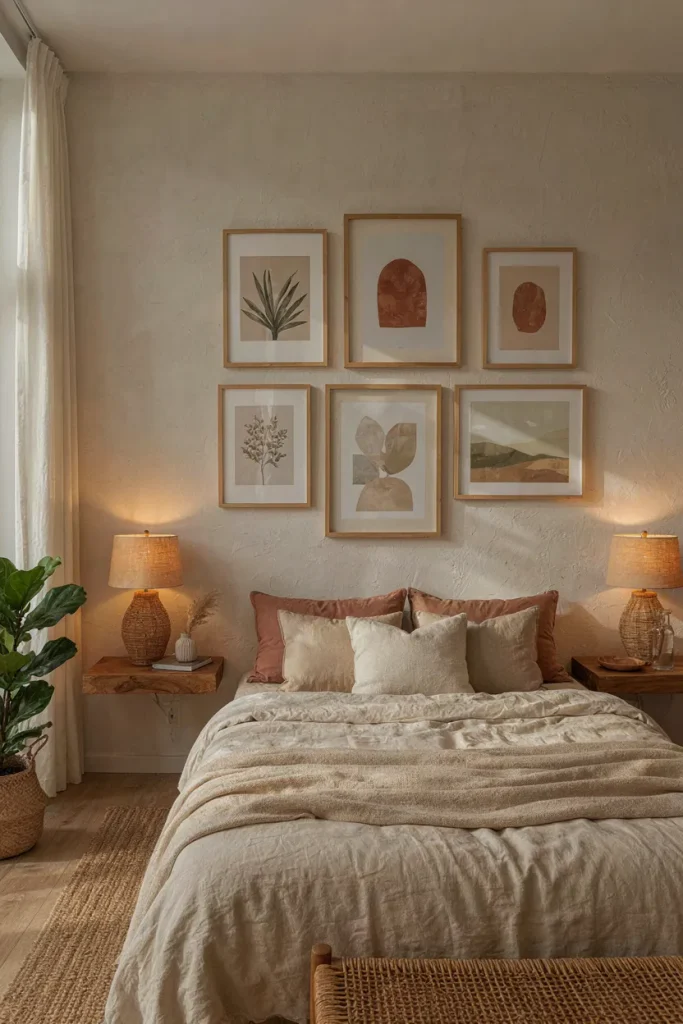
BEFORE: A large blank wall above the bed can make an otherwise furnished bedroom feel unfinished. Random artwork in mismatched colors may also create visual clutter and distract from the calming atmosphere.
AFTER: A coordinated gallery wall introduces personality, gentle color, and a beautiful focal point. Botanical illustrations and abstract earthy prints connect naturally with wooden furniture and neutral bedding.
Choose three to six prints featuring olive green, terracotta, sand, or warm brown. Arrange the frames on the floor before hanging them, keeping approximately two to three inches between each piece. Use matching wood finishes for a cohesive appearance and position the entire arrangement comfortably above your headboard.
Woven Rattan Furniture
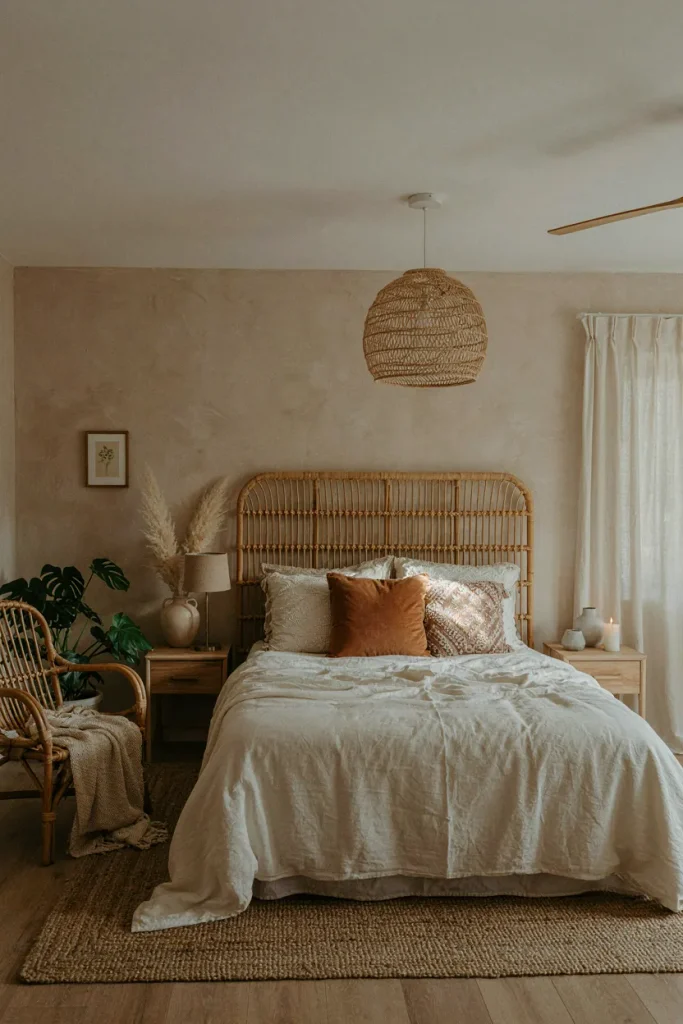
Rattan furniture introduces beautiful woven details that make an earthy bedroom feel relaxed and naturally inviting. Its honey colored texture pairs especially well with cream bedding, olive green accents, and warm wooden furniture.
1. Choose a rattan headboard: Select a gently curved or rectangular woven design to create a natural focal point behind your bed.
2. Coordinate wooden furniture: Pair the headboard with light oak bedside tables to maintain a consistent warm color palette.
3. Layer soft bedding: Choose ivory cotton sheets, oatmeal cushions, and a caramel throw to balance the structured woven texture.
4. Introduce matching accessories: Add a woven pendant light or storage basket without filling every corner with rattan.
5. Finish with greenery: Place a leafy indoor plant near a window to introduce a fresh botanical element.
Rattan works beautifully in bedrooms that need more texture without additional bold colors. Keep larger surfaces simple and allow the woven furniture to stand out. For a more polished appearance, combine rattan with smooth ceramics and soft fabrics. Avoid placing delicate woven furniture near excessive moisture or direct heat.
Warm Clay Bedding
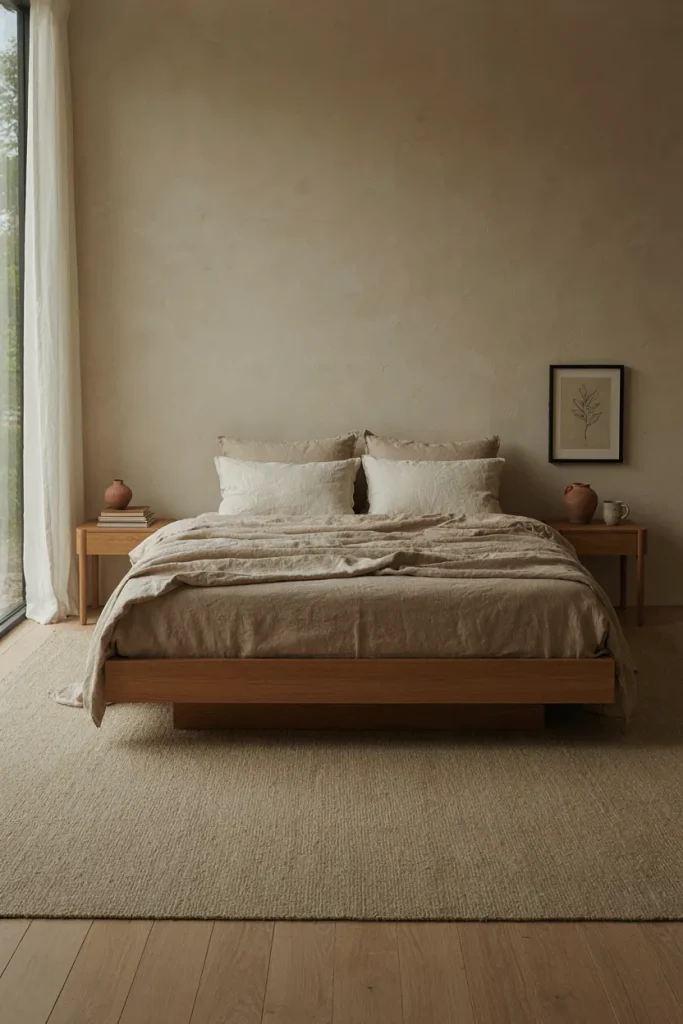
Clay colored bedding offers a softer alternative to vibrant terracotta while introducing a subtle reddish brown warmth. Its understated appearance works beautifully with natural wood, creamy textiles, and organic decorative details.
| Design Element | Option A: Soft Clay | Option B: Deep Clay |
| Bedding color | Muted pinkish clay | Rich reddish brown clay |
| Pillow combination | Ivory and oatmeal | Cream and caramel |
| Bed frame | Light natural oak | Medium walnut |
| Wall color | Warm white | Sandy beige |
| Overall style | Soft and airy | Cozy and grounded |
For a balanced bedroom, repeat your chosen clay shade through one small decorative accessory, such as a ceramic vase or framed print. Keep the remaining textiles neutral so the bedding remains the focal point. Washed linen adds relaxed texture, while cotton provides a smoother finish for everyday comfort.
Cozy Neutral Reading Nook
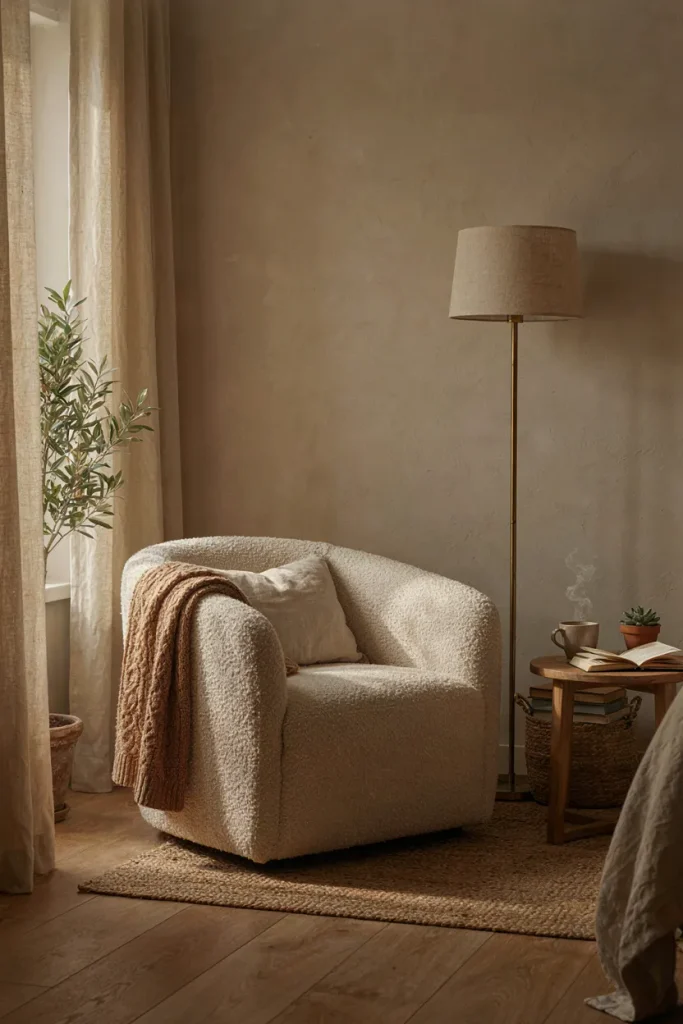
DO:
- Place a compact armchair near a window for comfortable daytime reading.
- Choose cream, camel, or oatmeal upholstery to complement the earthy palette.
- Add a warm reading lamp with an adjustable shade for evening use.
- Keep a small wooden side table nearby for books and drinks.
DON’T:
- Block bedroom walkways with oversized furniture.
- Choose a chair that lacks proper back support.
- Depend entirely on dim decorative lighting for reading.
- Overcrowd the corner with unnecessary accessories.
A reading nook adds a practical retreat within your bedroom while introducing another layer of comfort. Choose a chair with enough depth to sit comfortably and use a washable throw for easy maintenance. Even a small unused corner can become functional with thoughtful furniture placement and focused lighting.
Muted Mustard Accents

Muted mustard introduces gentle golden warmth without the brightness of traditional yellow. Its slightly brown undertones coordinate naturally with walnut furniture, cream bedding, and earthy green accessories, making it a versatile accent for cozy bedrooms.
Cost: Low to moderate, depending on textiles and accessories.
Time: Approximately one hour for a simple bedroom refresh.
Skill Level: Beginner.
Best For: Neutral bedrooms that need a warmer, more colorful appearance.
Begin with two mustard cushions and a small patterned throw rather than introducing the color across every surface. Pair these accents with oatmeal bedding and natural wooden furniture. In bedrooms with limited daylight, choose a lighter mustard shade to maintain warmth without making the room feel visually heavy.
Warm Beige Canopy Bed
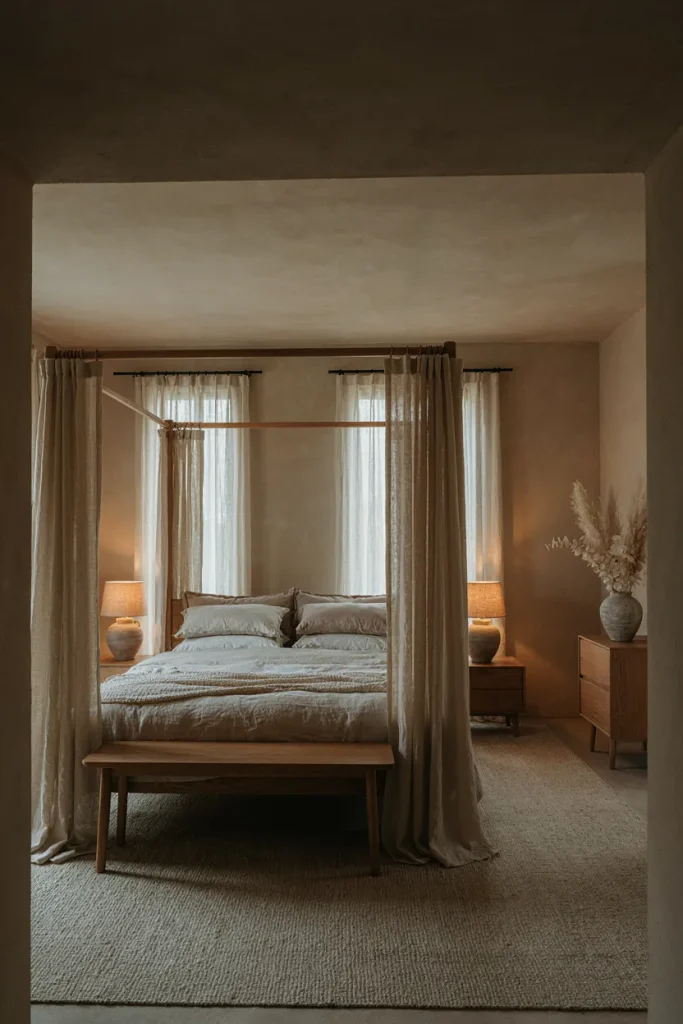
A wooden canopy bed adds architectural interest while keeping the bedroom feeling soft and peaceful. Choose a simple oak frame with slim posts rather than heavy carved details. Hang lightweight beige linen panels from the upper rails, allowing the fabric to fall naturally without covering the entire bed or blocking daylight.
Keep the surrounding furniture low and understated so the canopy remains the main feature. Cream bedding, taupe cushions, and a plush oatmeal rug reinforce the calming palette. Before purchasing, measure your ceiling height carefully and allow enough clearance above the frame to prevent a cramped appearance.
Forest Green Velvet Headboard

A forest green velvet headboard creates striking contrast against warm neutrals while introducing a luxurious, tactile finish. The deep botanical color grounds the sleeping area without requiring dark walls or extensive decorating changes.
- Choose a forest green headboard with a simple rectangular or gently curved shape for a timeless appearance.
- Pair it with ivory bedding to prevent the rich green upholstery from dominating the room.
- Introduce caramel or warm tan cushions to create a pleasing contrast between earthy shades.
- Select walnut bedside tables and antique brass lamps to complement the darker green.
- Keep wall colors light, preferably mushroom beige or warm cream, for a balanced finish.
Velvet catches light differently throughout the day, giving deep green upholstery a subtle richness. For smaller bedrooms, choose a lower headboard to maintain open wall space. Repeat the green through one botanical print or ceramic accessory, allowing the upholstered bed to remain the strongest decorative feature.
Natural Stone Decor
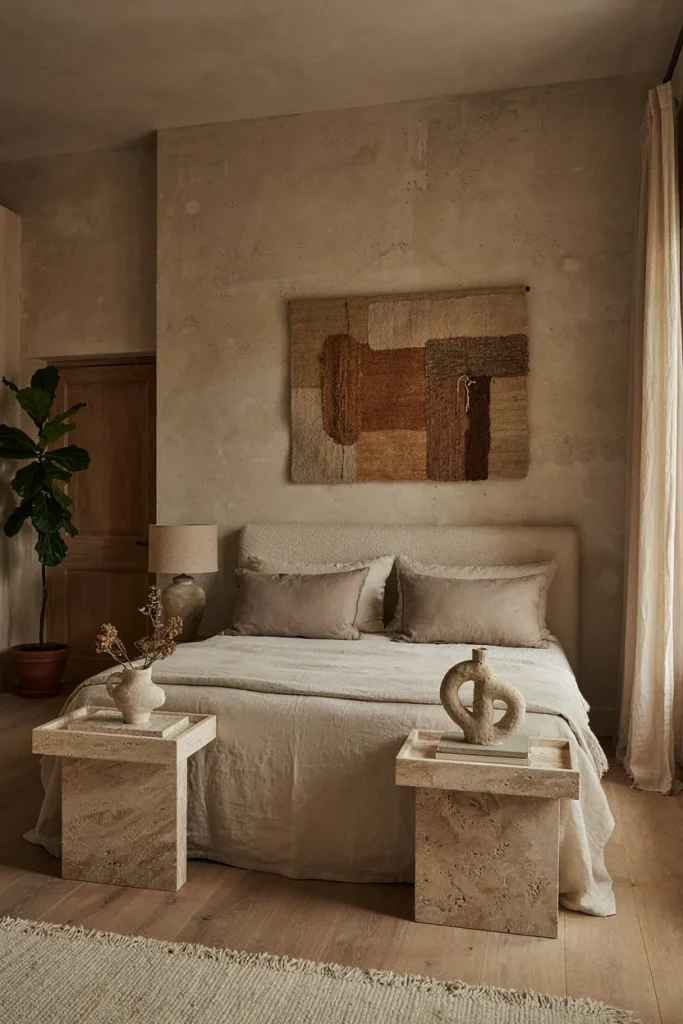
Quick Tip:
Introduce natural stone through smaller accessories before investing in heavy furniture. A travertine tray, marble lamp base, or limestone inspired vase adds texture without overwhelming the room. Choose matte finishes and warm beige undertones to maintain a soft, organic appearance.
Natural stone brings subtle texture and visual interest to a neutral bedroom. Place a travertine tray on your wooden nightstand and pair it with a simple ceramic lamp. Balance these harder surfaces with linen bedding and plush cushions. This contrast keeps the room comfortable while introducing sophisticated, nature inspired details.
Chocolate Brown Accent Wall

BEFORE: A bedroom decorated entirely in pale neutrals may lack a clear focal point, especially when furniture and bedding share similar shades. The overall appearance can feel unfinished despite having attractive accessories.
AFTER: A chocolate brown accent wall creates striking depth behind the bed while making cream bedding stand out. Warm lighting and natural wood furniture soften the contrast, producing a grounded, comfortable atmosphere.
Choose a chocolate brown paint with warm undertones rather than a nearly black shade. Apply it behind the headboard and keep the remaining walls creamy white or light taupe. Add brass sconces for gentle illumination. This design works particularly well in bedrooms with generous daylight and simple furniture.
Organic Linen Curtains

Soft linen curtains bring natural texture to bedroom windows while gently filtering daylight. Their relaxed fabric creates beautiful folds that complement wooden furniture, woven accessories, and warm neutral bedding.
1. Choose a natural color: Select flax, oatmeal, or warm ivory linen to complement the existing earthy palette.
2. Measure the windows: Install curtain rods approximately four to six inches above the frame, where ceiling height allows.
3. Choose the right length: Allow the curtain panels to lightly touch the floor for a clean, relaxed finish.
4. Consider privacy needs: Layer sheer linen with blackout curtains if your bedroom receives strong morning sunlight.
5. Keep hardware simple: Use wooden, matte black, or antique brass rods that coordinate with nearby furniture.
Linen curtains soften the appearance of bedroom windows and create a gentle transition between indoor and outdoor light. For a cohesive finish, coordinate their undertones with your bedding rather than matching colors exactly. Choose wider panels for fuller folds, and remember that unlined linen offers limited nighttime privacy.
Earthy Botanical Corner
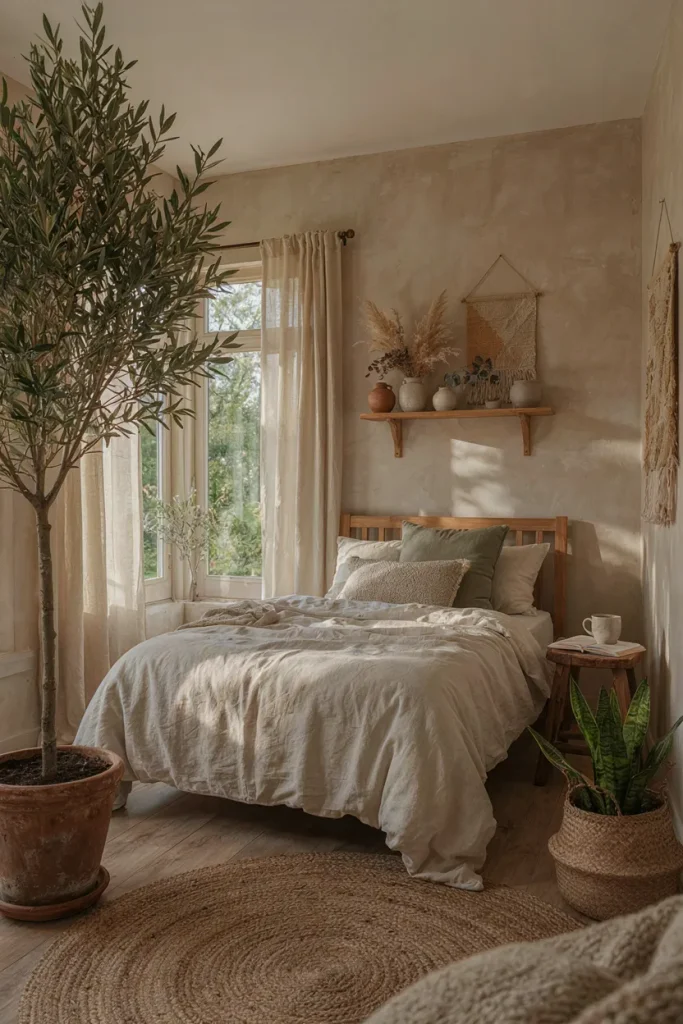
DO:
- Choose an olive tree or snake plant that suits your bedroom’s natural light.
- Use terracotta pots or woven planters to complement the earthy palette.
- Place taller plants near windows without blocking walkways.
- Combine different leaf shapes for subtle visual interest.
DON’T:
- Crowd every corner with oversized plants.
- Choose plants without checking their lighting requirements.
- Allow excess watering to damage wooden floors.
- Place moisture sensitive plants near heating vents.
Indoor greenery adds a refreshing natural element to warm neutral bedrooms. A single tall plant can soften an empty corner, while smaller greenery creates balance on a nearby dresser. Use protective saucers beneath planters and choose low maintenance varieties suited to your light conditions for lasting results.
Conclusion
Creating a beautiful earth tone bedroom doesn’t require expensive furniture or a complete renovation. Sometimes, the smallest changes, like adding sage green pillows, warm wooden accents, or textured linen bedding, bring the most noticeable results.
The secret is choosing natural colors, layering comfortable materials, and creating a space that reflects your personal style.
Start with one idea that inspires you, then gradually introduce more details as your bedroom comes together.
Save these 22 cozy bedroom ideas on Pinterest for future inspiration, and share this article with anyone dreaming of a warmer, more peaceful home. Your cozy retreat starts with one simple change!