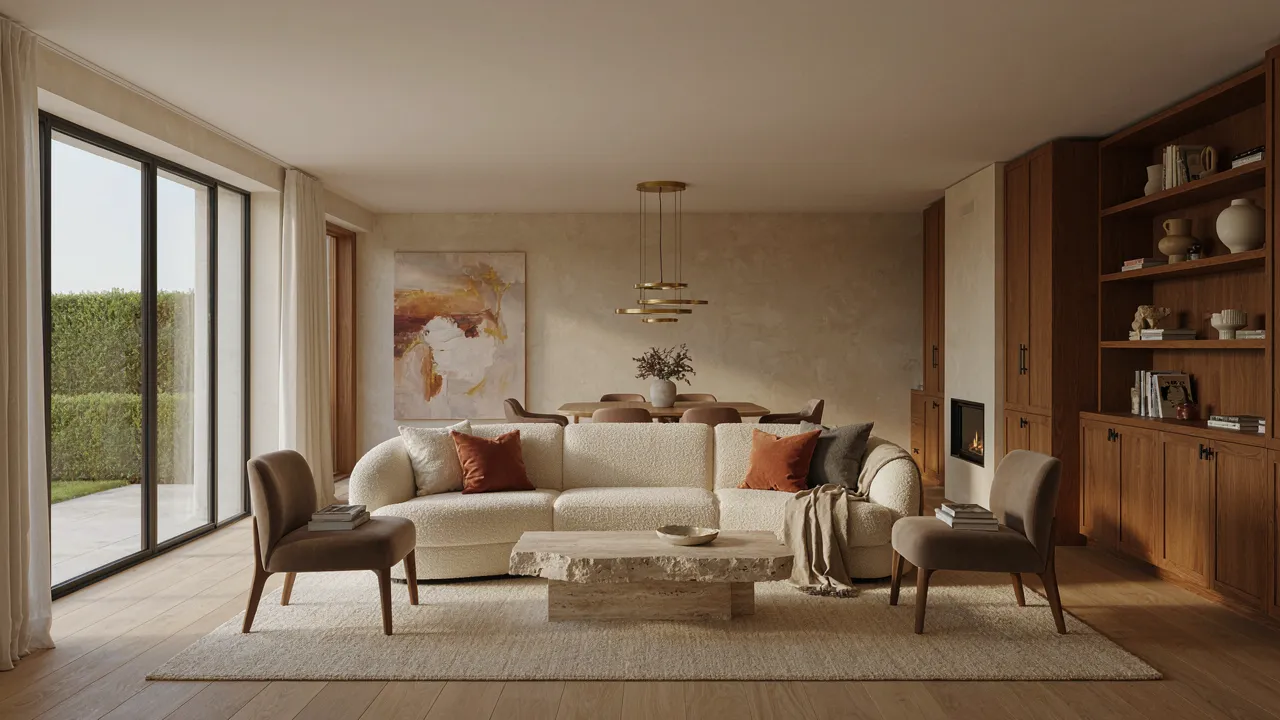
21 Stunning Contemporary Living Room Ideas for a Luxe Look
A beautiful contemporary living room doesn’t need a huge budget or a complete makeover. Sometimes, the right furniture, softer lighting, and a few thoughtful details are enough to make your space feel stylish, luxurious, and welcoming.
Whether you’re decorating a new home or refreshing a living room that feels outdated, finding the right balance between comfort and elegance can be challenging. You want a space that looks sophisticated but still feels comfortable enough for everyday life.
From curved sofas and oversized artwork to warm neutral colors, textured walls, and statement lighting, these 21 ideas offer inspiration for different room sizes and budgets.
You’ll also discover practical ways to arrange furniture, mix materials, and create a polished look without overcrowding your space. Even small changes can bring more warmth, depth, and personality to your home.
Warm Neutral Layers
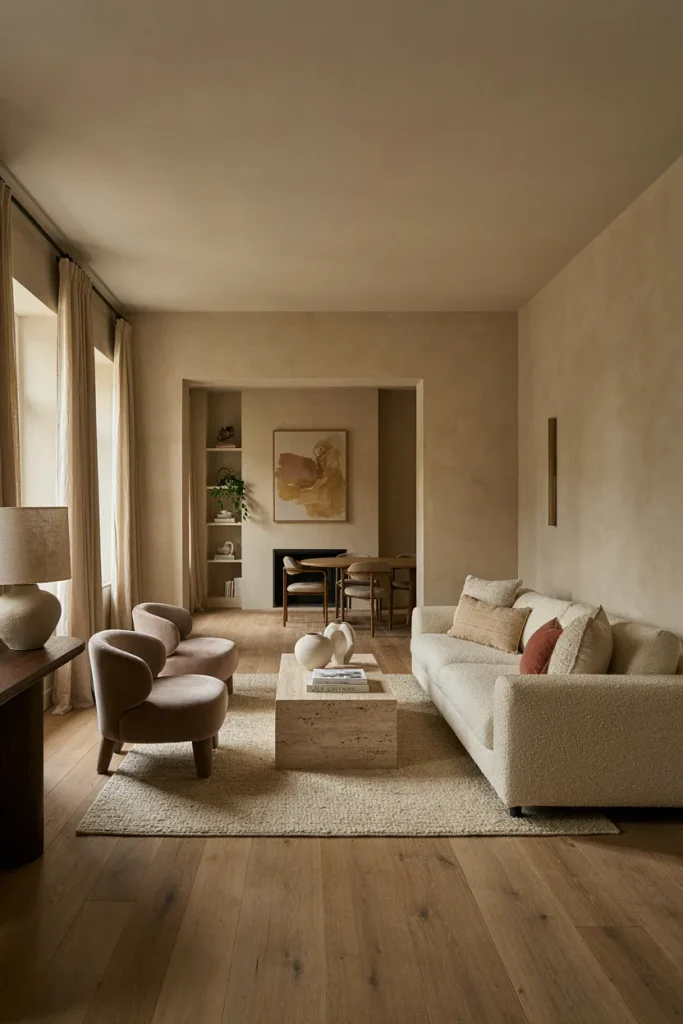
Warm neutrals instantly make a living room feel polished without becoming cold or empty. Start with a creamy off white sofa, then introduce deeper shades through beige cushions, a taupe armchair, and a textured wool rug. These subtle color differences create depth while maintaining a calm, coordinated appearance throughout the seating area.
The secret is mixing textures rather than filling the room with decorative objects. Pair smooth stone surfaces with soft boucle, natural wood, and woven fabrics. For a contemporary living room that feels expensive yet comfortable, keep larger furniture pieces neutral and introduce contrast through small details like dark bronze lamps or walnut accessories.
Sculptural Statement Furniture
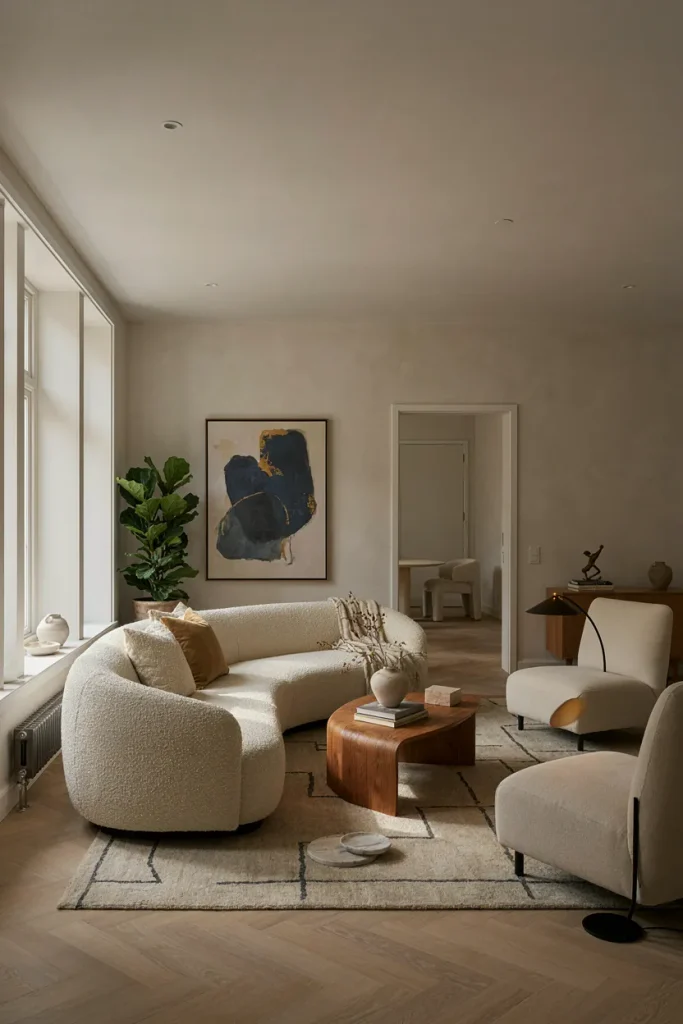
Furniture with interesting shapes can give even a simple room a designer-inspired appearance.
- Choose a curved sofa: A gently rounded cream or beige sofa softens straight architectural lines and creates an inviting seating arrangement.
- Introduce an organic coffee table: Select a walnut, travertine, or marble table with an irregular silhouette to create visual interest.
- Balance furniture proportions: Pair one substantial statement piece with slimmer chairs to avoid overcrowding.
- Keep accessories minimal: Display a sculptural vase, one large book, or a ceramic bowl rather than several small decorations.
- Allow breathing room: Leave approximately 18 inches between the sofa and coffee table for comfortable movement.
Sculptural furniture works especially well in open concept interiors where individual pieces are visible from multiple angles. Choose one main focal point and let surrounding furniture support its shape. This approach creates a distinctive, high end atmosphere without relying on expensive decorative collections or overly complicated styling.
Also View:24 Living Room With Fireplace Ideas You’ll Adore
Floor to Ceiling Curtains
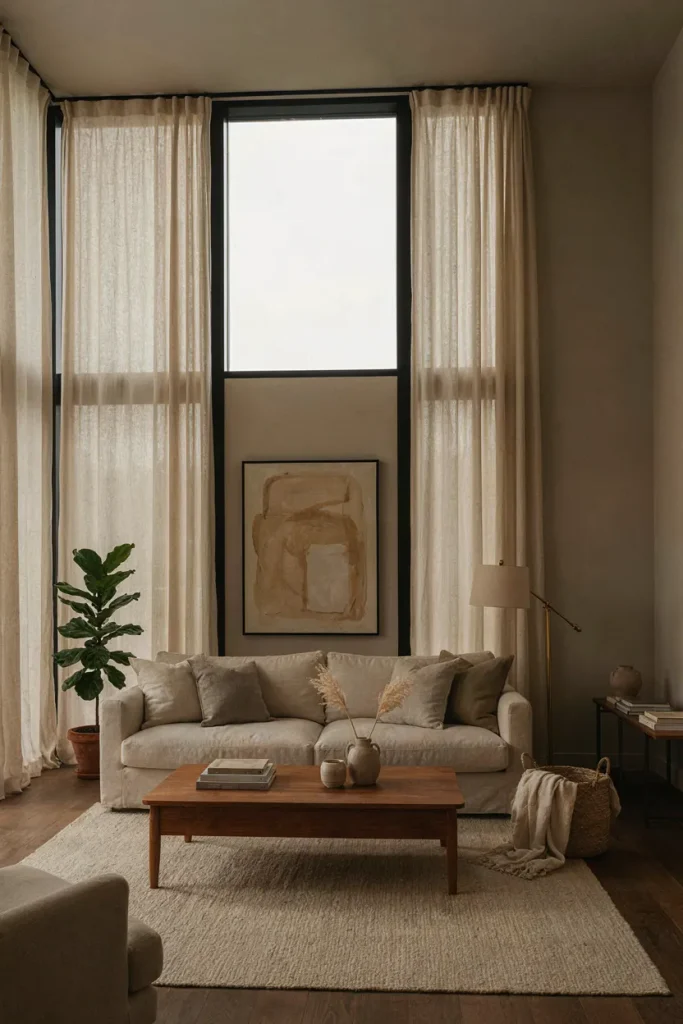
Quick Tip:
Mount curtain rods close to the ceiling rather than directly above the window frame. Choose panels that nearly touch the floor, and extend the rod beyond the window edges to make the windows appear wider while allowing more daylight inside.
Full length curtains introduce softness to rooms filled with straight lines, glass surfaces, and modern furniture. Lightweight linen blends create a relaxed look, while heavier textured fabrics provide a more tailored finish. For an especially polished result, choose curtain colors close to the walls and use consistent hardware throughout the room.
Oversized Abstract Artwork
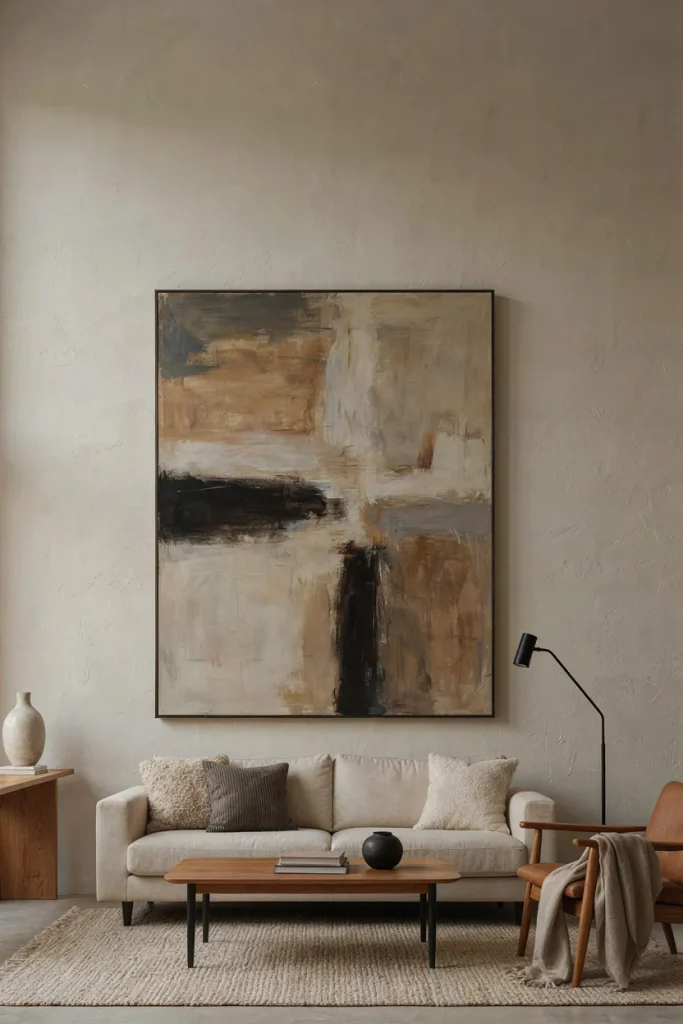
BEFORE:
A large empty wall makes the seating area feel unfinished, even with expensive furniture. Several small pictures scattered across the wall create visual clutter and weaken the room’s overall design.
AFTER:
One oversized abstract painting gives the space a clear focal point and creates a more intentional appearance. Its colors connect the sofa, rug, and decorative accessories, making the entire arrangement feel coordinated.
For balanced proportions, choose artwork approximately two thirds to three quarters the width of your sofa. Hang its bottom edge around six to eight inches above the sofa back. Abstract pieces with subtle texture work particularly well because they introduce visual interest without competing with other furniture or architectural details.
Layered Ambient Lighting
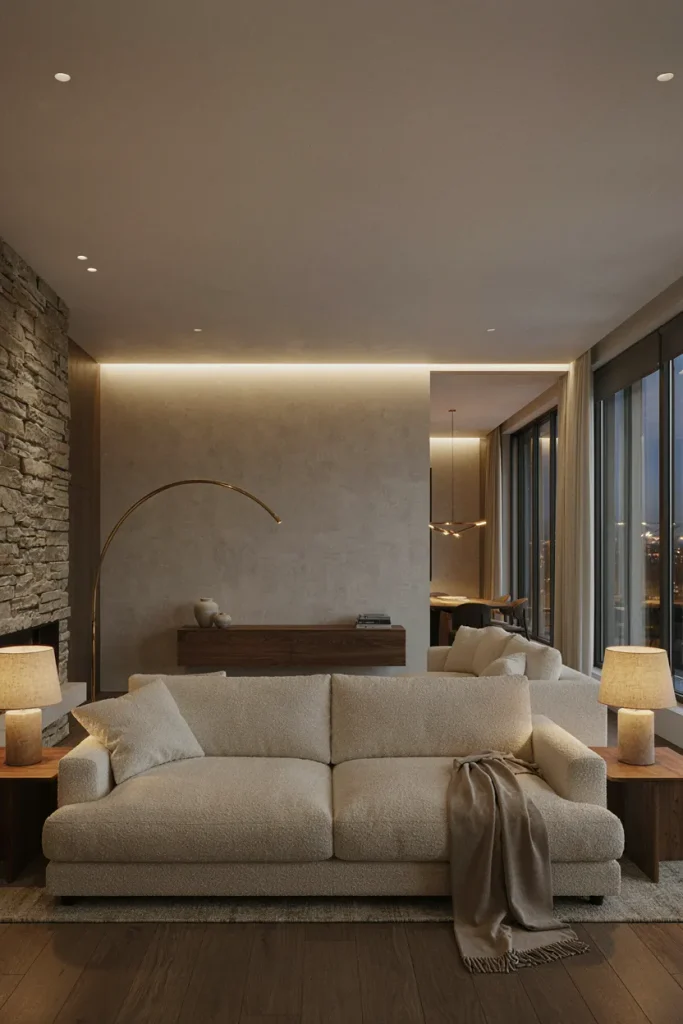
1. Begin with ceiling lighting: Choose dimmable recessed lights or a minimalist ceiling fixture to provide comfortable overall illumination.
2. Introduce a statement floor lamp: Position a sculptural lamp beside the sofa or reading chair to add height and focused lighting.
3. Add warm table lamps: Place matching or complementary lamps on side tables to create gentle pools of light.
4. Highlight architectural details: Install concealed LED strips behind a media console or beneath floating shelves for subtle accent lighting.
5. Coordinate bulb temperatures: Use warm white bulbs around 2700K to 3000K for a comfortable, consistent glow.
Lighting changes how furniture, wall colors, and textures appear throughout the day. Instead of relying on one bright ceiling fixture, combine several light sources at different heights. This creates depth, reduces harsh shadows, and makes the seating area more inviting during evening gatherings without sacrificing its clean, modern appearance.
For more information about energy-efficient lighting, explore the U.S. Department of Energy’s LED lighting guide to understand how LED technology can provide efficient, flexible lighting for your home.
Floating Media Console
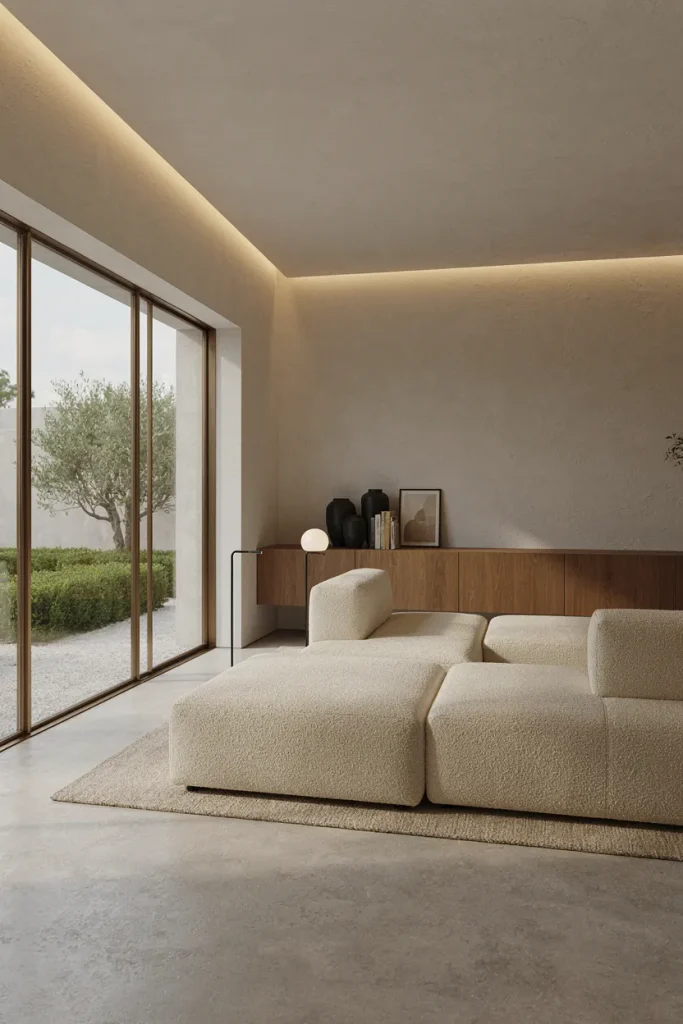
| Design Detail | Traditional TV Stand | Floating Media Console |
| Floor space | Occupies visible floor area | Leaves the floor beneath exposed |
| Visual appearance | Often looks heavier | Creates a lighter, streamlined profile |
| Cable organization | Wires may remain visible | Cables can be concealed with proper planning |
| Cleaning | Requires cleaning around legs | Provides easier access beneath the unit |
A floating media console helps a contemporary seating area feel spacious and organized, especially in smaller homes. Choose a handleless cabinet with closed storage for remotes, gaming accessories, and cables. Mount it securely to suitable wall supports, and keep the surrounding decor minimal for a sleek, balanced entertainment wall.
Textured Accent Wall
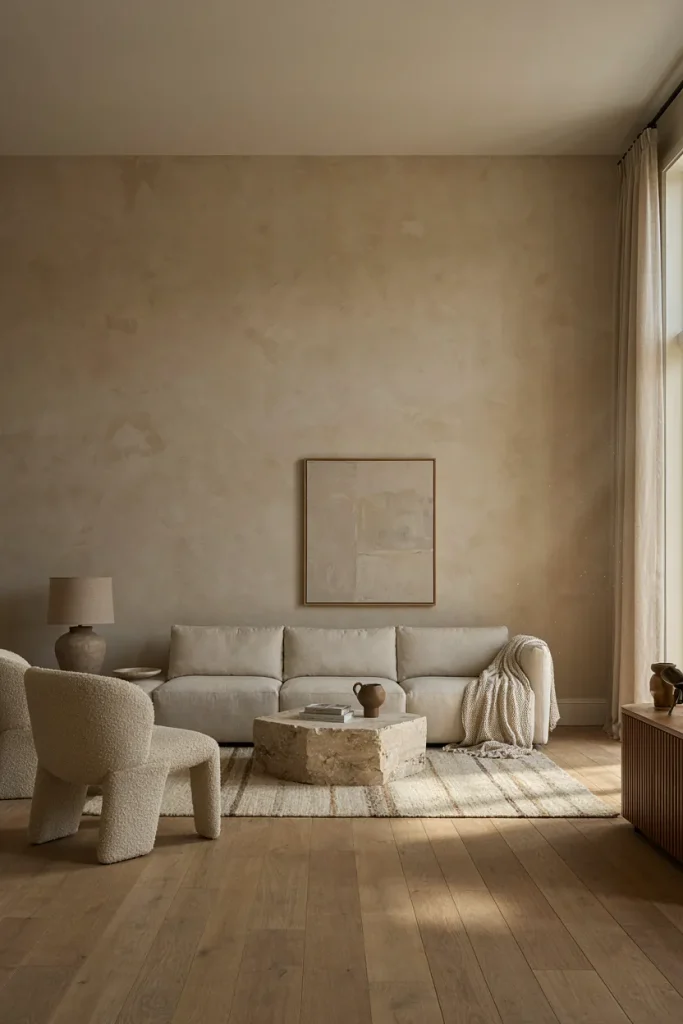
DO:
- Choose warm beige, greige, or soft taupe for a subtle textured finish.
- Apply limewash or decorative plaster to one main focal wall.
- Pair textured walls with smooth wood, glass, or stone furniture.
- Test finish samples under natural and artificial lighting.
DON’T:
- Cover every wall with heavy, competing textures.
- Choose overly dramatic patterns that distract from the furniture.
- Mix several bold wall finishes within one seating area.
- Skip surface preparation before applying specialty finishes.
A textured accent wall introduces depth without requiring colorful wallpaper or complicated decorations. Limewash creates gentle tonal variations, while fine plaster offers a more consistent surface. Choose the wall behind your sofa or television, and keep nearby accessories simple so the finish becomes a subtle architectural feature.
Black Accent Details
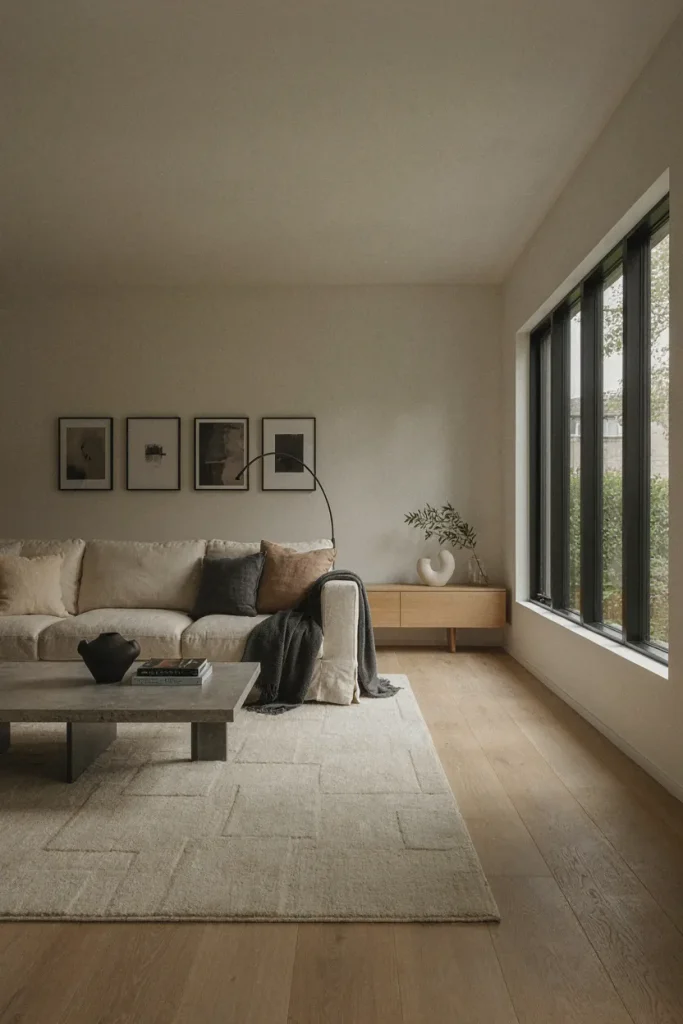
Best For: Neutral living rooms needing stronger contrast.
Cost: Low to moderate, depending on existing accessories.
Time: One afternoon for simple decorative updates.
Result: Sharper furniture outlines and a more defined color palette.
Small black accents can make an otherwise pale living room feel more structured and intentional. Repeat the finish through three or four details, such as lighting, picture frames, table legs, and cabinet hardware. Keep the larger furniture pieces light so the darker elements provide contrast without making the room feel heavy.
Oversized Neutral Area Rug
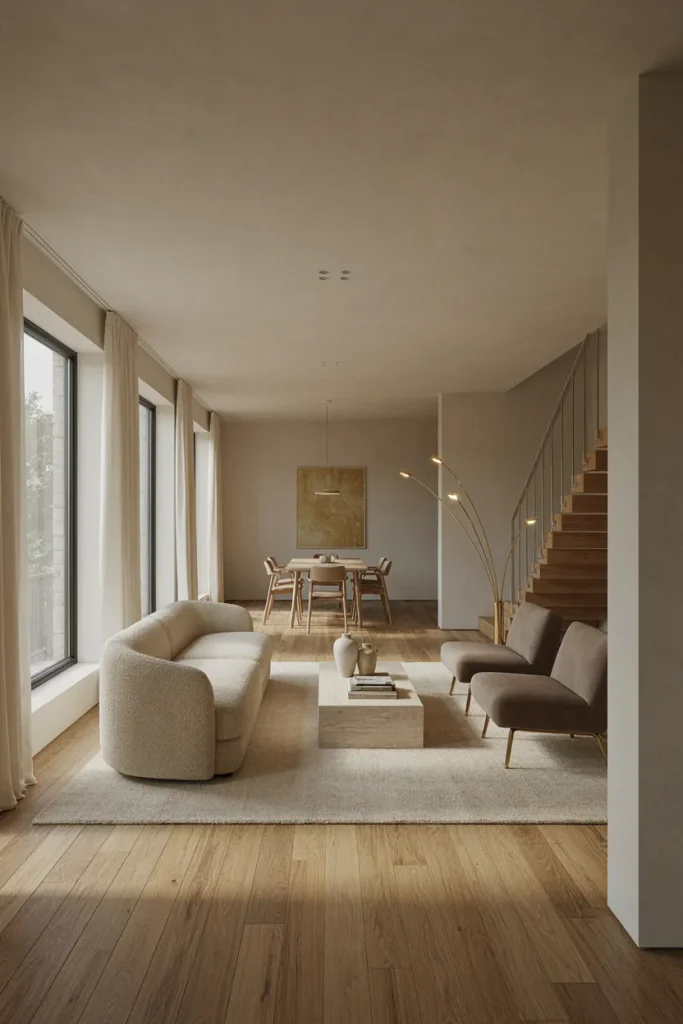
An undersized rug can make even expensive furniture look disconnected. A larger neutral rug creates a unified seating area by visually connecting the sofa, chairs, and coffee table. Choose an ivory, oatmeal, or warm greige design with subtle texture rather than a busy pattern. The result feels calm, spacious, and thoughtfully arranged.
For proper placement, make sure at least the front legs of your sofa and accent chairs rest on the rug. In a spacious living room, placing all furniture legs on it creates an even more cohesive arrangement. Leave some flooring visible around the edges and choose durable, low pile materials for easier maintenance.
Curved Boucle Seating
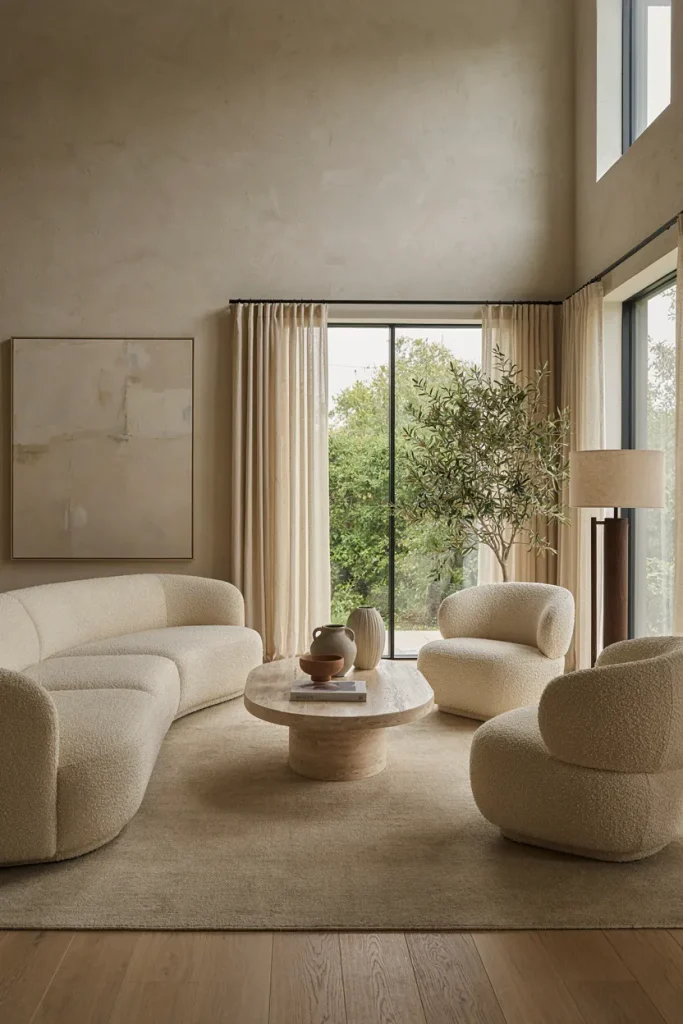
- Choose a curved sofa: Select a gently rounded silhouette that softens the straight lines of walls, windows, and cabinets.
- Balance with simple furniture: Pair the sofa with an oval coffee table and slim side tables to maintain visual harmony.
- Mix upholstery textures: Combine boucle seating with smooth leather, linen cushions, or a tightly woven rug.
- Allow comfortable circulation: Leave enough clearance around curved furniture so its shape remains visible and movement feels natural.
- Select practical fabrics: Look for tightly woven, durable upholstery, especially in homes with children or pets.
Curved seating gives a modern lounge a softer, more welcoming personality without losing its sophisticated appearance. The rounded shape naturally encourages conversation and makes furniture arrangements feel less rigid. Keep surrounding decorations understated, and choose one statement curved piece rather than filling the entire room with rounded furniture.
Marble Coffee Table
Quick Tip:
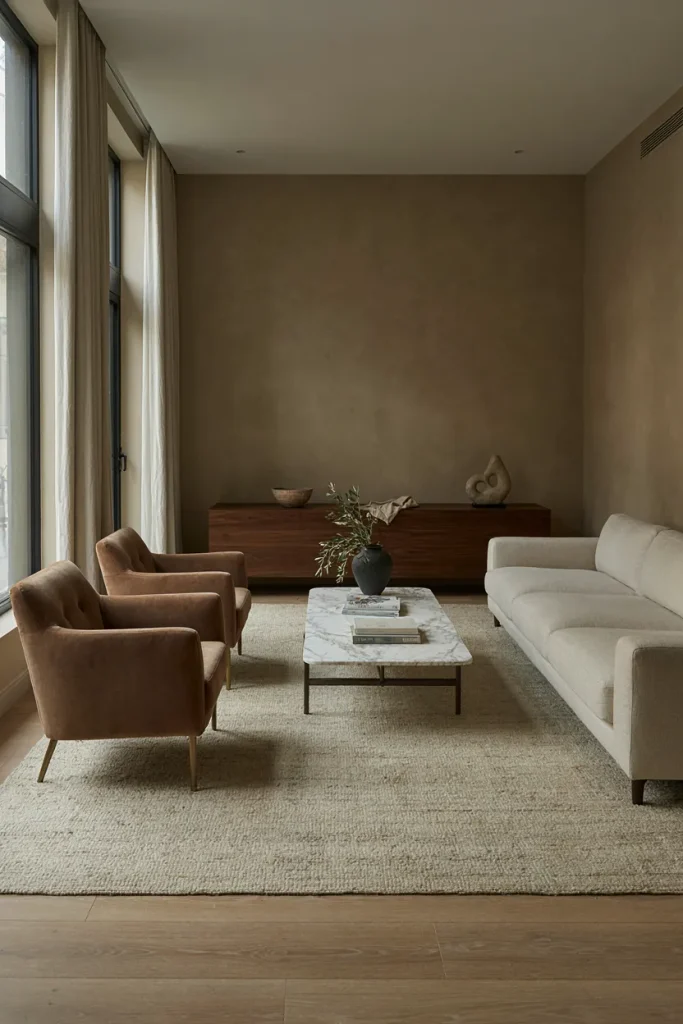
Choose a marble coffee table with a honed finish for a softer, less reflective appearance. Use coasters and wipe spills promptly, since natural marble can stain or etch when exposed to acidic liquids.
A marble coffee table introduces natural pattern and a refined focal point without requiring colorful accessories. Pair white or cream stone with warm wood, soft upholstery, and a textured rug to prevent the room from feeling cold. For smaller seating areas, consider a round marble table to improve movement around furniture.
Walnut Wood Accents
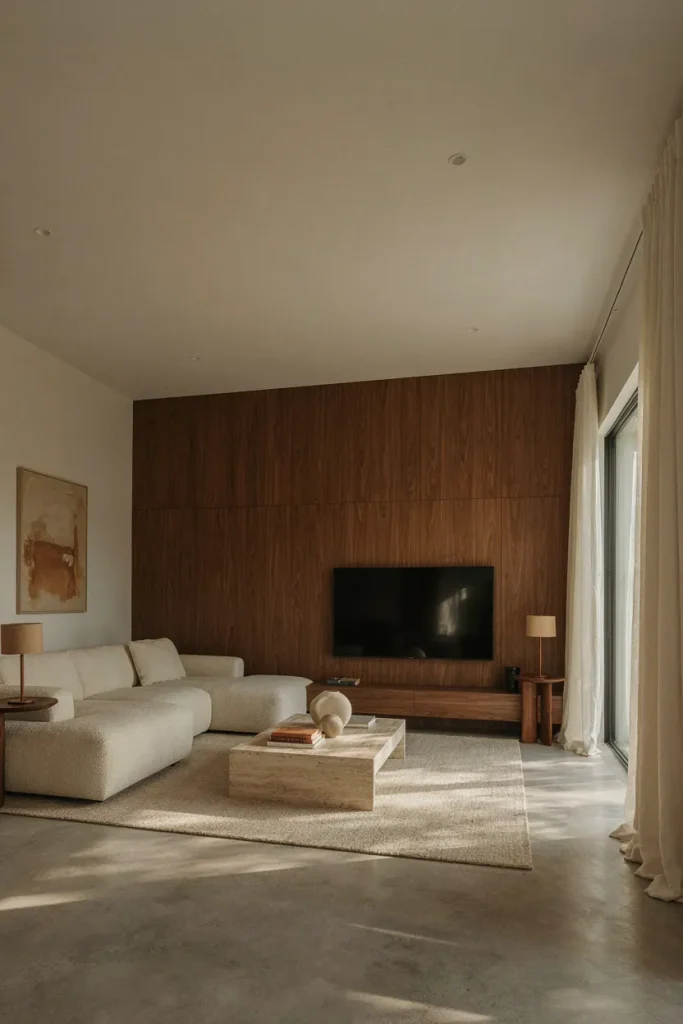
BEFORE:
An all white living room feels flat, with little contrast between the walls, furniture, and accessories. Glossy surfaces and pale finishes create a sterile appearance, especially under cool ceiling lighting.
AFTER:
Rich walnut details introduce warmth, natural texture, and stronger visual definition. The deeper wood tones balance light upholstery while making the overall furniture arrangement appear more grounded and cohesive.
Walnut works particularly well through coffee tables, floating shelves, media consoles, and occasional chairs. Start with two or three coordinated pieces rather than replacing every surface. Pair the wood with ivory, warm gray, or taupe fabrics, and avoid combining too many competing wood tones within the same seating area.
Minimalist Built In Shelves
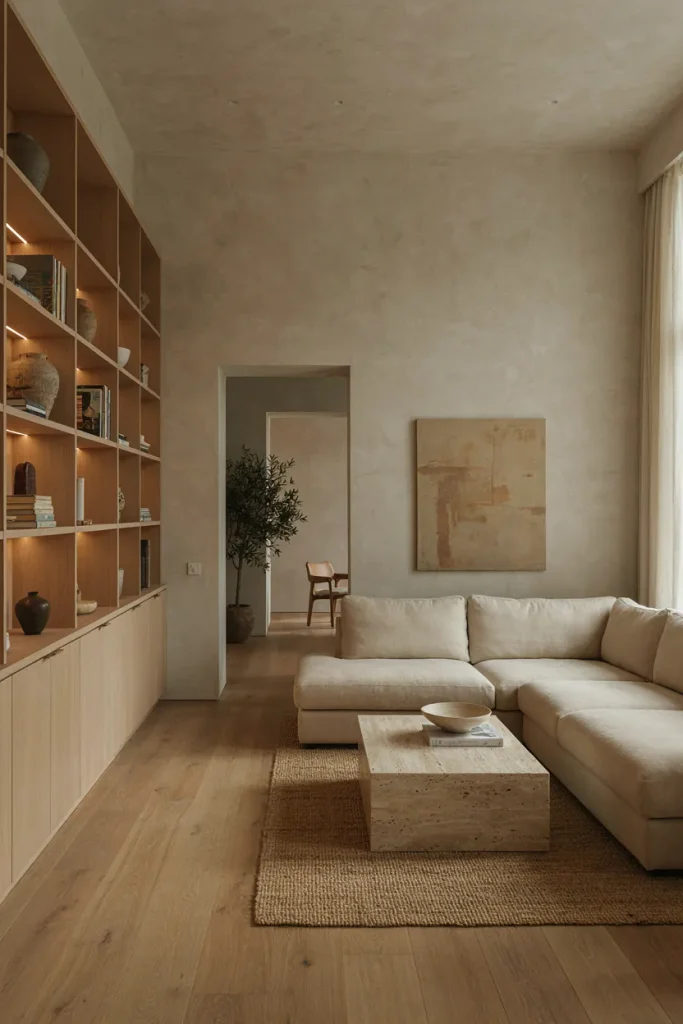
1. Choose a focal wall: Install built in shelving beside the television or along an empty wall to create a clean architectural feature.
2. Select a matching finish: Paint the shelves the same warm white or beige as your walls for a cohesive appearance.
3. Arrange larger objects first: Place ceramic vases, framed artwork, and stacked books at different heights to create balance.
4. Leave intentional empty spaces: Avoid filling every shelf so individual decorative pieces have room to stand out.
5. Introduce soft lighting: Add concealed LED strips to highlight selected objects and create a gentle evening glow.
Built in shelving provides practical storage while giving the living room a polished, custom appearance. Closed cabinets beneath the open shelves can hide electronics, cables, and everyday clutter. For the most balanced result, repeat a limited palette of wood, ceramic, and stone accessories throughout the display.
Glass Accent Tables
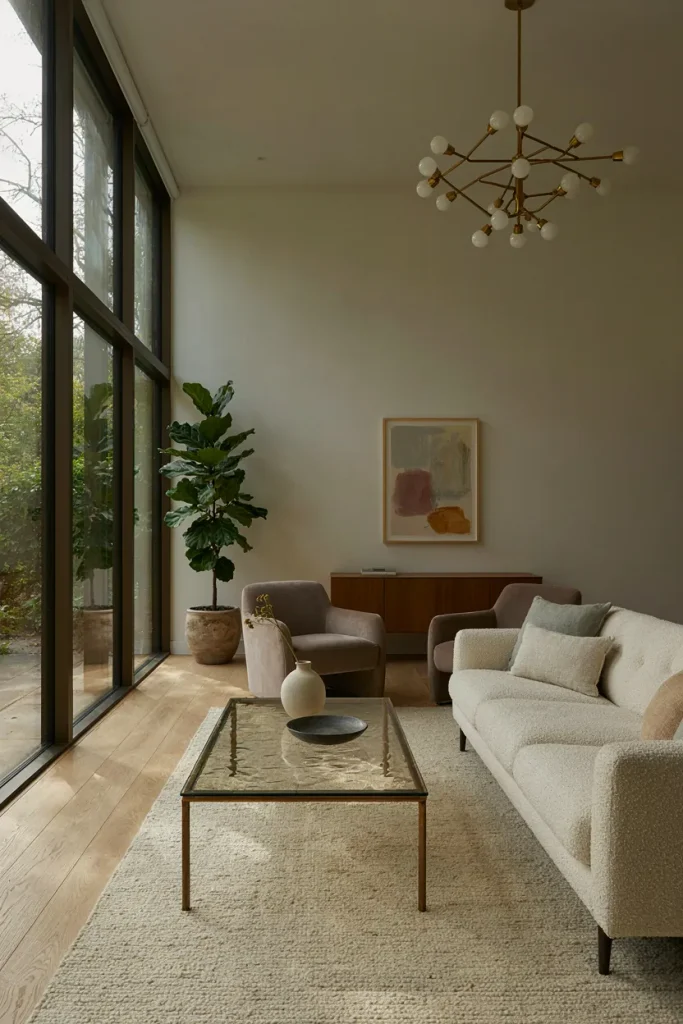
| Design Feature | Solid Coffee Table | Glass Accent Table |
| Visual weight | Creates a substantial focal point | Maintains an open, airy appearance |
| Rug visibility | Covers more of the rug | Allows patterns and textures to remain visible |
| Maintenance | Often hides fingerprints better | Requires frequent cleaning to remove smudges |
| Room suitability | Works well in spacious seating areas | Helps compact layouts feel less crowded |
Glass tables offer a practical way to introduce elegance without adding visual heaviness. Choose tempered glass with polished edges and a stable metal or wooden base. In busy households, rounded corners are worth considering. Keep accessories limited to a small tray or vase so the transparent surface remains the main attraction.
Monochromatic Beige Palette
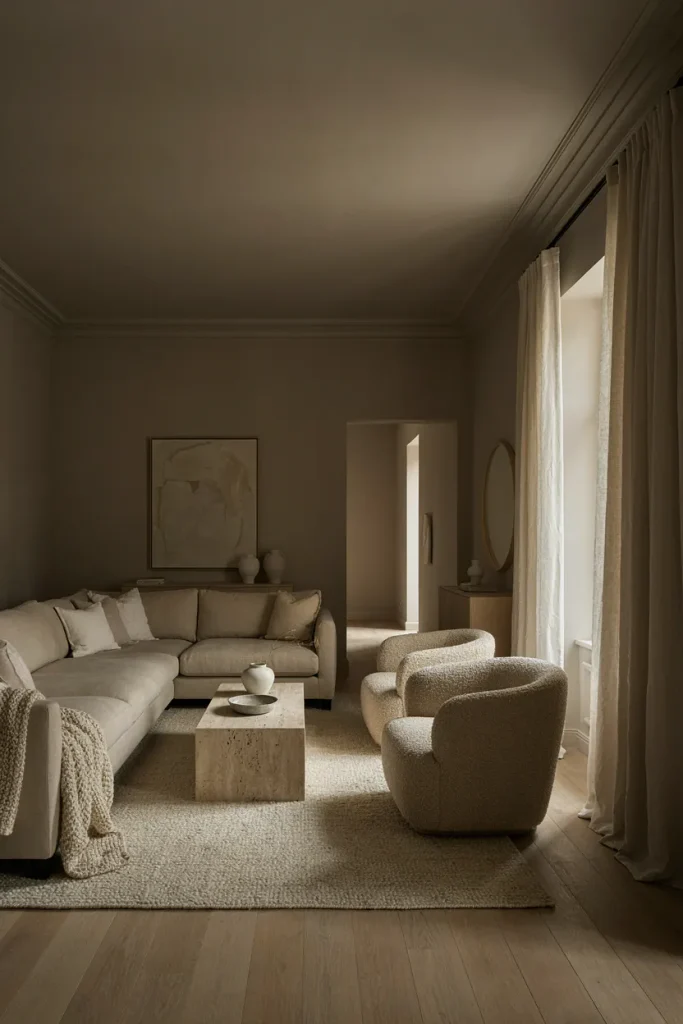
DO:
- Combine cream, sand, oatmeal, and taupe for gentle tonal contrast.
- Mix boucle, linen, wool, and natural stone to introduce texture.
- Choose one darker neutral shade to anchor the furniture arrangement.
- Test beige paint samples under different lighting conditions.
DON’T:
- Select identical beige shades for every furniture piece.
- Rely entirely on smooth fabrics and glossy surfaces.
- Ignore undertones when combining warm and cool neutrals.
- Overcrowd the room with decorative cushions and accessories.
A monochromatic beige palette creates a restful setting while allowing furniture shapes and textures to stand out. The key is choosing several related tones rather than matching everything exactly. Introduce subtle contrast through walnut, bronze, or darker taupe details to give the seating area more definition and visual depth.
Statement Pendant Lighting
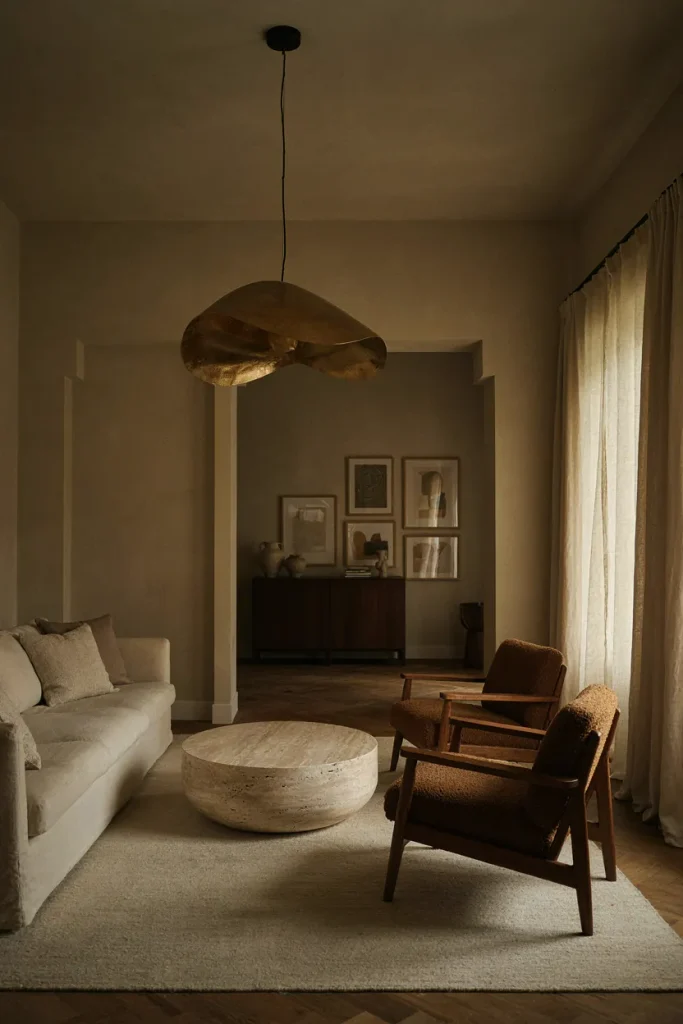
Best For: Living rooms with high ceilings or open floor plans.
Cost: Moderate to high, depending on fixture materials and installation.
Installation Time: Approximately two to four hours with suitable existing wiring.
Result: A striking overhead focal point with a refined architectural appearance.
A statement pendant can bring personality to a neutral living room without requiring additional wall decorations. Choose a fixture that complements the furniture proportions and ceiling height. For comfortable illumination, use a dimmable light source and position the fixture where it will not obstruct views or movement.
Floor to Ceiling Windows
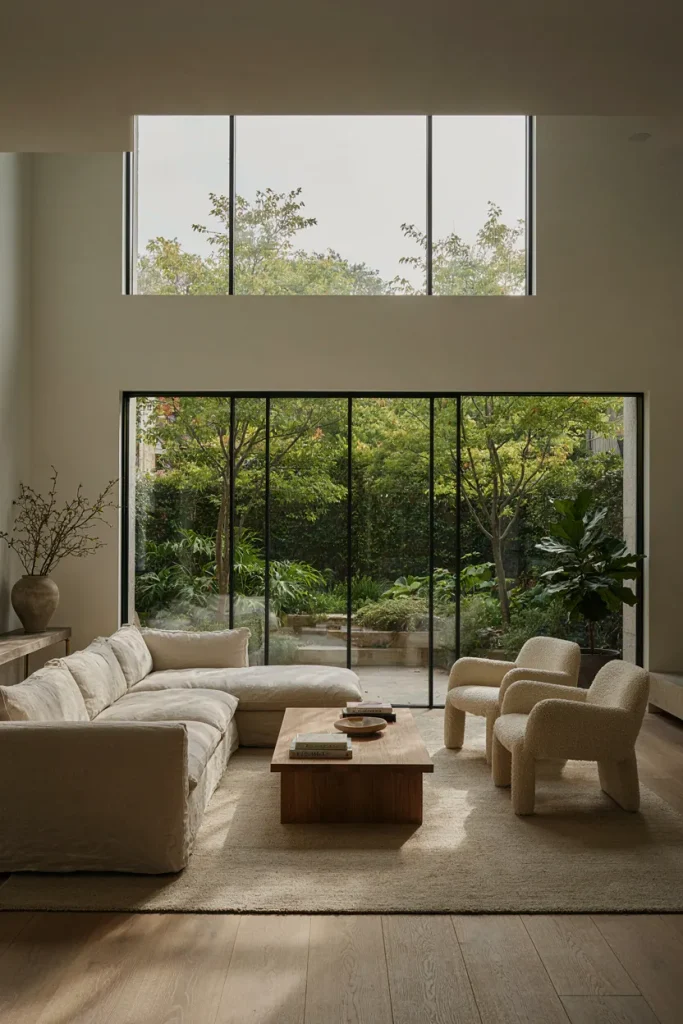
Nothing makes a modern living room feel more open than a generous connection to the outdoors. Floor to ceiling windows draw natural light deep into the seating area and turn garden views into part of the interior design. Keep furniture below window height where possible, and choose slim frames to maintain clean sightlines.
Large windows also require thoughtful planning for privacy, glare, and indoor temperature. Install sheer curtains for daytime softness and lined drapery or discreet shades for greater privacy. If replacing windows is outside your budget, mount existing window treatments close to the ceiling to create a similar sense of height.
Modern Stone Fireplace
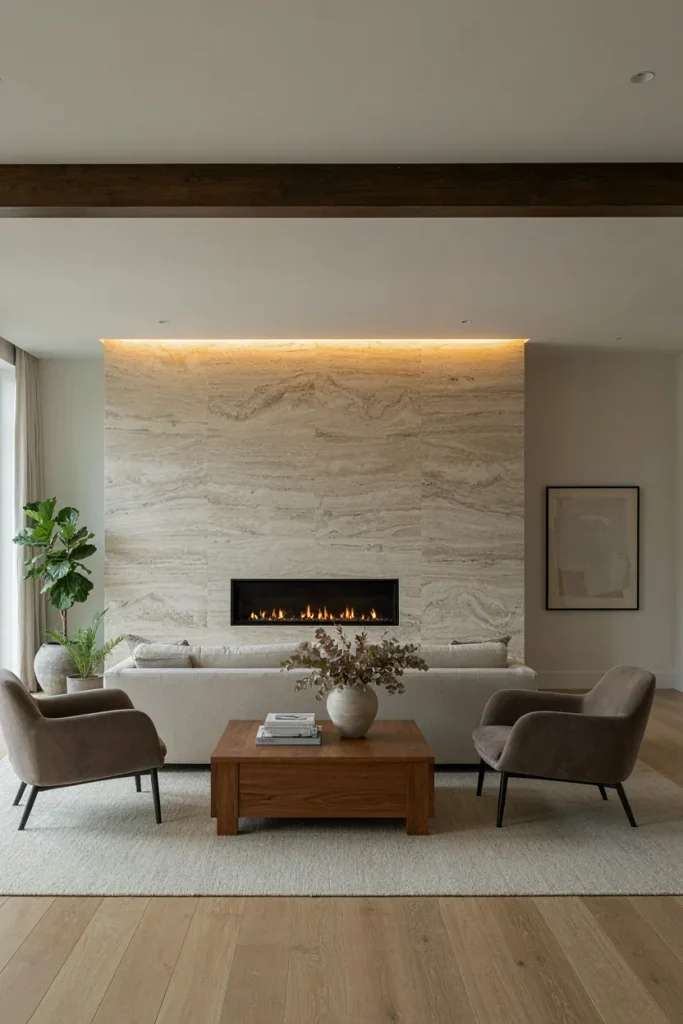
- Choose a streamlined surround: Large porcelain or natural stone slabs create a clean finish with fewer visible grout lines.
- Keep the mantel minimal: A frameless fireplace or simple floating mantel maintains a refined appearance.
- Coordinate stone colors: Select cream travertine, warm limestone, or soft gray porcelain that complements the room’s existing palette.
- Plan furniture placement: Arrange seating around the fireplace while maintaining the clearances required by the manufacturer.
- Limit surrounding decorations: A single sculptural vase or restrained artwork allows the fireplace materials to stand out.
A stone fireplace adds architectural character while creating a welcoming focal point for the seating area. For a sleek result, continue the same stone finish from the hearth toward the ceiling. Confirm heat clearances, ventilation, and installation requirements with a qualified professional before selecting materials or mounting nearby electronics.
Soft Organic Shapes
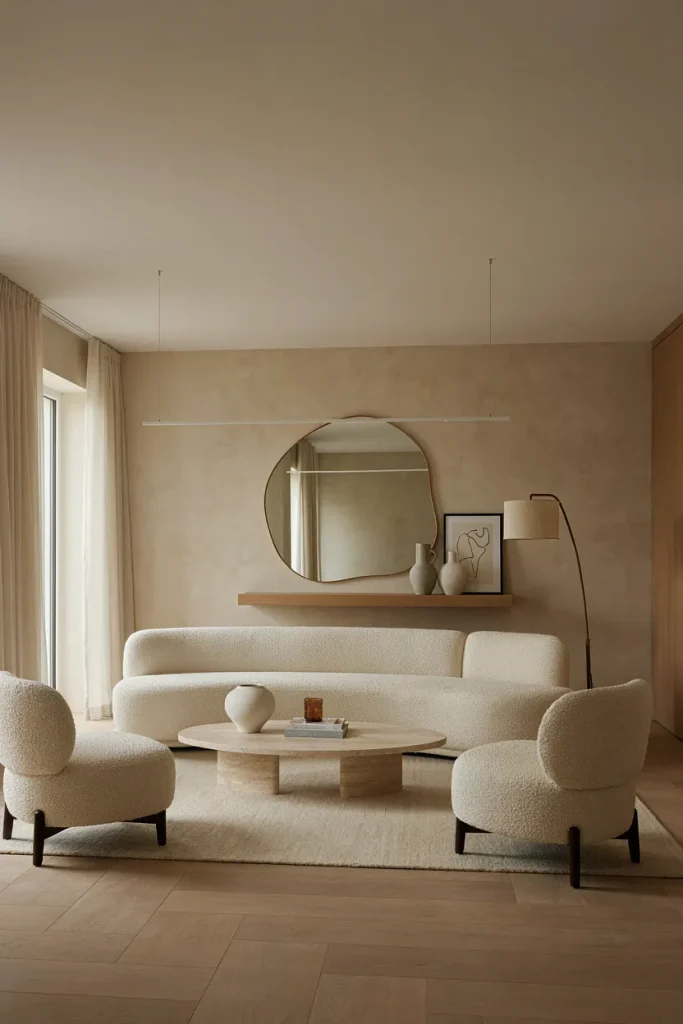
Quick Tip:
Combine two or three organic shapes with simple, straight lined furniture for a balanced arrangement. Choose an oval coffee table or rounded accent chair as your main feature, then repeat softer curves through a mirror or decorative vase.
Organic shapes soften the sharp edges commonly found in modern interiors. An irregular coffee table, curved seating, or rounded mirror creates gentle movement without introducing busy patterns. Keep the color palette restrained and leave enough space around statement pieces so their silhouettes remain visible rather than competing for attention.
Hidden Storage Solutions
BEFORE:
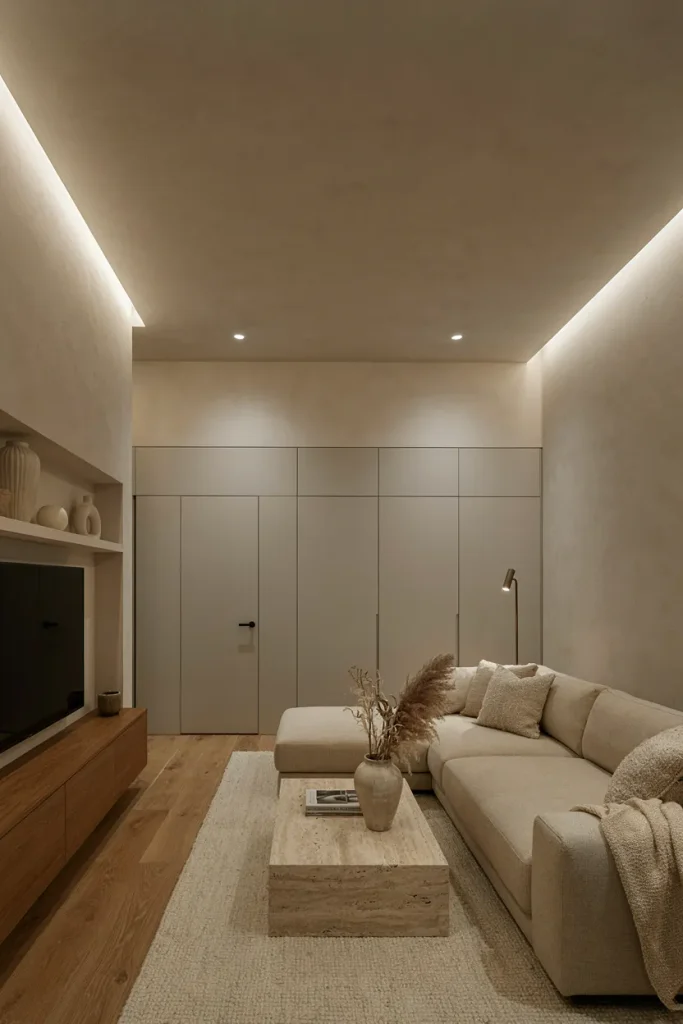
Remote controls, charging cables, magazines, and everyday accessories crowd the coffee table and surrounding furniture. Open shelves filled with miscellaneous items make the seating area feel visually busy and difficult to maintain.
AFTER:
Handleless cabinets and concealed compartments keep frequently used belongings organized but accessible. Clean surfaces allow the furniture, lighting, and architectural details to become the main visual features.
Hidden storage is particularly useful in family living rooms where practical needs meet modern design. Choose a floating media unit with deep drawers, a storage ottoman, or built in cabinets matching the wall color. Measure your equipment before purchasing furniture, and allow appropriate ventilation for enclosed electronics.
Luxe Metallic Accents
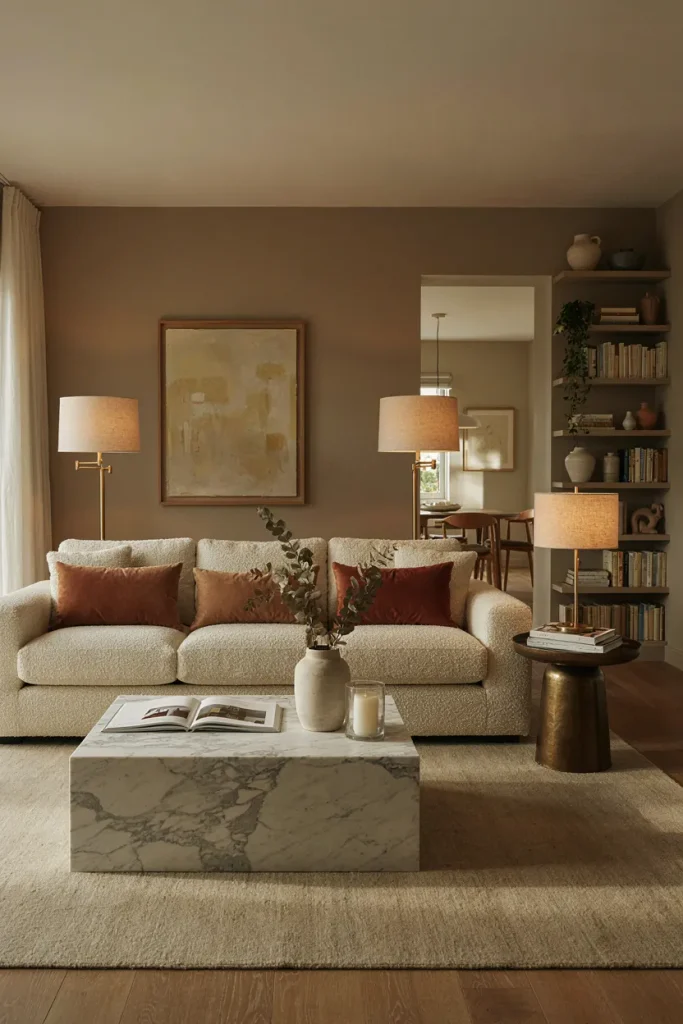
1. Choose one dominant metal finish: Select brushed brass, champagne gold, or bronze to establish a consistent look throughout the room.
2. Start with lighting fixtures: Introduce metallic finishes through a slim floor lamp, table lamp, or sculptural pendant.
3. Repeat through smaller details: Add coordinating cabinet handles, picture frames, or side table legs for subtle visual continuity.
4. Balance with matte materials: Pair metallic accessories with linen, boucle, natural wood, and textured stone to prevent excessive shine.
5. Keep decorative accents limited: Choose a few well positioned pieces rather than covering every surface with metallic objects.
Metallic accents introduce a subtle sense of luxury without requiring a complete furniture replacement. Brushed finishes generally feel softer than highly polished surfaces and are easier to coordinate with neutral interiors. Repeat the chosen metal in a few locations, allowing natural textures and comfortable upholstery to remain the focus.
Conclusion
Creating a beautiful contemporary living room is all about thoughtful choices that combine comfort, simplicity, and personal style. From layered lighting and sculptural furniture to cozy textures and elegant accents, even a few small updates can make your space feel more polished and inviting.
Start with one idea that suits your budget and existing furniture, then gradually introduce details that reflect your taste.
Save this post on Pinterest for future decorating inspiration, and share it with friends or family planning a home refresh. Your dream living room might be just a few simple changes away!

