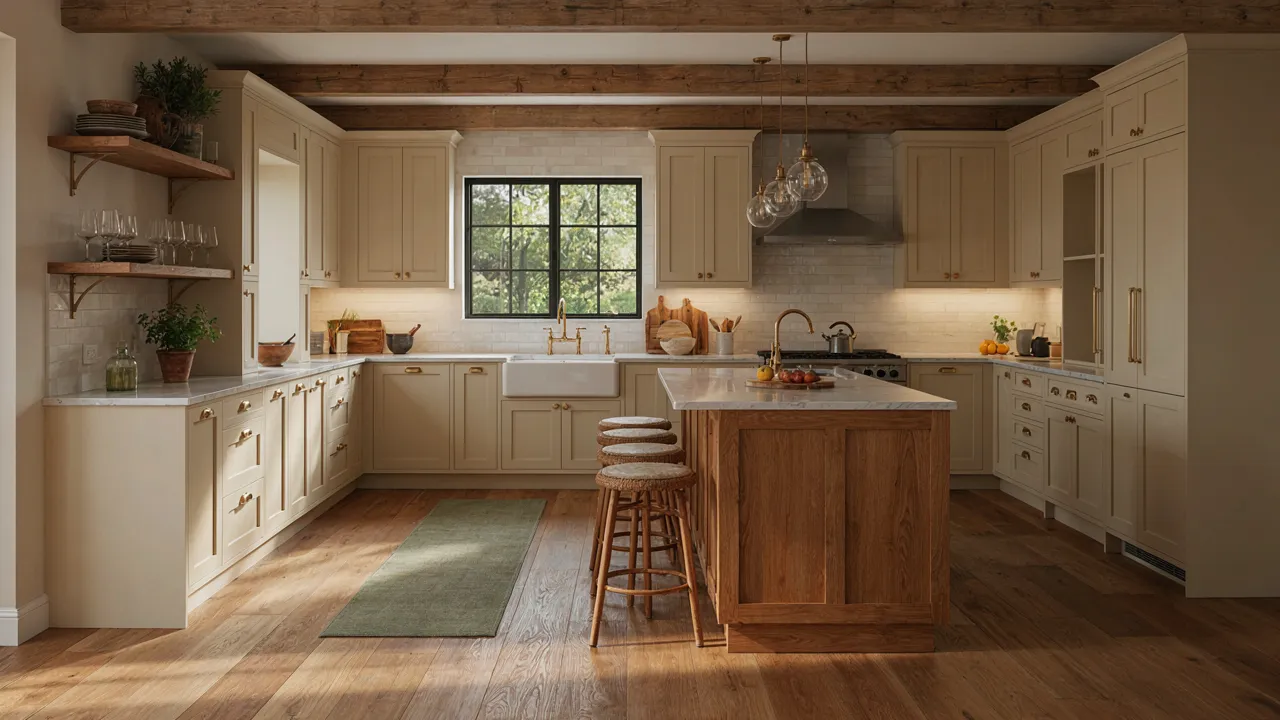
24 Stunning Modern Farmhouse Kitchen Ideas for Timeless Charm
A beautiful kitchen should feel warm, welcoming, and comfortable every single day. If you love natural wood, soft neutral colors, and cozy details, a modern farmhouse kitchen might be exactly what your home needs.
The secret to achieving this timeless style is finding the right balance between rustic charm and modern simplicity. Think creamy Shaker cabinets, warm oak accents, elegant pendant lights, and beautiful textures that make your kitchen feel inviting without looking cluttered.
Whether you’re planning a complete renovation or simply refreshing a few details, these 24 farmhouse kitchen ideas offer inspiration for different layouts, budgets, and personal styles.
From clever storage solutions to charming decorative touches, you’ll discover practical ways to create a kitchen that feels organized, functional, and full of character. Even small updates can make an ordinary cooking space feel more personal and welcoming.
Warm White Shaker Cabinets

Warm white Shaker cabinets bring a soft, welcoming feel to a farmhouse kitchen without making it look outdated. Their clean lines create a balanced appearance, while the creamy finish adds warmth that stark white sometimes lacks. Pair them with brushed brass hardware and pale oak flooring for a naturally coordinated look.
For a practical finish, choose washable cabinet paint with a satin or semi-gloss sheen. It handles everyday splashes better than flat paint and makes cleaning easier around cooking areas. Keep upper cabinets simple and introduce texture through wooden stools, woven baskets, or handmade pottery for a kitchen that feels comfortable and thoughtfully designed.
Rustic Wood Ceiling Beams
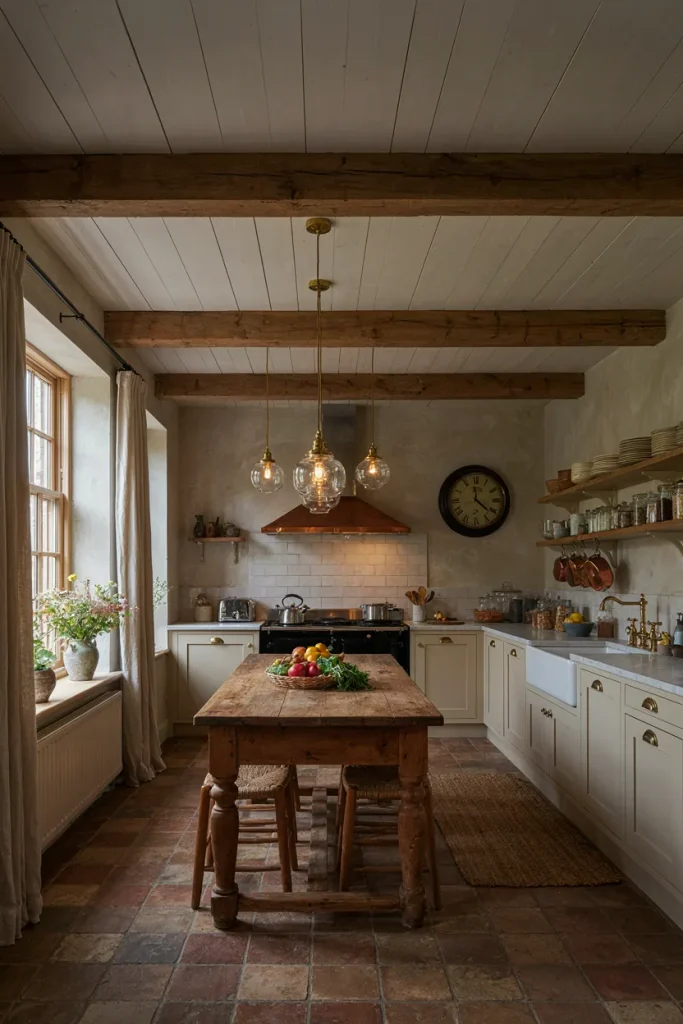
Exposed wood beams instantly give a plain kitchen ceiling character and architectural depth. They work especially well in rooms with tall ceilings or open layouts.
- Choose natural wood tones: Light oak creates an airy appearance, while medium walnut adds richer contrast against white cabinetry.
- Consider faux beams: Lightweight hollow beams can provide a similar decorative effect without the weight of solid timber.
- Match existing finishes: Coordinate the beam color with flooring, shelving, or island stools for visual consistency.
- Keep spacing balanced: Position beams according to ceiling proportions rather than placing too many close together.
- Plan around lighting: Check pendant locations, recessed lights, and ceiling fixtures before installation.
For a modern farmhouse kitchen, wooden beams introduce warmth without requiring major changes to cabinets or countertops. They also help connect rustic features with contemporary finishes. In smaller spaces, choose slimmer beams in lighter stains to avoid making the ceiling appear lower or the room feel crowded.
Also View: 22 Kitchen Cabinet Trends for a Fresh, Sleek Space
Natural Oak Kitchen Island
Quick Tip:
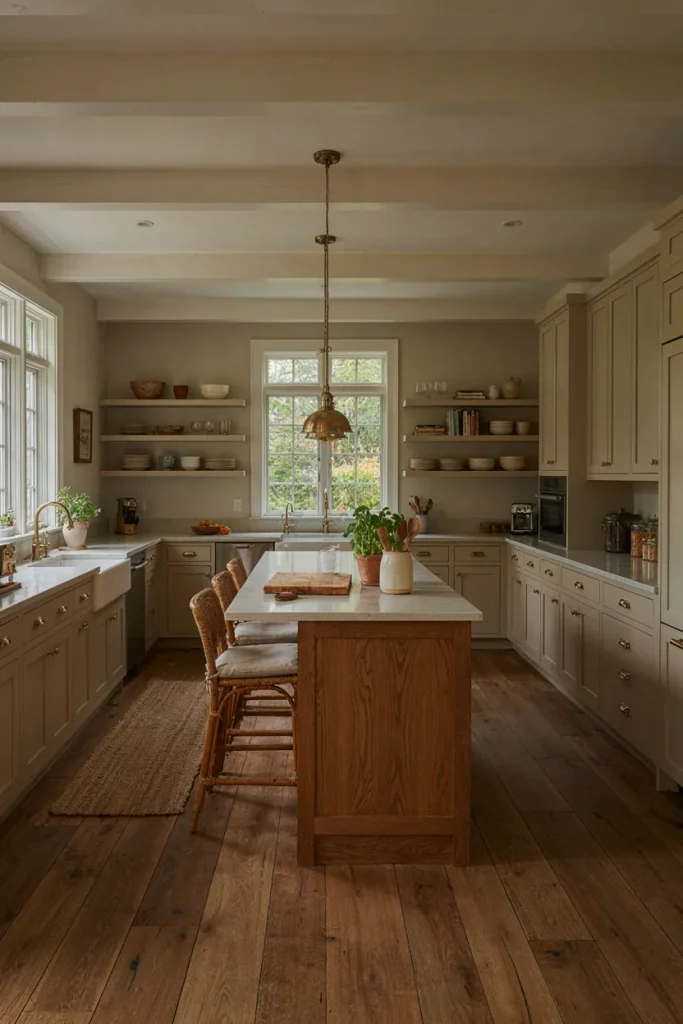
Choose a durable, sealed wood finish for an oak island, especially around the sink or food preparation areas. For easier maintenance, pair a natural wood island base with a stain-resistant quartz countertop that complements its warm undertones.
A natural oak island creates a beautiful focal point while breaking up long stretches of painted cabinetry. Its visible grain adds texture and warmth without overwhelming the room. Choose simple paneling and understated hardware for a cleaner appearance. Allow comfortable walking space around the island so everyday cooking and movement remain easy.
Among these farmhouse kitchen ideas, a natural oak island is an excellent choice for adding warmth, texture, and a practical gathering space.
A natural oak island is an excellent addition to a modern farmhouse kitchen, bringing warmth, natural texture, and a practical gathering space.
Classic Subway Tile Backsplash
BEFORE:
A plain painted wall behind the countertops can make the kitchen feel unfinished. Cooking splashes also leave stubborn marks, especially near the stove and sink.
AFTER:
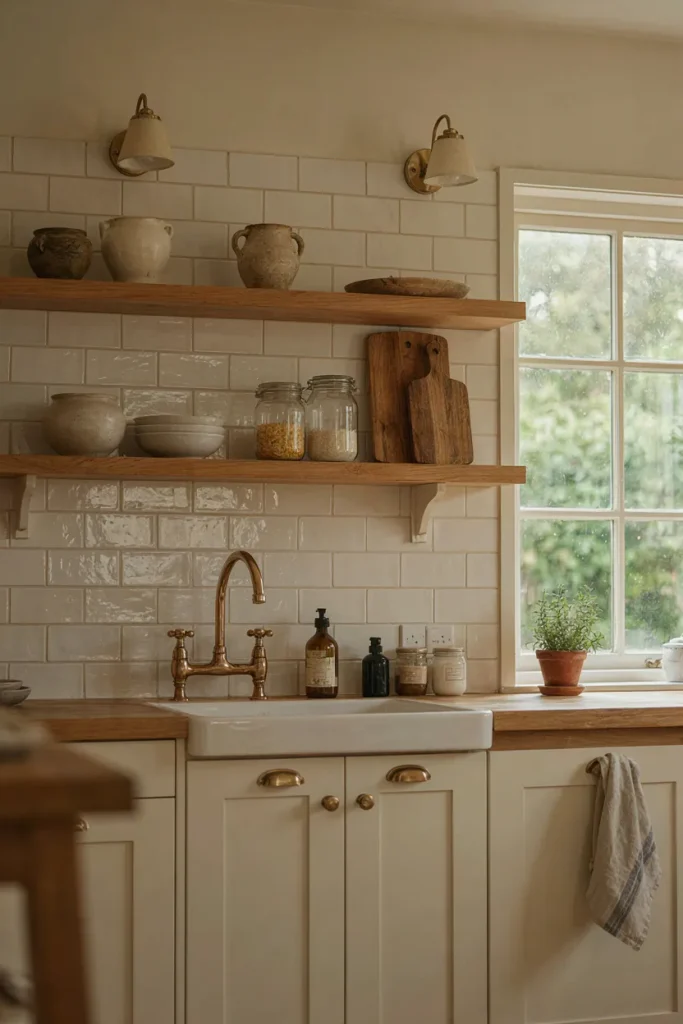
A subway tile backsplash creates a clean, polished background that complements rustic wood and modern cabinetry. Its smooth glazed surface makes everyday splashes easier to wipe away.
Choose slightly off-white tiles instead of bright white for a softer farmhouse appearance. Warm gray or beige grout adds gentle definition without creating harsh lines. For easier maintenance, select stain-resistant grout and seal it if required. Extending the backsplash to the upper cabinets creates a finished, coordinated look.
Open Wooden Floating Shelves
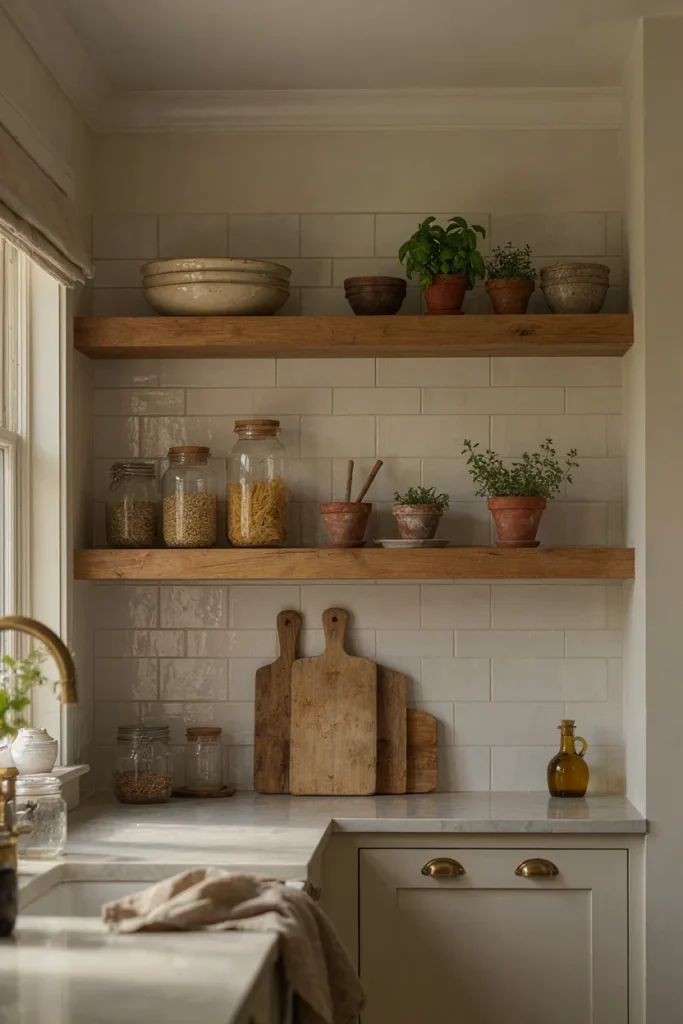
Open wooden shelves bring warmth and personality to a kitchen while keeping everyday essentials within easy reach. They also break up solid walls of cabinetry, making the space feel lighter.
- Choose the right location: Install shelves near the preparation area or coffee station for convenient access.
- Select sturdy wood: Use solid oak or properly finished hardwood that can handle the weight of dishes.
- Install secure supports: Anchor brackets into wall studs or use suitable structural fixings for the expected load.
- Arrange everyday essentials: Group plates, mugs, and glass jars together, leaving some open space between items.
- Add subtle decoration: Include a small plant, wooden board, or ceramic vase for natural farmhouse character.
Floating shelves work especially well in smaller kitchens where upper cabinets can feel visually heavy. Keep frequently used dishes on the lower shelf and decorative pieces above. Avoid overcrowding, since exposed items collect dust and cooking grease. A simple arrangement is easier to clean and more attractive.
Matte Black Cabinet Hardware

Small hardware changes can give existing kitchen cabinets a noticeably fresher appearance without replacing the doors. Matte black finishes introduce definition against light cabinetry and complement the simple lines of farmhouse interiors.
| Feature | Brushed Brass Hardware | Matte Black Hardware |
| Overall appearance | Warm and traditional | Crisp and contemporary |
| Best cabinet pairing | Cream, beige, and wood | White, sage, and light oak |
| Visual effect | Soft, subtle contrast | Strong, defined contrast |
| Coordinating fixtures | Warm metallic faucets | Black faucets and lighting |
For a balanced result, repeat matte black in two or three places, such as cabinet pulls, pendant lights, and the faucet. Measure the existing screw-hole spacing before purchasing replacement handles to avoid unnecessary drilling. Choose a durable finish, since frequently touched hardware can show wear over time.
Farmhouse Apron Front Sink
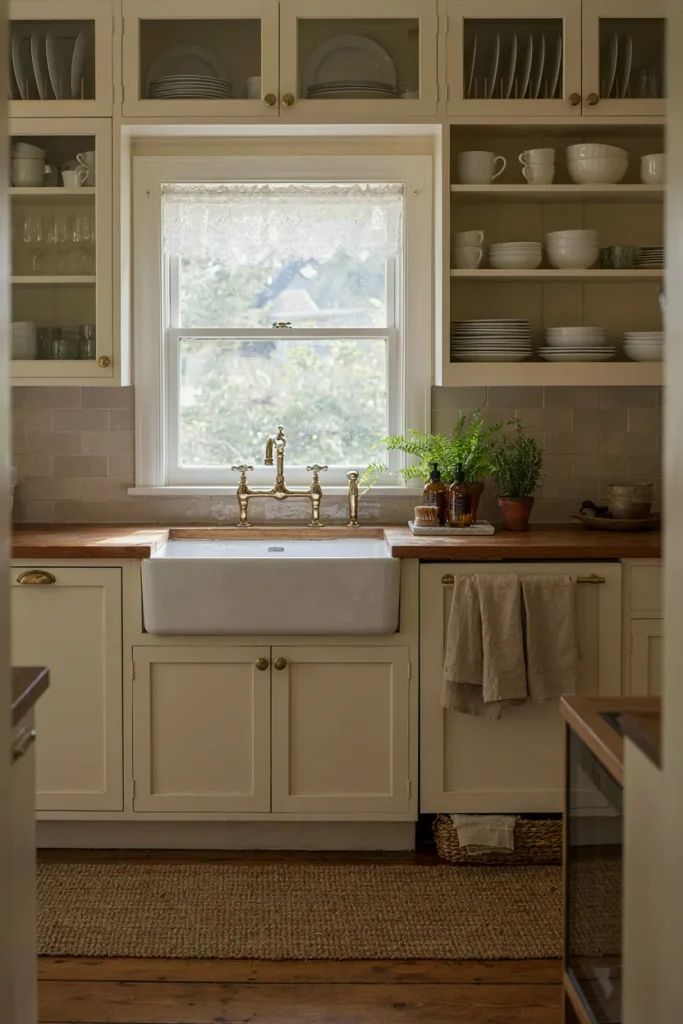
A deep apron front sink becomes a striking focal point while bringing traditional farmhouse character into a contemporary kitchen. Its exposed front panel creates a distinctive look, especially when paired with simple cabinetry and natural materials.
DO:
- Choose fireclay or stainless steel for durability and easy maintenance.
- Measure the sink cabinet carefully before purchasing.
- Install a sturdy support system beneath heavier sink models.
- Pair the sink with a practical pull-down faucet.
DON’T:
- Assume every apron front sink fits a standard cabinet.
- Ignore countertop clearance and plumbing requirements.
- Use abrasive cleaners on delicate sink finishes.
- Overlook the possibility of water dripping onto cabinet doors.
Apron front sinks work beautifully in both compact and spacious kitchens, but installation planning matters. Fireclay models can be particularly heavy and may require cabinet modifications. For a cohesive appearance, coordinate the faucet finish with nearby hardware and keep countertop accessories minimal around the sink area.
Soft Sage Green Cabinets

Soft sage green cabinets introduce gentle color while preserving the calm, natural character of farmhouse interiors. This muted shade works particularly well with warm white walls, oak surfaces, and aged brass fixtures.
Color Palette: Muted sage green, warm ivory, natural oak, and soft brass.
Best For: Kitchens needing subtle color without overpowering the room.
Finish: Satin or semi-gloss cabinet paint for easier cleaning.
Works With: Cream stone countertops, white tile, and natural woven textures.
Sage green looks different under warm artificial light and cool daylight, so testing paint samples is essential. Apply large swatches to cabinet doors and observe them throughout the day. In darker kitchens, choose a lighter sage with warm undertones to prevent the cabinetry from appearing too gray.
Vintage Glass Pendant Lights
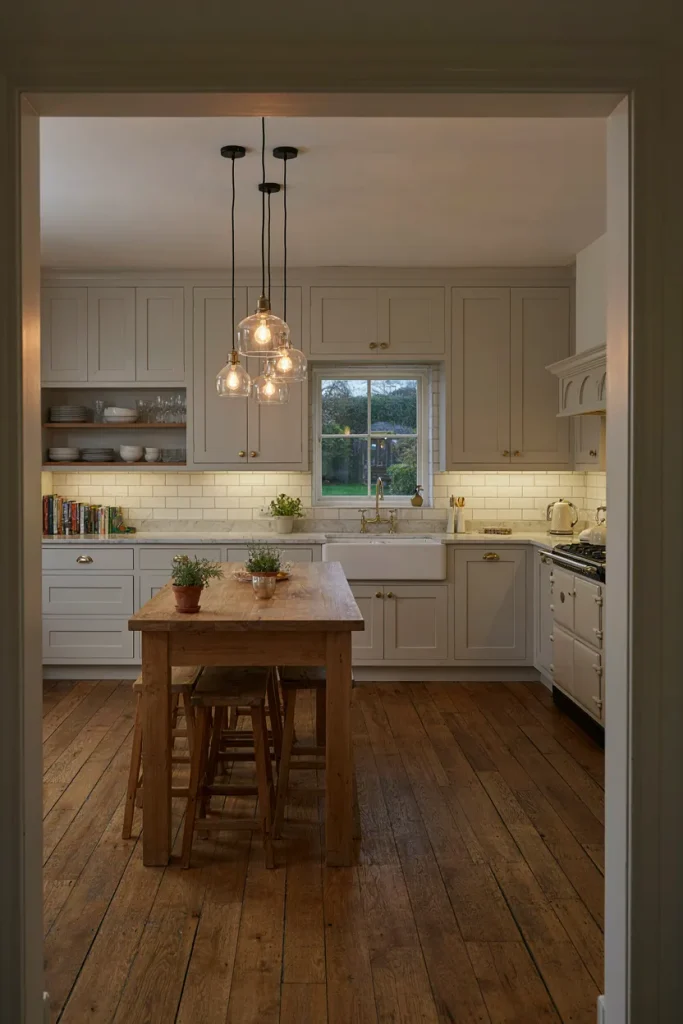
Vintage glass pendant lights add character above a kitchen island without blocking sightlines or making the room feel crowded. Clear glass shades allow light to spread naturally, while antique brass or black metal fittings introduce subtle farmhouse detail. Choose warm white LED bulbs for comfortable illumination during evening meals and casual gatherings.
For balanced placement, start with pendant bottoms approximately 30 to 36 inches above the island countertop, then adjust for ceiling height and visibility. Two larger pendants often suit medium islands, while three smaller fixtures work well over longer surfaces. Use dimmable bulbs to switch between brighter food preparation lighting and a softer evening atmosphere.
White Shiplap Accent Walls
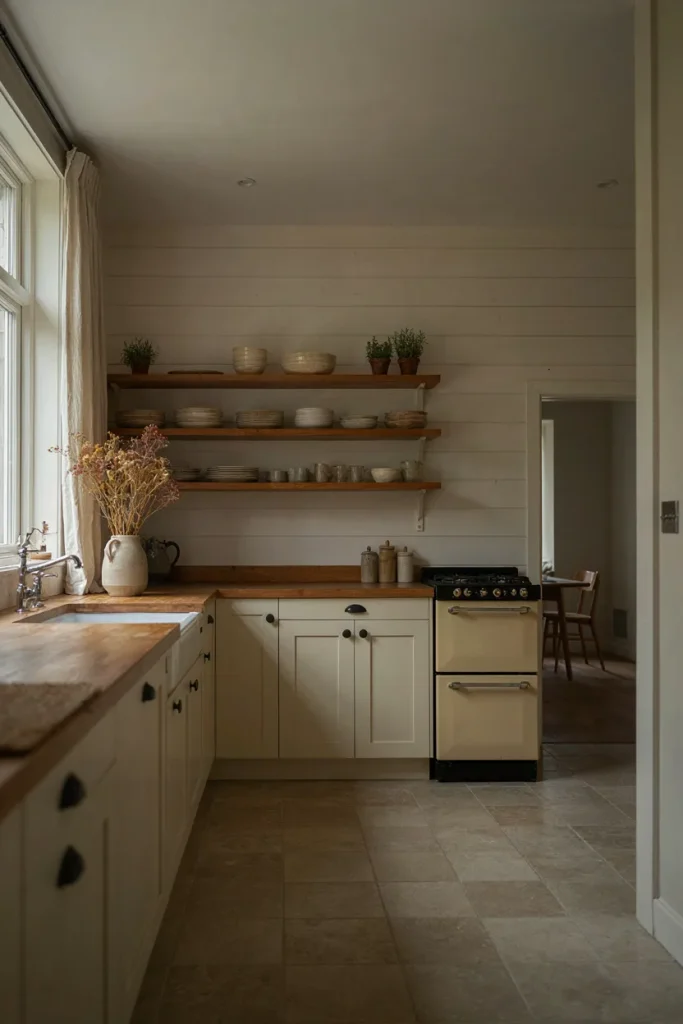
White shiplap walls bring subtle texture to a farmhouse kitchen without introducing busy patterns. Their horizontal lines create a relaxed cottage-inspired appearance while providing a beautiful background for wooden shelves, vintage clocks, and simple kitchen accessories.
- Choose moisture-resistant materials: Use properly finished wood or suitable moisture-resistant panels in areas exposed to humidity.
- Create one accent wall: Install shiplap behind a dining nook or coffee station rather than covering every wall.
- Select warm white paint: Creamy undertones complement wooden cabinets and natural stone beautifully.
- Keep panel spacing consistent: Even grooves create a cleaner, more professional finish.
- Use washable paint: A durable satin finish makes occasional splashes and fingerprints easier to clean.
Shiplap works particularly well in kitchens that need architectural interest without major renovations. Pair it with smooth countertops and simple cabinet doors to balance the textured surface. Avoid installing unfinished wood directly behind cooking areas, where moisture and grease can create cleaning and maintenance problems.
Butcher Block Countertops
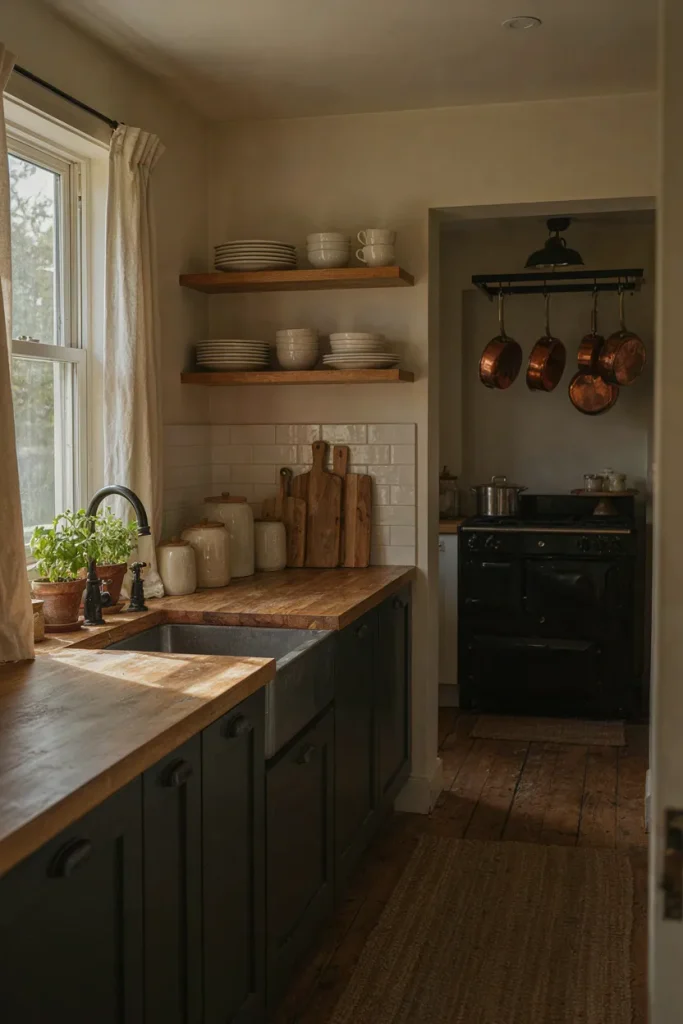
Quick Tip:
Choose a countertop finish specifically rated for the intended kitchen use, and follow the manufacturer’s maintenance instructions. Wipe up standing water immediately, especially around sinks and seams, to help prevent swelling, staining, and moisture damage.
Butcher block countertops introduce natural warmth that balances painted cabinets and metal fixtures. Maple offers a lighter appearance, while walnut creates a richer, more dramatic contrast. For busy kitchens, consider combining wooden countertops on a dry preparation island with quartz near the sink for easier everyday maintenance.
Two Tone Kitchen Cabinets

BEFORE:
A kitchen with matching cabinets from floor to ceiling can sometimes feel visually flat. Dark cabinetry throughout may also make a smaller room appear heavier, especially with limited natural light.
AFTER:
Two tone cabinetry introduces gentle contrast and gives the kitchen a more layered appearance. Lighter upper cabinets maintain an airy feeling, while deeper lower cabinets ground the design.
For a timeless combination, pair warm white upper cabinets with mushroom beige, muted olive, or soft charcoal lower cabinets. Keep countertops and backsplash materials consistent to connect both colors. Before painting, test samples in morning and evening light to see how the shades interact with your flooring.
Rustic Brick Backsplash
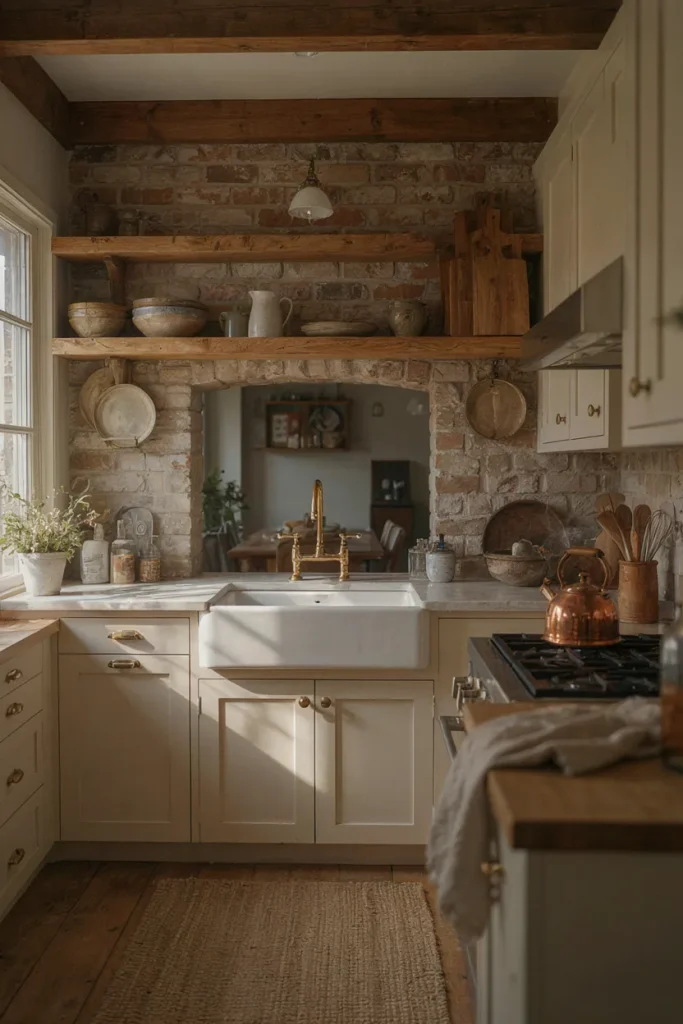
Rustic brick brings rich texture and old-world character to a farmhouse kitchen, especially when paired with clean cabinetry and modern countertops. Its uneven surface adds visual depth, making even a simple cooking area feel more inviting.
- Choose your brick finish: Select warm red brick for rustic character or limewashed brick for a softer appearance.
- Prepare the wall: Make sure the surface is clean, level, and suitable for the selected brick veneer.
- Plan the layout: Arrange the brick pattern before installation to avoid awkward cuts around outlets.
- Protect the surface: Use a compatible sealer where needed to reduce moisture absorption and staining.
- Coordinate nearby finishes: Pair the brick with simple hardware and light countertops to prevent visual clutter.
For easier cleaning, consider brick-look porcelain tile behind the stove rather than porous natural brick. It provides a similar textured appearance with less maintenance. Keep surrounding walls neutral so the backsplash remains the focal point. Warm under-cabinet lighting can also highlight the brick’s subtle color variations.
Oversized Farmhouse Range Hood

An oversized range hood creates a strong architectural focal point above the cooking area. Whether finished in warm plaster, painted wood, or smooth metal, its shape can help define the overall kitchen style.
| Feature | Plaster Style Hood | Wood Clad Hood |
| Appearance | Soft and sculptural | Warm and rustic |
| Best pairing | Stone and ivory cabinets | White cabinets and oak accents |
| Surface texture | Smooth or subtly textured | Natural wood grain |
| Maintenance | Depends on washable finish | Depends on sealed wood finish |
A decorative hood surround should never compromise ventilation performance or required clearances. Choose a properly sized ventilation insert and follow manufacturer installation requirements, especially above gas ranges. For a timeless appearance, keep the surround simple and coordinate its finish with nearby cabinets or wall colors rather than introducing another bold shade.
Woven Counter Stools
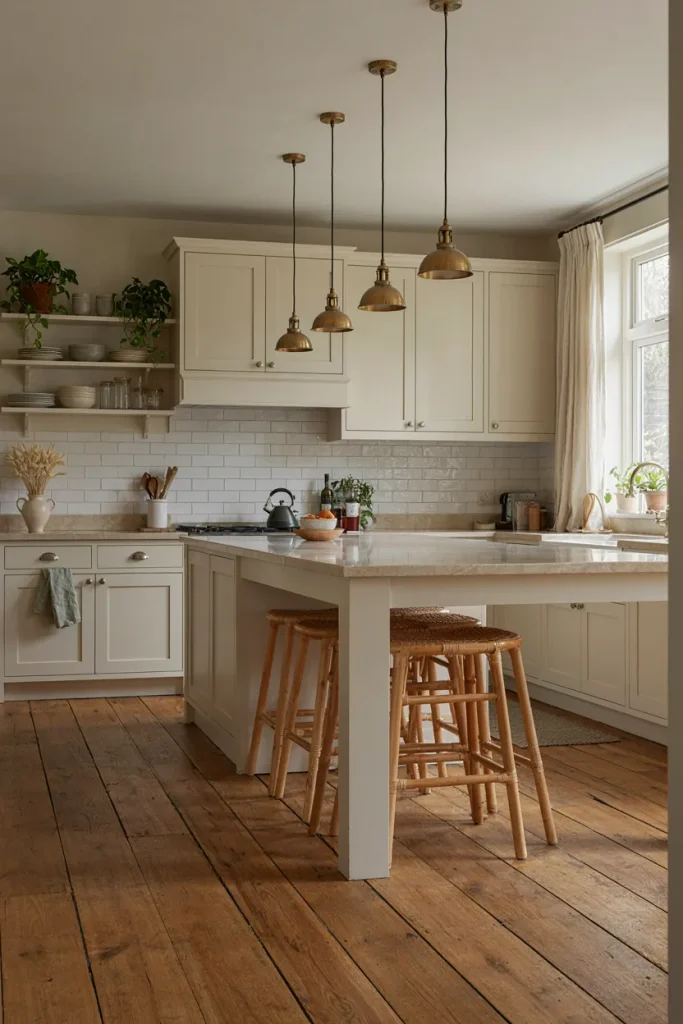
Woven counter stools introduce natural texture and casual warmth to a farmhouse kitchen without requiring permanent changes. Their relaxed appearance softens stone countertops and painted cabinetry, making the island feel like a comfortable gathering place.
DO:
- Choose tightly woven seats with sturdy frames for everyday use.
- Measure counter height before selecting stool dimensions.
- Allow enough space between stools for comfortable seating.
- Coordinate natural fibers with nearby wooden or woven accessories.
DON’T:
- Select delicate woven materials for heavily used seating.
- Crowd too many stools around a narrow island.
- Ignore footrests when choosing taller counter stools.
- Place untreated natural fibers near frequent water splashes.
For standard 36-inch kitchen counters, stools with seat heights around 24 to 26 inches generally provide comfortable legroom. Choose wipeable synthetic rattan for households with young children or frequent spills. Natural woven textures pair especially well with soft white cabinetry, pale oak floors, and understated black hardware.
Antique Brass Kitchen Faucets

Antique brass faucets bring vintage character to farmhouse kitchens while adding warmth to neutral color schemes. Their slightly aged appearance pairs naturally with white sinks, oak countertops, and traditional cabinetry without feeling overly decorative.
Finish: Antique brass, brushed brass, or unlacquered brass.
Best For: Neutral kitchens needing a subtle vintage accent.
Functionality: Pull-down sprayers and single-handle controls offer everyday convenience.
Maintenance: Follow manufacturer recommendations to protect the selected finish.
A curved brass faucet works particularly well above an apron front sink, creating a classic focal point. Choose a model with a durable ceramic cartridge and enough spout clearance for washing large pots. Unlacquered brass develops a natural patina over time, while protected finishes maintain a more consistent appearance.
Cozy Farmhouse Breakfast Nook
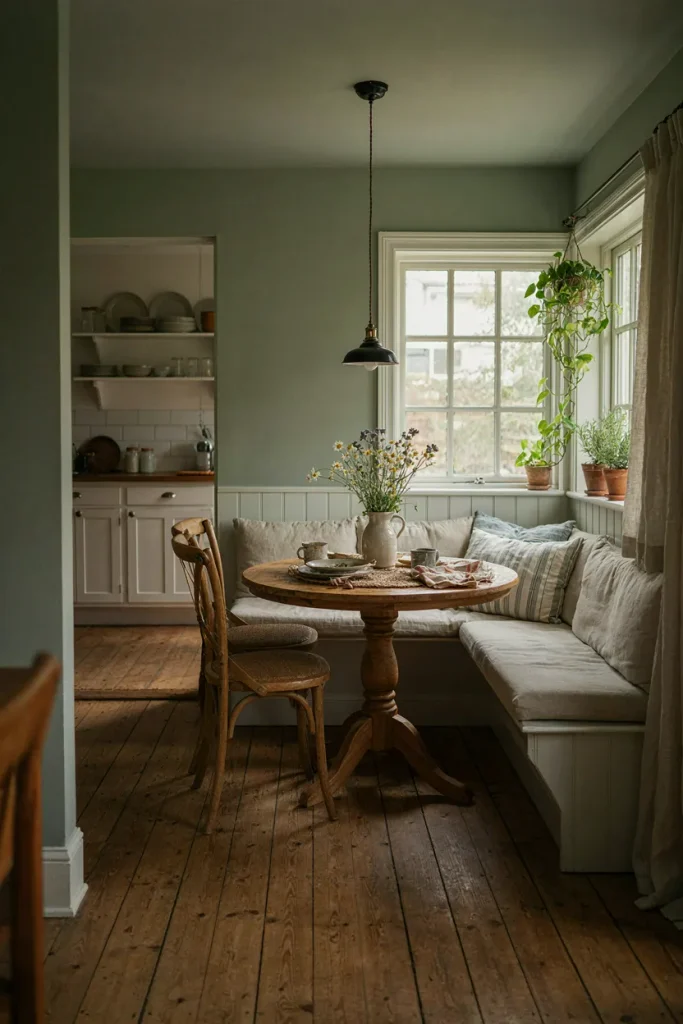
A cozy breakfast nook makes an unused kitchen corner feel purposeful while creating a comfortable spot for morning coffee and casual family meals. Built-in bench seating works especially well in smaller spaces because it can fit neatly against walls without requiring the clearance needed behind individual chairs.
Start with a round pedestal table to improve movement around tight corners. Add washable seat cushions and storage drawers beneath the bench for napkins or seasonal linens. Keep nearby windows unobstructed to maximize daylight. A small pendant light centered above the table completes the setup without overwhelming the space.
Creamy Zellige Tile Backsplash
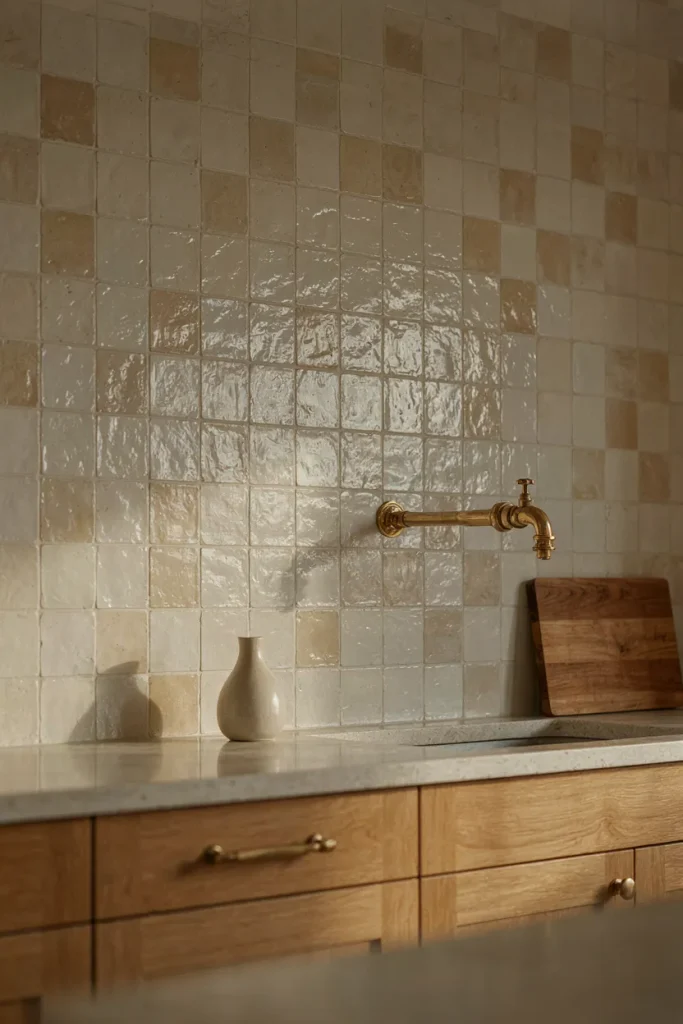
Creamy zellige tiles give farmhouse kitchens a handcrafted appearance through their irregular edges, subtle color variations, and glossy surfaces. These small details introduce visual interest without relying on bold patterns or contrasting colors.
- Choose warm ivory tones: Cream, vanilla, and soft beige shades complement natural wood finishes.
- Use a simple layout: A traditional horizontal or square grid arrangement allows the tile texture to stand out.
- Plan for variation: Mix tiles from different boxes before installation to distribute color differences naturally.
- Select suitable grout: Use a compatible neutral grout that supports the uneven tile edges.
- Check maintenance requirements: Confirm whether the tiles need sealing and follow the manufacturer’s cleaning guidance.
Zellige works beautifully behind open oak shelves or between light-colored cabinets. Its reflective finish helps distribute available light, although the uneven surface can require more careful cleaning than smooth ceramic tile. For a similar appearance with simpler maintenance, consider porcelain tiles designed to replicate handmade zellige.
Reclaimed Wood Pantry Door
Quick Tip:
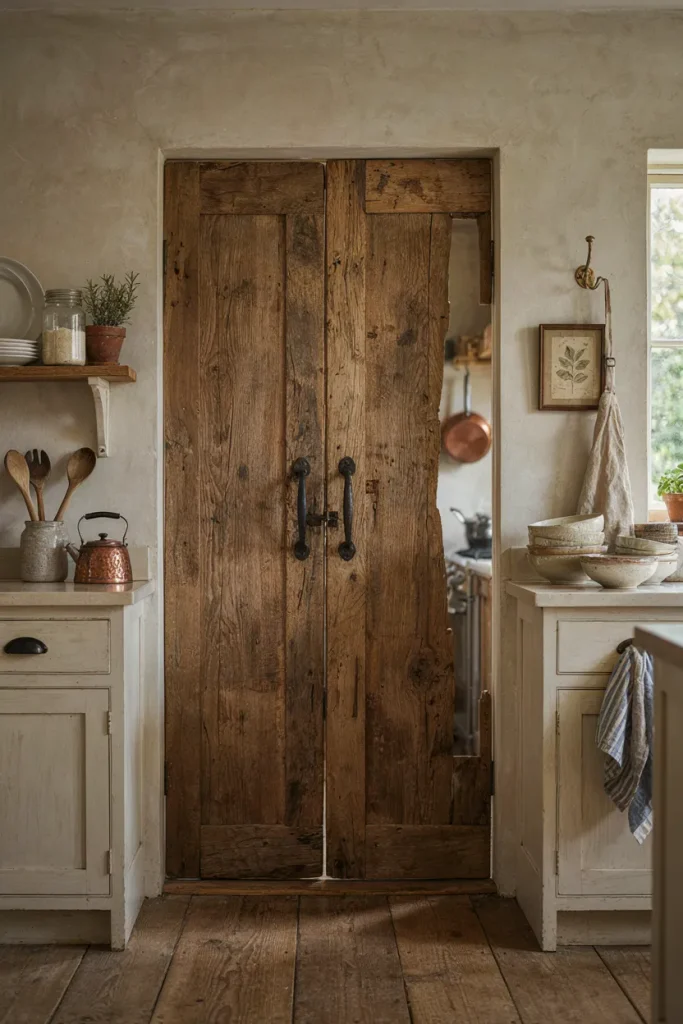
Choose reclaimed wood that has been properly cleaned, dried, and inspected for damage or pests. For sliding barn-style doors, check that enough wall space remains beside the pantry opening and that the door will not block switches or cabinets.
A reclaimed wood pantry door adds rustic character while creating a warm contrast against painted kitchen cabinets. Choose a natural oak stain for a lighter appearance or weathered walnut for deeper contrast. Keep surrounding finishes simple so the wood grain becomes the focal point without overwhelming the room.
Marble Look Quartz Countertops
BEFORE:
Busy countertops or outdated laminate surfaces can make a farmhouse kitchen feel visually cluttered. Dark finishes may also absorb light, leaving smaller cooking spaces looking less open.
AFTER:
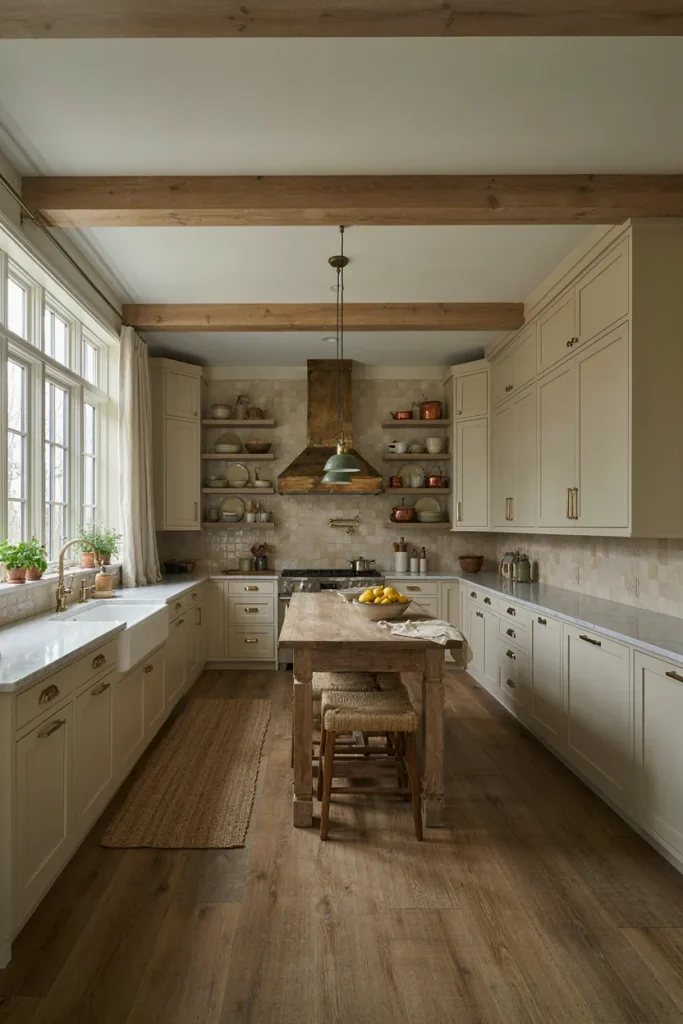
Marble-look quartz creates a brighter, more coordinated appearance with subtle veining that adds interest without overwhelming the cabinetry. Its nonporous surface also simplifies everyday cleaning compared with many natural stones.
Choose quartz with soft gray or beige veining rather than dramatic patterns for a timeless result. Pair it with warm white cabinetry and natural oak accents to prevent an overly cool appearance. Always use trivets for hot cookware, since excessive heat can damage the resin in quartz countertops.
Always follow the manufacturer’s quartz countertop care and maintenance instructions to help protect the surface from heat, stains, and damage.
Vintage Inspired Kitchen Rugs
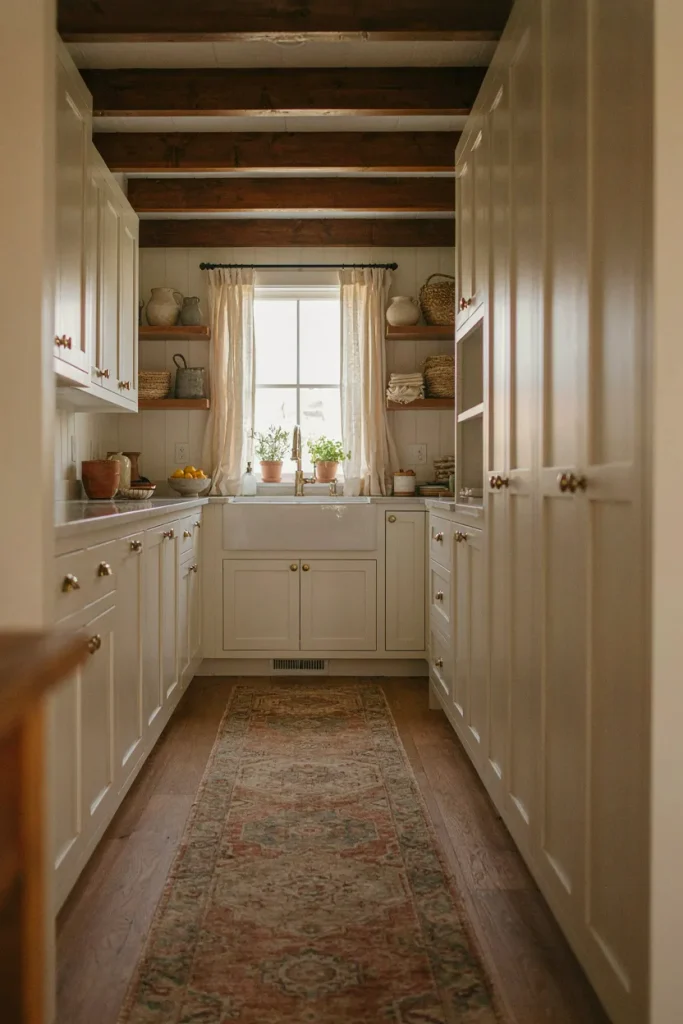
A vintage-inspired kitchen rug adds warmth, pattern, and softness to spaces dominated by hard surfaces. Faded traditional designs complement farmhouse cabinetry beautifully while introducing subtle color without requiring changes to permanent finishes.
- Measure the walkway: Choose a runner that leaves visible flooring along both sides for a balanced appearance.
- Select practical materials: Look for washable, low-pile rugs that handle everyday kitchen traffic.
- Choose muted patterns: Consider faded terracotta, sage green, or dusty blue designs to complement neutral cabinets.
- Prevent slipping: Use a suitable nonslip rug pad or secure backing.
- Position carefully: Keep rugs away from areas where curled edges could create tripping hazards.
Vintage-style runners work especially well between an island and a row of cabinets. Their patterned surfaces can help disguise minor crumbs between cleanings, although spills should still be addressed promptly. Choose a rug thin enough to clear nearby doors and drawers without catching underneath them.
Rustic Coffee Station
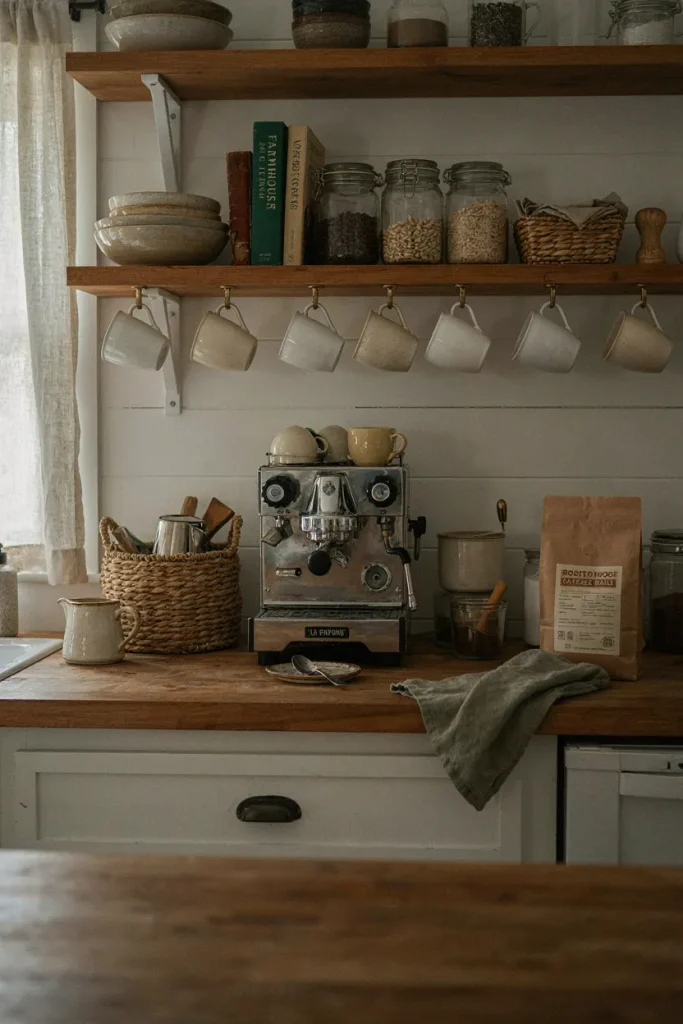
DO:
- Choose a countertop corner near an electrical outlet.
- Install wooden shelves for mugs and coffee essentials.
- Use matching airtight containers for coffee beans and sugar.
- Add a washable tray beneath the coffee machine.
DON’T:
- Overcrowd the counter with decorative accessories.
- Store coffee beans beside heat-producing appliances.
- Place electrical equipment directly beneath potential water leaks.
- Choose shelving that cannot support your stored items.
A dedicated coffee station keeps morning essentials organized while adding a welcoming touch to your farmhouse kitchen. Combine practical storage with natural textures, such as wooden trays and ceramic canisters. For smaller kitchens, use a narrow section of countertop and vertical shelving to create a functional setup without sacrificing valuable preparation space.
Natural Stone Kitchen Flooring
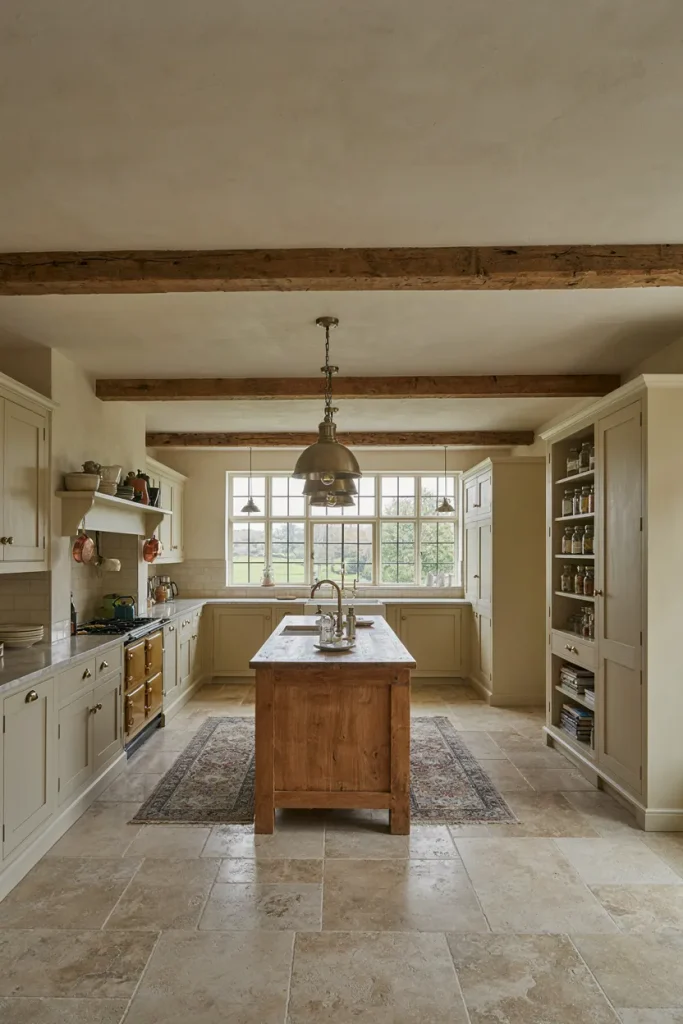
Natural stone flooring brings earthy texture and lasting character to farmhouse interiors. Its subtle color variations pair beautifully with painted cabinetry, wooden islands, and traditional kitchen details.
Material: Limestone, slate, or travertine, depending on the desired appearance.
Color Palette: Warm beige, sandy taupe, soft gray, and creamy ivory.
Best For: Kitchens with rustic wood accents and understated cabinetry.
Maintenance: Stone-specific cleaning products and sealing where recommended.
Limestone creates a softer, warmer appearance, while slate introduces deeper tones and stronger contrast. Choose tiles with a slip-resistant finish suitable for kitchen floors, especially around sinks. Because some natural stones are porous, consider sealing requirements, stain resistance, and maintenance costs before selecting your preferred material.
Before choosing natural stone flooring, review the Natural Stone Institute’s care and maintenance guidance to understand the cleaning and sealing needs of different stone surfaces.
Arched Kitchen Cabinet Details
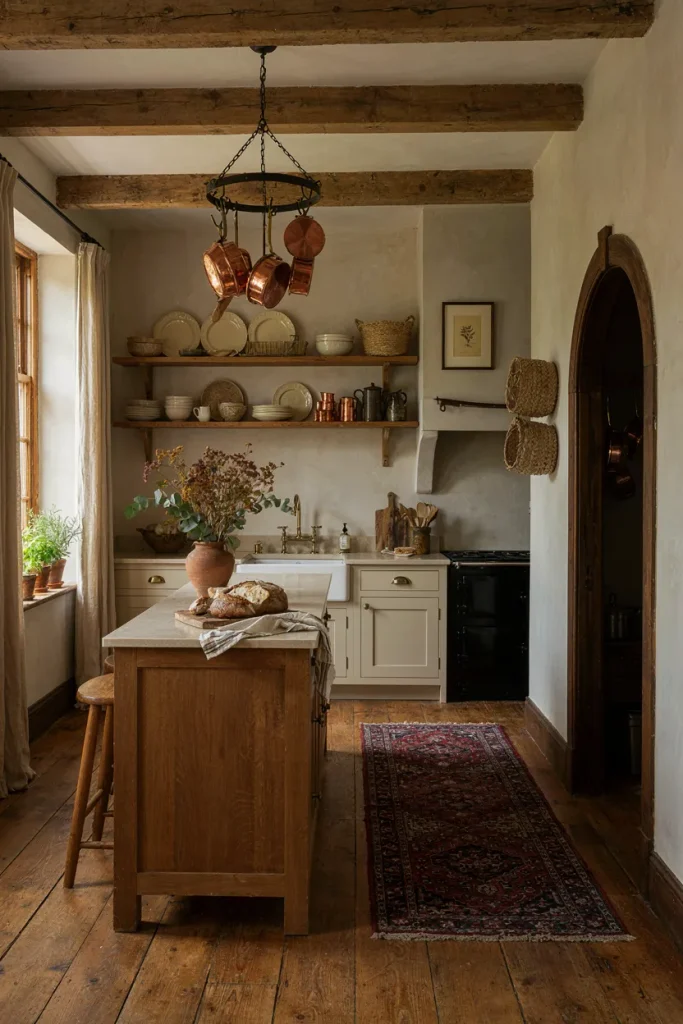
Arched cabinet details soften the straight lines commonly found in contemporary kitchens, bringing traditional character without excessive decoration. Gently curved upper panels create an elegant focal point, especially when combined with simple lower cabinets and warm neutral finishes.
- Choose subtle curves: Shallow arches create a refined appearance that remains suitable for modern farmhouse interiors.
- Limit decorative detailing: Use arched doors on selected upper cabinets rather than every cabinet surface.
- Coordinate cabinet colors: Warm ivory, mushroom beige, and muted sage work particularly well with curved profiles.
- Select simple hardware: Small brass knobs or understated pulls prevent the cabinetry from feeling overly ornate.
Arched cabinetry works especially well in kitchens with plaster range hoods, wooden shelves, or traditional architectural features. For a cohesive result, repeat the curved shape sparingly through a pantry opening or decorative niche. Keep countertops and backsplash patterns simple so the gentle cabinet detailing remains the main attraction.
Conclusion
Creating a beautiful modern farmhouse kitchen doesn’t always require an expensive renovation. Sometimes, simple changes like warm wooden shelves, vintage-inspired lighting, or soft neutral cabinets are enough to bring fresh character into your home.
The 24 ideas shared here offer plenty of inspiration for creating a space that feels timeless, practical, and welcoming. Start with one detail that matches your budget and gradually build a look you truly love.
Save this post on Pinterest for future inspiration, try your favorite ideas, and share it with anyone planning a kitchen refresh. Your dream farmhouse kitchen can begin with one thoughtful change!