15 Media Wall Ideas That Create a Stunning Focal Point
A blank TV wall can make even a well-decorated living room feel unfinished. The right media wall ideas can turn that overlooked area into a stylish focal point that feels intentional, practical, and beautifully balanced.
This article brings together 15 inspiring ways to design around your television, from warm wood panels and hidden storage to statement stone, soft lighting, and built-in shelving. Each idea is designed to help you solve common problems like visible cables, awkward empty walls, limited storage, or a screen that feels too dominant. In my experience, the best results come from combining visual interest with everyday function. You do not need a huge budget or a complete renovation to create a setup that feels polished and personal.
Slatted Wood Feature
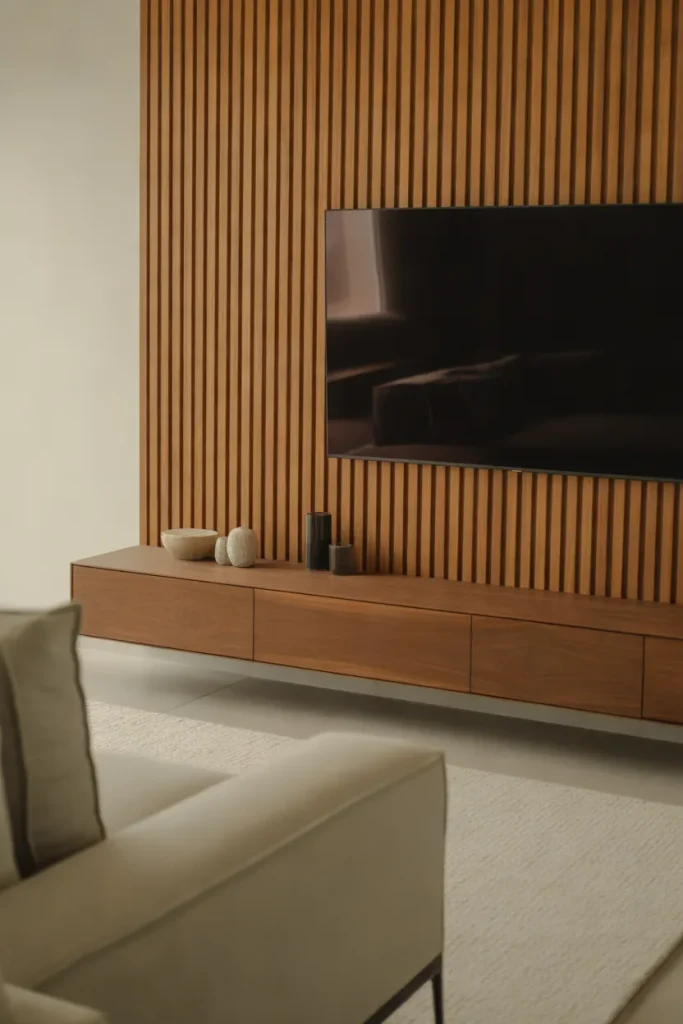
A slatted wood feature instantly gives a television wall more depth, texture, and architectural interest. Among modern media wall ideas, this approach works especially well because the vertical lines draw the eye upward while helping a large screen feel more integrated into the room rather than simply mounted on a blank wall.
Choose oak, walnut, or light ash slats depending on your existing furniture. In my experience, narrow slats with small gaps create the cleanest finish. Keep cables hidden behind the panels and pair the wood with a simple floating console so the wall stays polished instead of visually crowded.
Built In Shelving
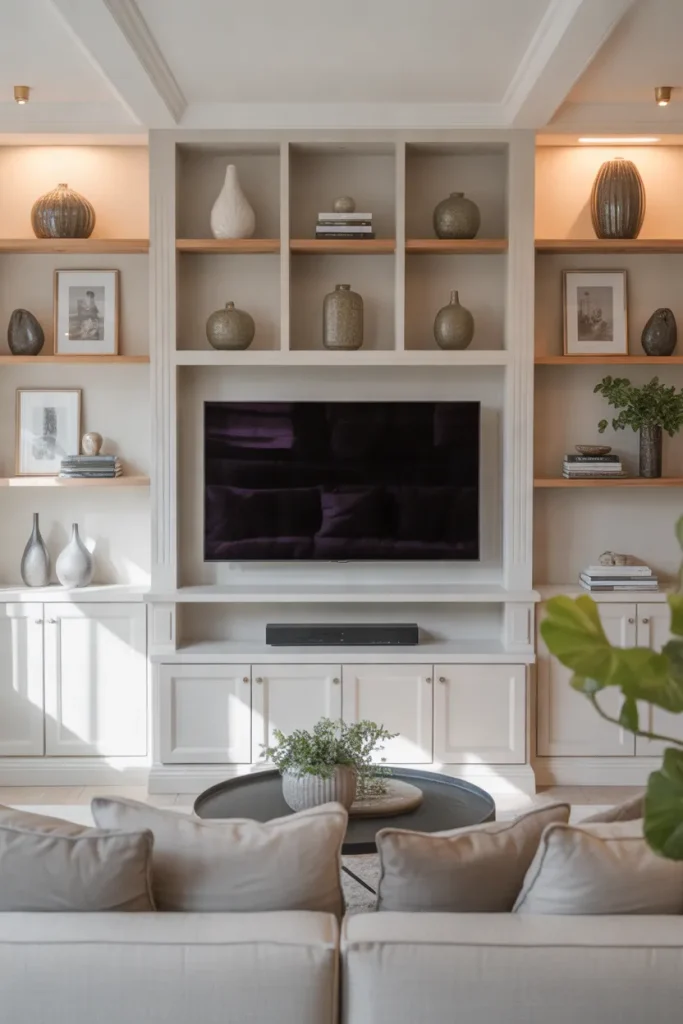
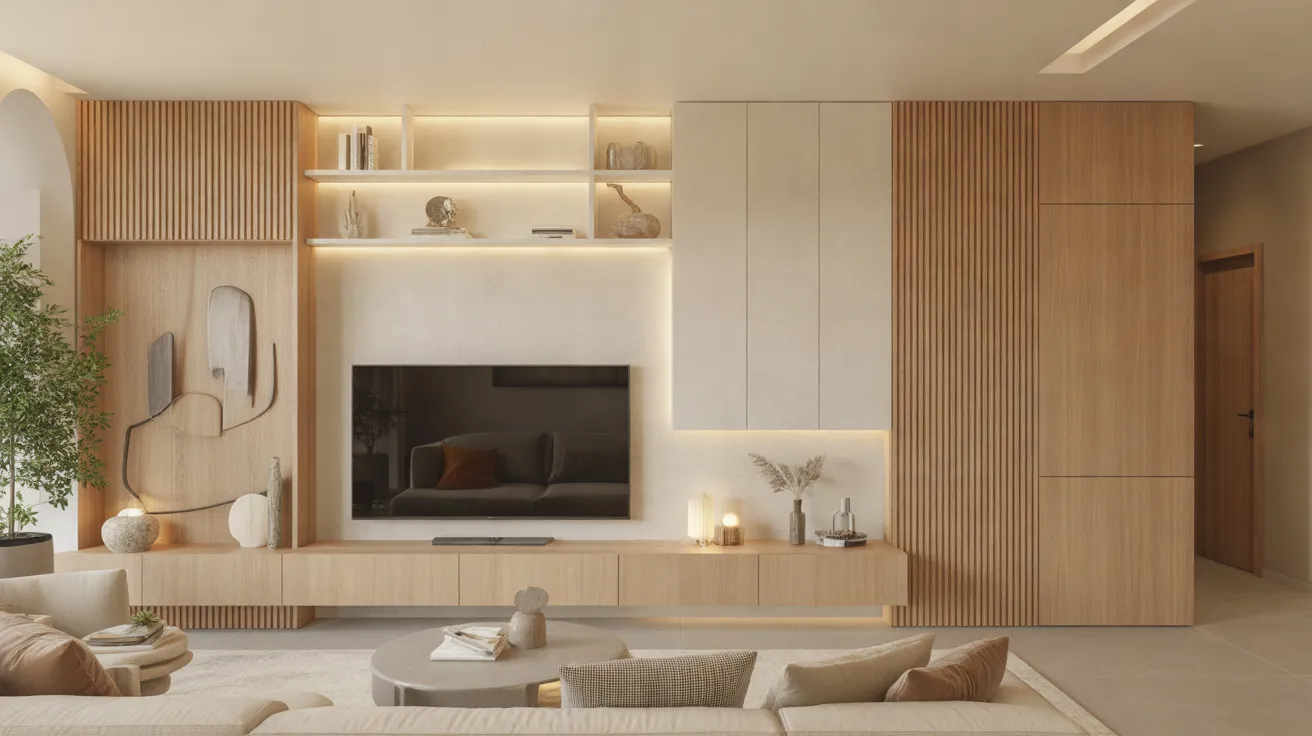
- Frame the screen intentionally. Shelves placed evenly around the television make it feel like part of a complete architectural feature instead of an isolated black rectangle.
- Mix open and closed storage. Display books and decor above while hiding cables, remotes, consoles, and everyday clutter inside lower cabinets.
- Leave breathing room. Avoid filling every shelf because a few carefully spaced objects create a cleaner, more expensive appearance.
- Repeat materials and colors. Match shelf finishes with nearby furniture, flooring, or cabinetry to make the room feel visually connected.
I’ve noticed built in storage works best when the television remains the central anchor without overpowering everything around it. Keep larger decorative pieces near the lower shelves and lighter objects higher up. This creates visual balance while giving you practical storage that still feels calm, organized, and intentional.
Soft LED Backlighting
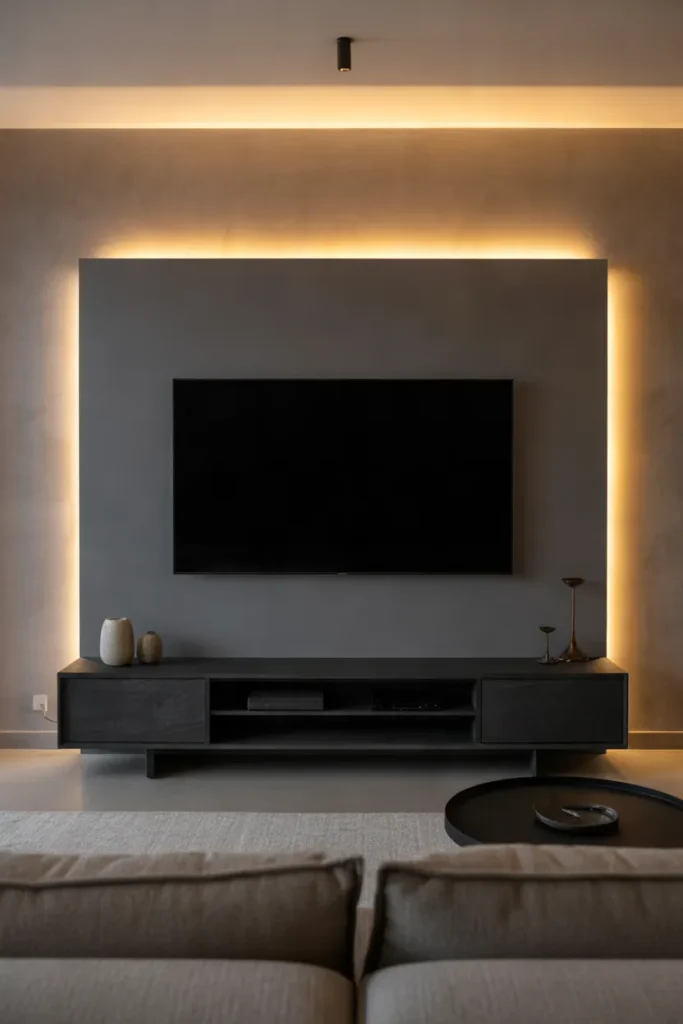
Quick Tip:
Choose warm white LEDs around 2700K to 3000K for a softer living room atmosphere. Install the strip slightly behind the television edge so the light reflects onto the wall instead of appearing as a harsh visible line.
For more guidance on comfortable lighting, explore the U.S. Department of Energy’s lighting guide
Soft backlighting adds depth around the screen and reduces the stark contrast between a bright television and a dark room. It also helps define the media zone without adding bulky decor. Keep the brightness modest, especially during evening viewing, so the glow supports the room rather than distracting from what you are watching.
Also View: 15 Whimsical Bedroom Ideas You’ll Absolutely Adore
Marble Effect Panel
BEFORE:
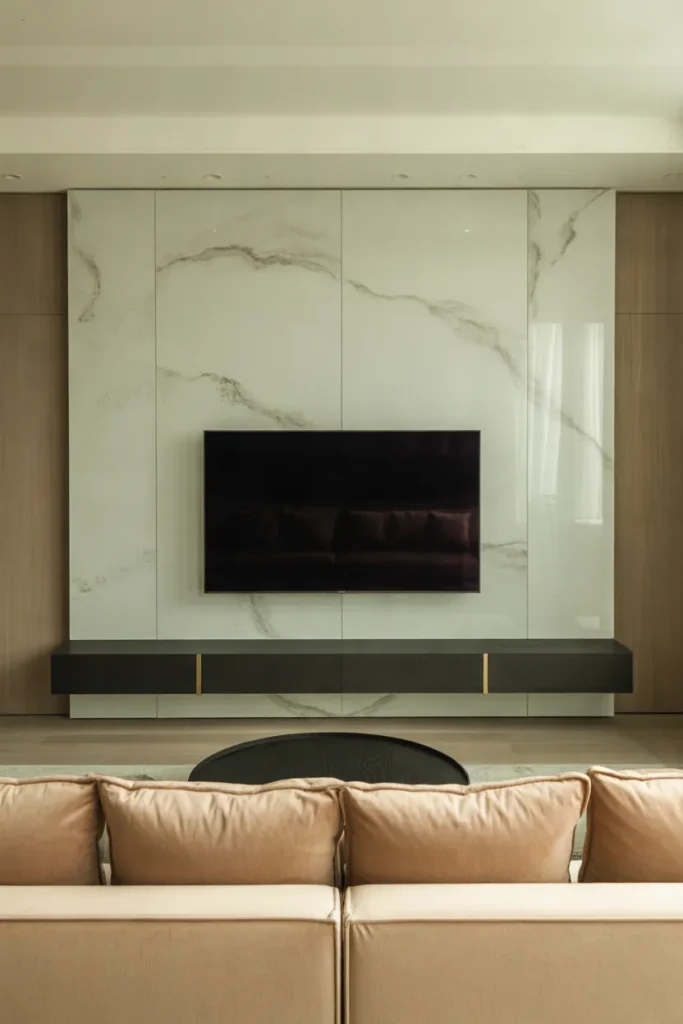
A plain painted wall can make a large television feel disconnected from the rest of the room. Dark screens often stand out sharply against light walls, especially when there are no surrounding textures or architectural details.
AFTER:
A marble effect panel creates a defined backdrop that makes the television look intentionally placed. Large scale veining adds movement and visual interest without requiring shelves, artwork, or extra decorative pieces around the screen.
For a convincing finish, choose a panel with subtle veining rather than an overly busy pattern. I’ve seen this work especially well with black televisions and slim floating consoles because the contrast feels crisp and balanced. Porcelain slabs and quality marble effect panels also offer the look of stone with easier maintenance.
Floating Media Console
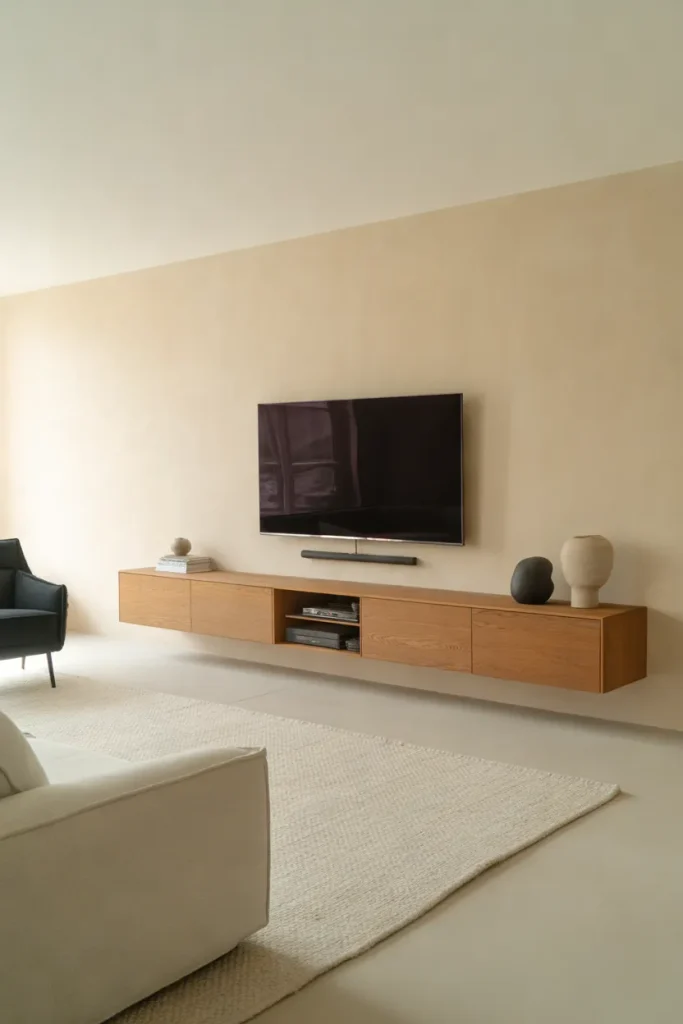
- Measure the television first. Choose a console that extends at least several inches beyond both sides of the screen for better visual balance.
- Set the mounting height. Position the console low enough to leave comfortable space between its top surface and the television.
- Hide every visible cable. Route wires through the wall or a concealed cable channel before securing the unit.
- Keep styling minimal. Use two or three low decorative objects so nothing competes with the screen.
Floating furniture makes a media wall feel lighter because more floor remains visible beneath the unit. It also simplifies cleaning and gives compact rooms a less crowded appearance. For the neatest result, check the wall construction before installation and use fixings designed to support the console’s fully loaded weight.
Fireplace Media Wall
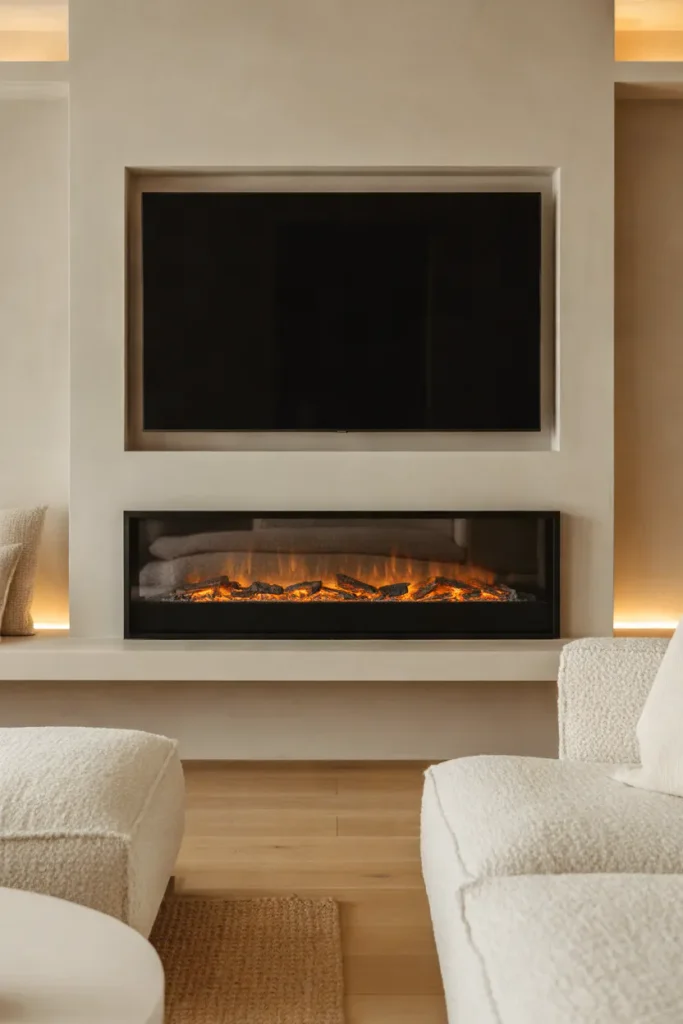
| Feature | Separate Setup | Integrated Media Wall |
| Visual focus | TV and fireplace compete | Both share one focal zone |
| Floor space | Requires more furniture | Keeps the layout compact |
| Overall finish | Can feel disconnected | Looks structured and cohesive |
| Cable storage | Often more visible | Easier to conceal within the build |
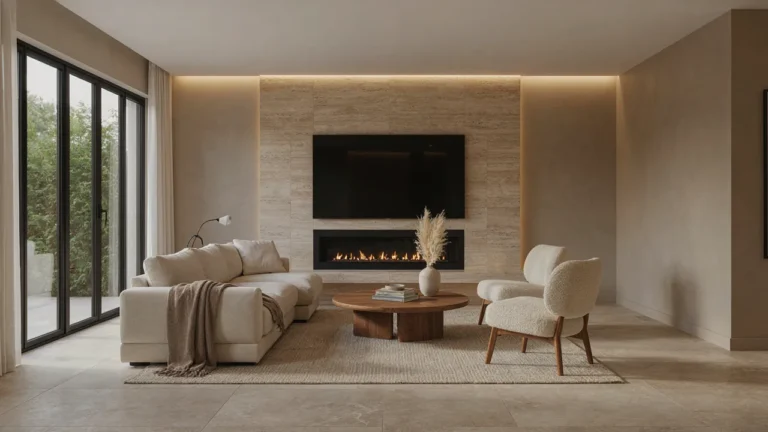
Combining the screen and fireplace works best when their widths and spacing feel deliberate. Leave enough separation to prevent the television from appearing cramped above the fire feature, and always follow the fireplace manufacturer’s clearance requirements. A wider fireplace often creates stronger proportions beneath a large screen and anchors the entire arrangement.
Dark Accent Wall

DO
- Choose charcoal, deep navy, or soft black for strong screen integration.
- Balance the dark wall with lighter flooring, rugs, or upholstery.
- Use warm lamps to prevent the room from feeling flat.
- Keep surrounding decor simple and well spaced.
DON’T
- Paint every nearby surface dark unless the room receives plenty of light.
- Add too many black accessories around the television.
- Ignore undertones in existing furniture and flooring.
- Use glossy paint that reflects light toward the screen.
A dark backdrop helps the television blend into the wall rather than dominate it visually. This works especially well in rooms where the screen feels too obvious against pale paint. Matte finishes usually give the cleanest result because they reduce glare and create a softer, more architectural focal point.
Dark accent walls are one of the most stylish media wall ideas for contemporary living rooms.
Textured Plaster Finish

Cost: Medium, depending on whether you DIY or hire a specialist.
Time: Usually one to two days for preparation and application.
Skill Level: Intermediate for authentic hand applied finishes.
Best For: Minimal, organic modern, Mediterranean, and warm contemporary interiors.
Textured plaster introduces subtle movement without making the television wall feel busy. Light catches the uneven finish differently throughout the day, giving the surface more character than standard paint. In my experience, warm beige and soft stone tones are easier to live with because they complement both dark screens and natural wood furniture.
Floor to Ceiling Panels

Full height panels create instant architectural structure and make a standard television setup feel more intentional. Extending the finish from floor to ceiling also draws the eye upward, which can make rooms with average ceiling heights appear taller and more proportioned.
Keep the panel layout simple so the wall does not compete with the screen. Narrow timber strips, broad painted panels, or upholstered sections can all work well. For the strongest result, align panel edges carefully with the console and television so the entire installation feels balanced rather than randomly divided.
Hidden Storage Cabinets

- Use handleless doors. Push to open cabinetry keeps the wall looking smooth and uninterrupted.
- Store technology out of sight. Place game consoles, routers, remotes, and spare cables inside ventilated cabinets.
- Plan access before installation. Leave practical openings for sockets, wiring, and equipment that may need maintenance.
- Match cabinet tones carefully. Warm white, greige, or soft taupe finishes blend easily with neutral living rooms.
- Limit open shelving. A single display niche can add character without introducing visual clutter.
Storage becomes especially valuable when the television area collects devices, wires, toys, and everyday accessories. Concealed cabinetry keeps those items accessible while maintaining a polished focal wall. Choose deeper lower cabinets for larger electronics and shallower upper units so the arrangement feels balanced rather than heavy around the screen.
Arched Media Niche
Quick Tip:
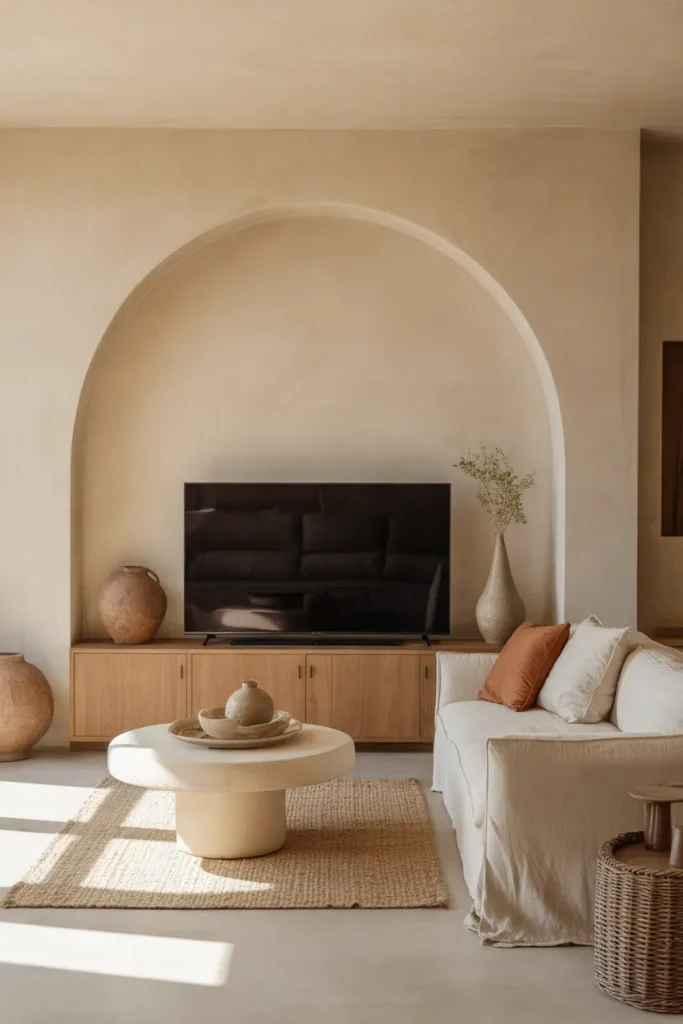
Creative media wall ideas like arched niches add softness and architectural character to living rooms.
Make the arch noticeably wider than the television so the screen does not look squeezed into the opening. Keep the curve simple and repeat its shape subtly through mirrors, lamps, or rounded furniture rather than adding several competing arches.
An arched niche softens the hard rectangular shape of a television and gives the media zone an architectural focal point. It works particularly well with plaster, limewash, and warm neutral interiors. Before construction, measure the screen and allow extra space for ventilation, cable access, and possible future television upgrades.
Side Display Shelves

BEFORE:
A television centered on a wide empty wall can leave awkward blank space at the sides. Filling both sides with bulky furniture may make the arrangement feel overly formal or crowded.
AFTER:
Slim shelving on one side introduces storage, height, and visual balance without creating perfect symmetry. The wall feels styled and complete while still maintaining plenty of negative space around the screen.
Asymmetrical shelving works best when the displayed objects share a restrained color palette. Use books, ceramics, framed pieces, and one or two plants in varied heights, then leave some shelves partly empty. I’ve noticed this approach feels more relaxed than matching towers while still giving media wall ideas a practical storage element.
Vertical Fluted Panels
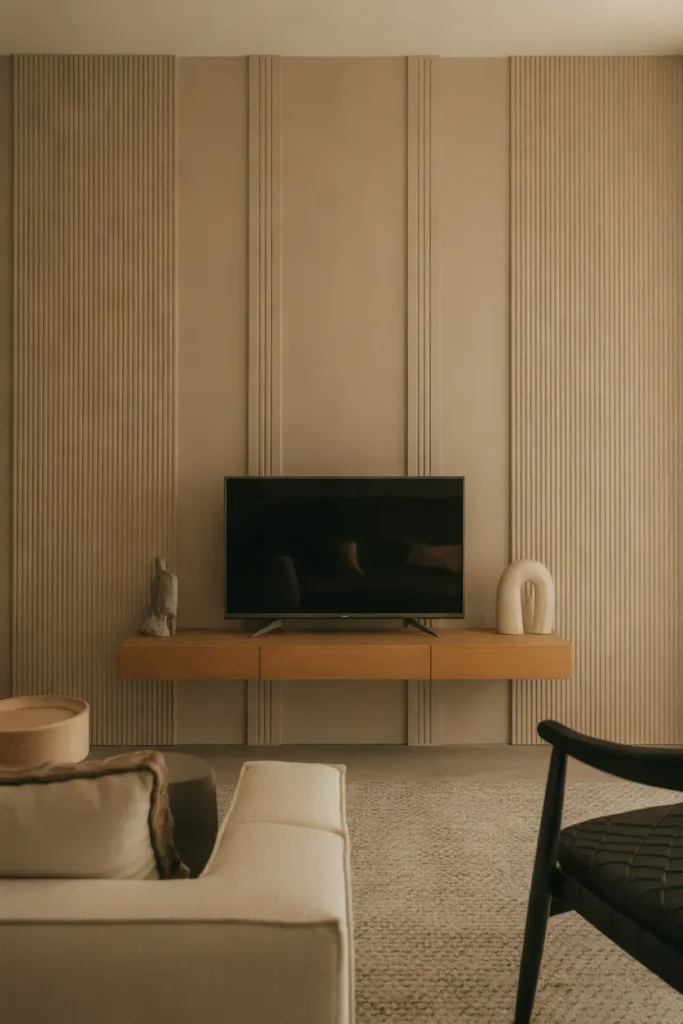
- Choose a restrained color. Warm beige, muted taupe, or soft gray keeps the textured surface sophisticated rather than overpowering.
- Center the screen carefully. Align the television with the panel layout before installation so the grooves feel balanced around it.
- Extend the panels vertically. Running them toward the ceiling strengthens the sense of height and architectural structure.
- Keep furniture simple. Pair the panels with a low console and minimal accessories to avoid visual competition.
Fluted surfaces work because their repeated grooves create depth without relying on bold color or busy decoration. They also cast changing shadows as daylight moves across the room. Choose wider grooves for a calmer look, and avoid placing too many decorative objects nearby, since the wall already provides strong visual texture.
Stone Feature Wall

| Feature | Natural Stone | Stone Effect Panels |
| Appearance | Unique veining and texture | Consistent pattern and finish |
| Installation | Heavier and more complex | Lighter and often easier |
| Maintenance | May require sealing | Usually easier to clean |
| Budget | Typically higher | Often more affordable |
Stone creates a strong focal point because its natural pattern gives the wall depth even with very little additional decor. Large slabs generally feel calmer than small tiles around a television. For practical installations, stone effect porcelain can deliver a similar visual impact while reducing weight, maintenance, and installation complexity.
Luxury media wall ideas often feature natural stone for a sophisticated and timeless appearance.
Framed Television Wall

DO
- Size the molding layout around the television before attaching any trim.
- Paint the trim and wall the same color for a cohesive finish.
- Keep panel spacing consistent across the full wall.
- Choose slim profiles for smaller or lower ceiling rooms.
DON’T
- Let molding lines run awkwardly behind the screen.
- Mix too many trim styles on one wall.
- Crowd the television with several framed artworks.
- Ignore cable access before installing the decorative panels.
Decorative molding gives a screen wall a more tailored appearance without requiring major built ins or heavy materials. I’ve seen this work particularly well in transitional interiors where modern electronics can otherwise feel out of place. Careful measurements matter most, since clean spacing is what makes the finished wall feel professionally planned.
Conclusion
The best media wall ideas do more than frame a television. They help create a living room that feels organized, balanced, and thoughtfully designed. Whether you prefer warm wood, sleek storage, soft lighting, textured finishes, or a dramatic feature wall, even one small update can shift the entire look of the room.
I’ve seen how careful details such as hidden cables, better proportions, and simple materials can make a surprisingly big impact. Save this post on Pinterest for future inspiration, try one or more ideas in your own space, and share it with someone planning a living room refresh.
These modern media wall ideas can transform an ordinary television wall into a beautiful focal point.