20 Paver Patio Ideas for a Charming Outdoor Escape
A welcoming patio can make even a small backyard feel like a place to linger.
The right pavers can bring shape, comfort, and personality to an outdoor space.
These paver patio ideas offer inspiration you can adapt to your home and budget.
You’ll find patterns for dining areas, quiet corners, garden paths, fire pits, and more. Each idea pairs a clear visual direction with practical details, so you can think through materials, layout, and everyday use before starting. If you’re working with a compact yard, a defined border or simple seating zone can make the space feel more intentional. For a larger area, contrasting patterns can help separate dining and lounging spots. Pavers also vary in texture, color, and upkeep, so consider how your patio will handle weather, furniture, and foot traffic. Browse the ideas, save the looks that suit your home, and choose a manageable first step.
For more inspiration on paver materials and outdoor layouts, explore the patio design resources available at Belgard.
Warm Running Bond
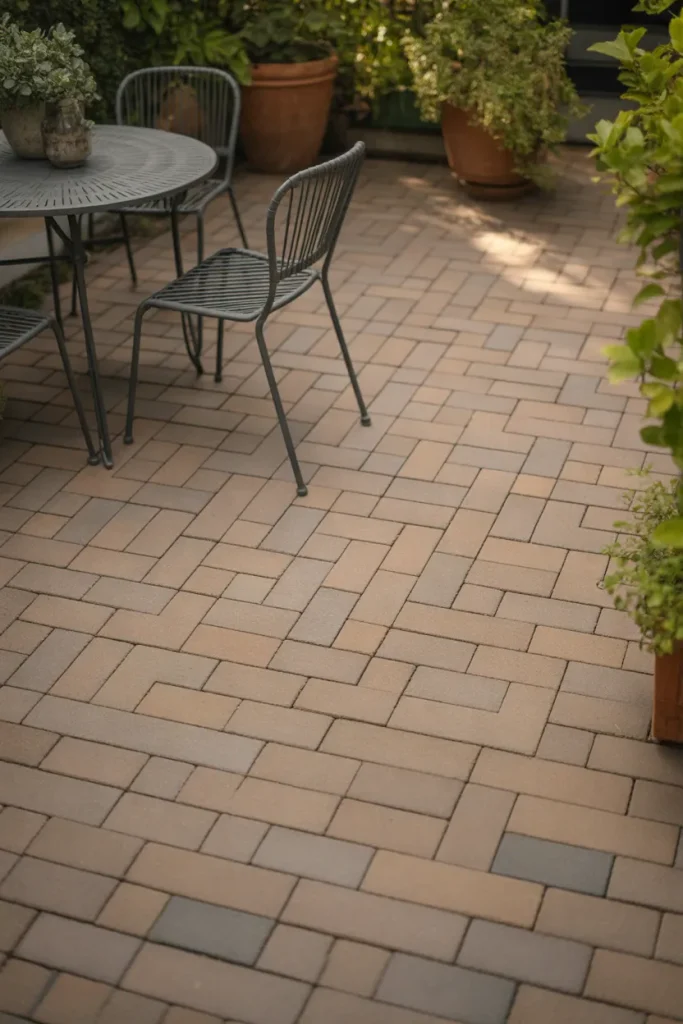
A running bond pattern gives a patio a clean, familiar look without feeling plain. Lay rectangular pavers in offset rows, shifting each joint halfway over the paver below. The repeating lines make a small seating area feel orderly, and the simple layout is approachable for a first project. For balanced color, mix a few close shades of tan or gray.
Before laying anything, mark the patio’s edges and check that the base slopes slightly away from the house so rainwater can drain. I’ve noticed that choosing pavers with a lightly textured surface helps the finished area feel comfortable underfoot and less slippery when damp. This classic layout works especially well beside brick homes and simple garden beds.
Mixed-Size Stone Grid
- Choose two or three paver sizes in the same color family. A limited palette keeps the pattern from looking busy.
- Sketch the layout on graph paper before buying materials. Repeating a small group of shapes makes placement easier.
- Start from a straight edge, such as a house wall or border. Check the lines often with a string line.
- Keep joint widths consistent. Uneven gaps can make an otherwise thoughtful pattern look accidental.
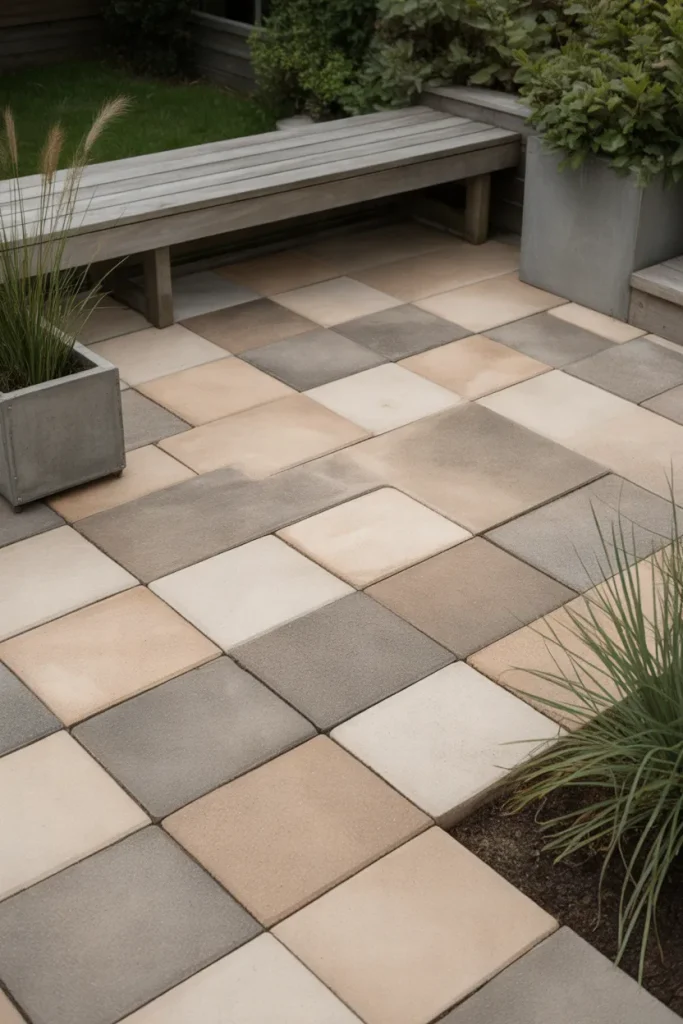
Mixed sizes add movement while keeping the patio grounded. Use larger stones as anchors, then fill around them with smaller rectangles. This pattern suits a wide seating zone where a single-size grid might feel too formal. Plan cuts at the outer edge, and choose a layout that leaves mostly full pavers in the most visible area.
These paver patio ideas create a balanced outdoor space by combining different stone sizes and shapes.
Circular Fire Pit Paver Patio Ideas
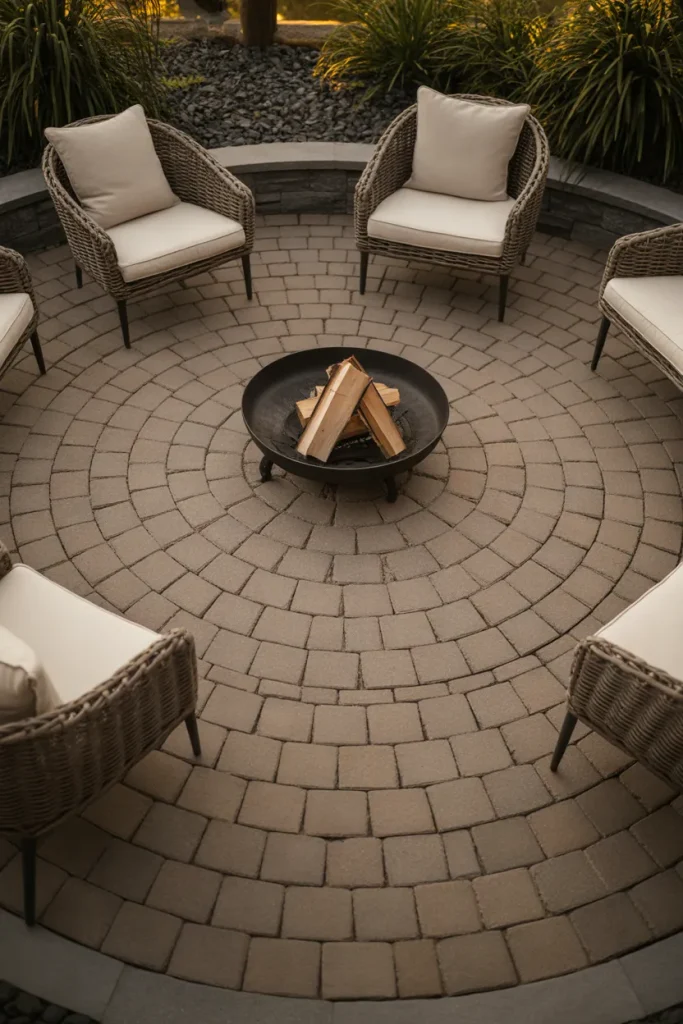
Quick Tip: Mark the circle with a stake and string before digging, then check the curve from several angles. Choose wedge-shaped pavers or a kit made for circular layouts, and follow the manufacturer’s fire-pit clearances for nearby seating and plants.
A round gathering area can make an open lawn feel more purposeful. Set the fire pit at the center, then leave enough room for chairs and a clear walking path around them. In my experience, a generous paved ring is easier to use than a tight circle, especially when guests need space to pull chairs back safely.
Also View: 22 Tiny Studio Apartment Layout Ideas for Wow Factor
Curved Garden Border Paver Patio Ideas
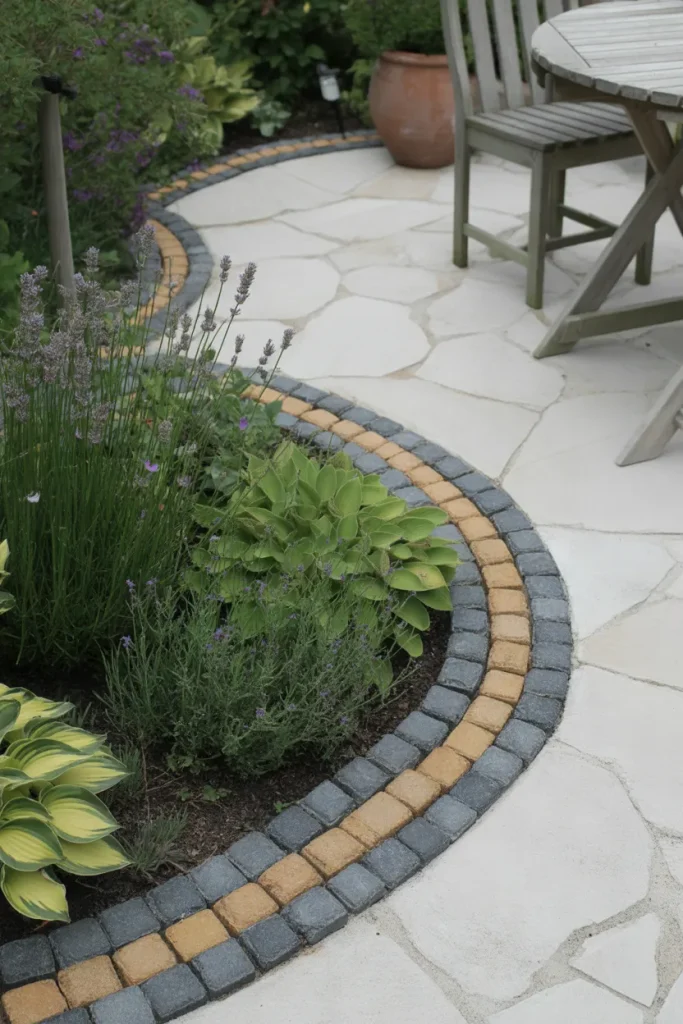
BEFORE: A straight patio edge can make a small yard feel boxy, especially where it meets a rounded flower bed. The boundary may look unfinished when grass grows unevenly along the pavers.
AFTER: A soft curve follows the garden bed and gives the seating area a more natural outline. A contrasting border row makes the edge easier to see and mow around.
Lay out the curve with a garden hose before digging, then adjust it until the shape looks smooth from the house. Use smaller pavers along the edge because they are easier to position around a bend. Compact the base carefully, and keep the outer row level so the border stays neat as the seasons change.
These paver patio ideas help create smooth transitions between garden beds and outdoor seating areas.
Paver and Gravel Path
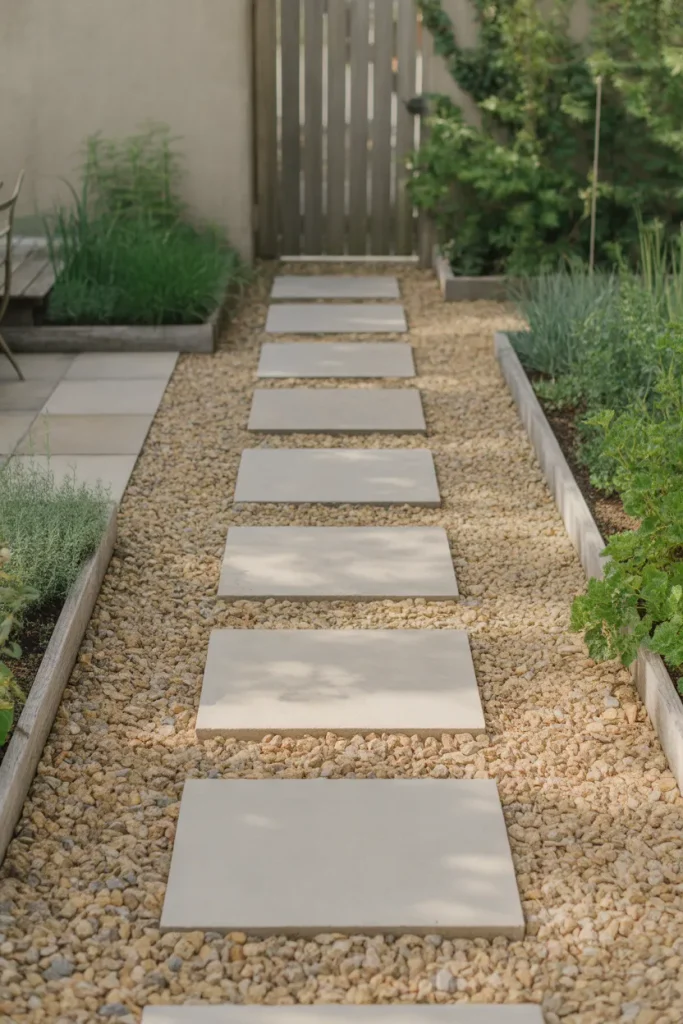
- Mark the path width with stakes and string. Leave enough room for two people to pass if the route is a main walkway.
- Excavate the route and add a compacted base. A stable foundation helps prevent pavers from shifting.
- Set large stepping stones at a comfortable stride. Use a level to keep them even.
- Fill the gaps with gravel, then sweep it into the edges. Top up any low spots after the first rain.
A gravel-and-paver path connects the patio to a shed, gate, or garden without paving the whole yard. Keep the stepping stones broad and evenly spaced so the route feels natural to walk. A metal or plastic edge can hold the gravel in place, especially where the path crosses a lawn or slopes slightly.
Two-Tone Checkerboard
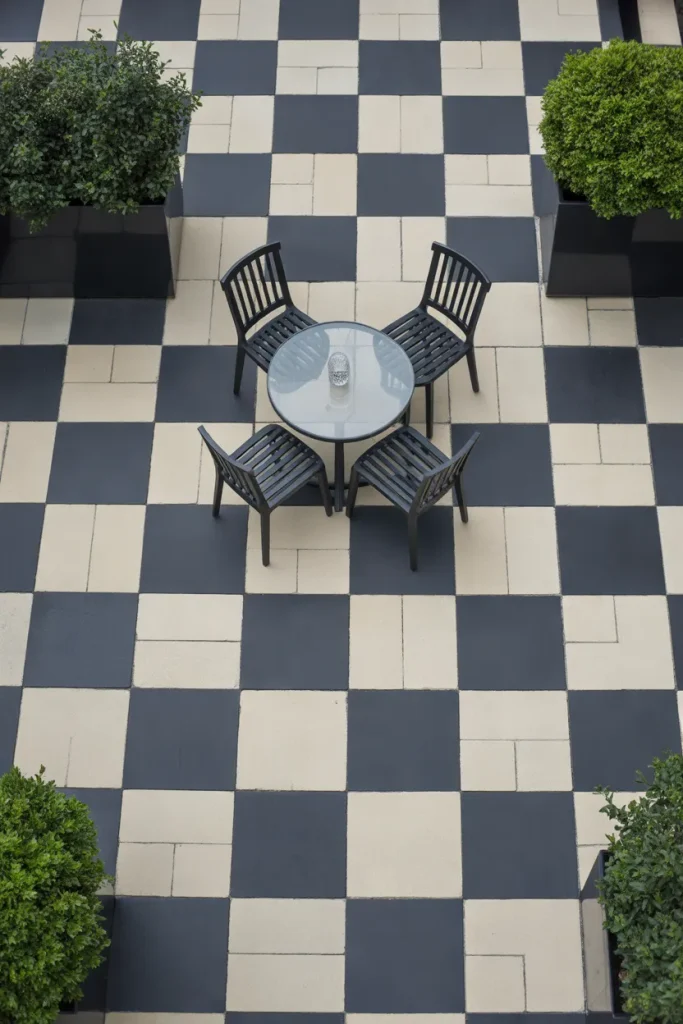
| Feature | Single Color | Two-Tone Pattern |
| Visual effect | Quiet and unified | Graphic and high contrast |
| Layout | Simple repeating rows | Alternating light and dark squares |
| Best setting | Small or detailed yards | Open patios with simple surroundings |
A checkerboard surface adds a strong focal point, so keep nearby furniture and planting restrained. Choose pavers with matching thickness, then alternate colors in a clear grid. Snap chalk lines to guide the first rows, since small alignment errors become noticeable across a high-contrast pattern. This design works best when the patio has a clean, square outline.
For a bold outdoor look, these paver patio ideas combine contrasting colors in a stylish pattern.
Defined Dining Zone

DO:
- Size the paved zone for the table and pulled-out chairs.
- Leave a clear route between the dining area and the house.
- Use a contrasting border to define the footprint.
- Choose textured pavers that feel steady under dining chairs.
DON’T:
- Place the table so close to a wall that chairs cannot move.
- Set pavers on loose soil that may shift under table legs.
- Use pale, polished stones where spills and stains are likely.
- Block access to doors or the main garden path.
A dining zone gives meals outdoors a natural home, even in a yard with no room for a full patio. Measure with chairs pulled back before setting the border, and keep the table centered on the paved area. A compact umbrella adds shade, while planters can soften the edge without crowding the walking space.
Raised Paver Terrace
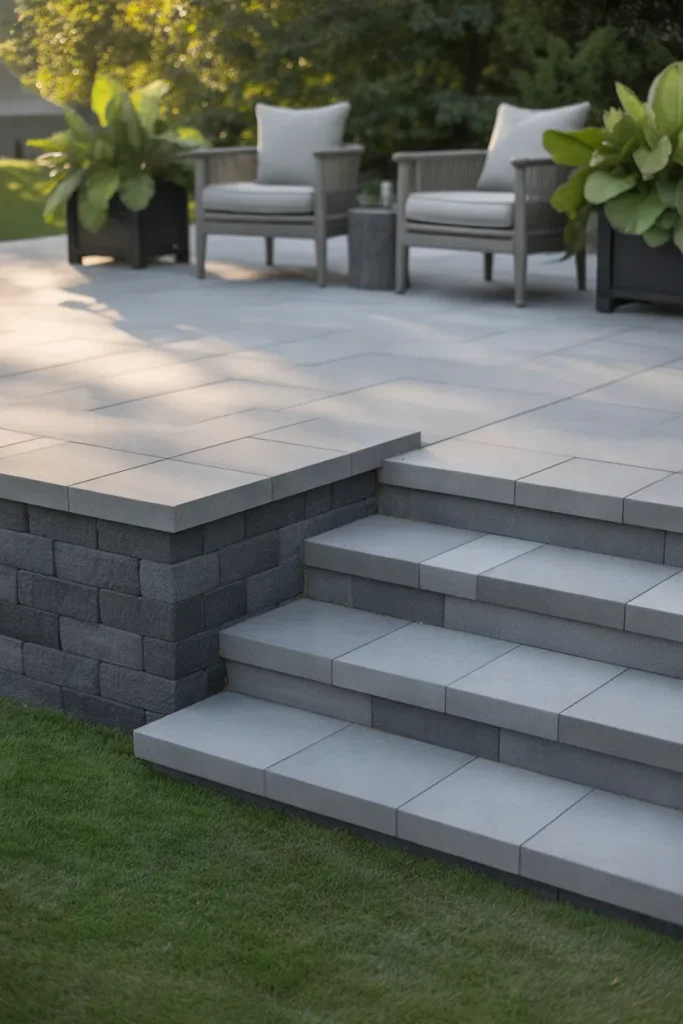
Cost: Moderate to high, depending on excavation, retaining materials, and site conditions
Time: Several days for preparation and installation
Skill Level: Intermediate, with careful leveling and drainage
Best For: Sloped yards or patios that need a defined platform
A raised terrace can turn a gentle slope into a level spot for chairs or a dining table. Plan the retaining edge and steps before choosing the paver pattern, since each part needs a stable base. For taller structures or uncertain soil conditions, ask a qualified contractor to assess the design and drainage before construction begins.
Diagonal Paver Layout
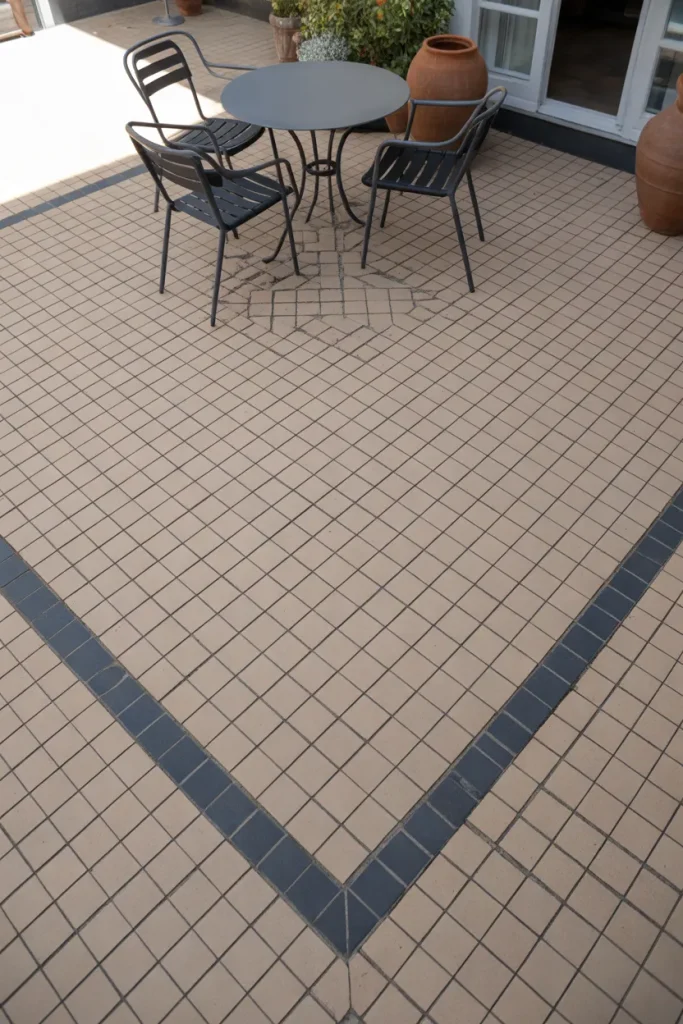
A diagonal layout draws the eye across the patio and can make a narrow space feel less rigid. Start with a clear center line, then dry-lay several rows to see where the angled edges will land. Border pavers can hide cut edges and give the pattern a crisp finish. Measure carefully, since diagonal layouts usually need more cuts.
These paver patio ideas can make narrow outdoor spaces appear wider and more visually appealing.
Layered Stone Border
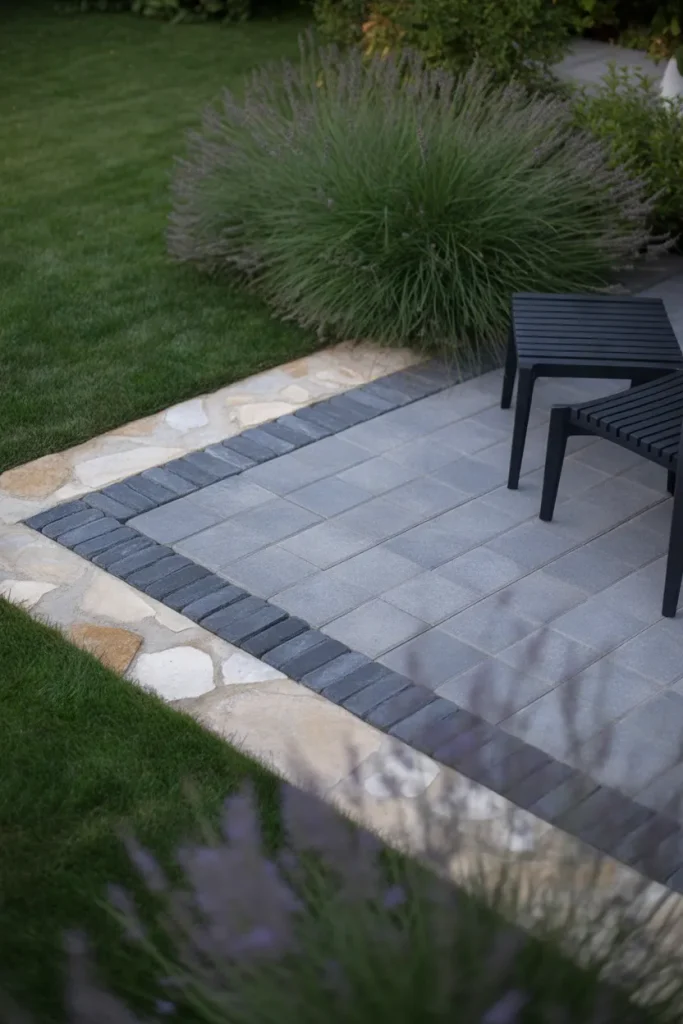
- Measure the patio footprint and choose a border width that fits the space.
- Select a border color that contrasts with the main pavers without clashing with nearby brick or siding.
- Lay the outer band first, keeping the corners square and joints even.
- Fill the center with the main paver pattern, then sweep joint sand into all gaps.
A layered edge makes a basic patio look finished and helps define its shape against grass or planting beds. Keep the inner border narrow if the patio is small, so it does not take over the surface. In my experience, repeating one of the border colors in a planter or chair cushion makes the whole space feel connected.
Herringbone Brick Pattern
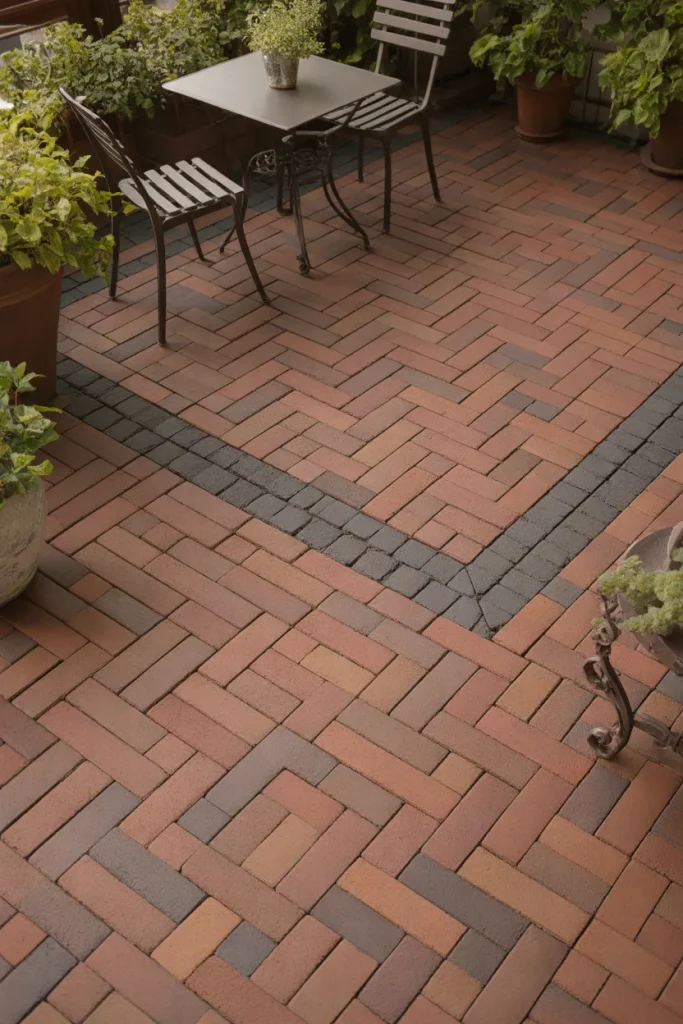
| Feature | Straight Rows | Herringbone |
| Visual style | Calm and linear | Dynamic and patterned |
| Installation | Easier to align | Requires careful layout |
| Edge treatment | Simple border works | Strong perimeter restraint helps |
Herringbone creates a lively surface from familiar brick pavers, and its interlocking arrangement can help resist shifting when installed over a proper base. Set a straight starting line and use a sturdy edge restraint around the perimeter. Dry-lay a small section first to confirm the pattern direction before committing to cuts at the borders.
Small Courtyard Paver Patio Ideas
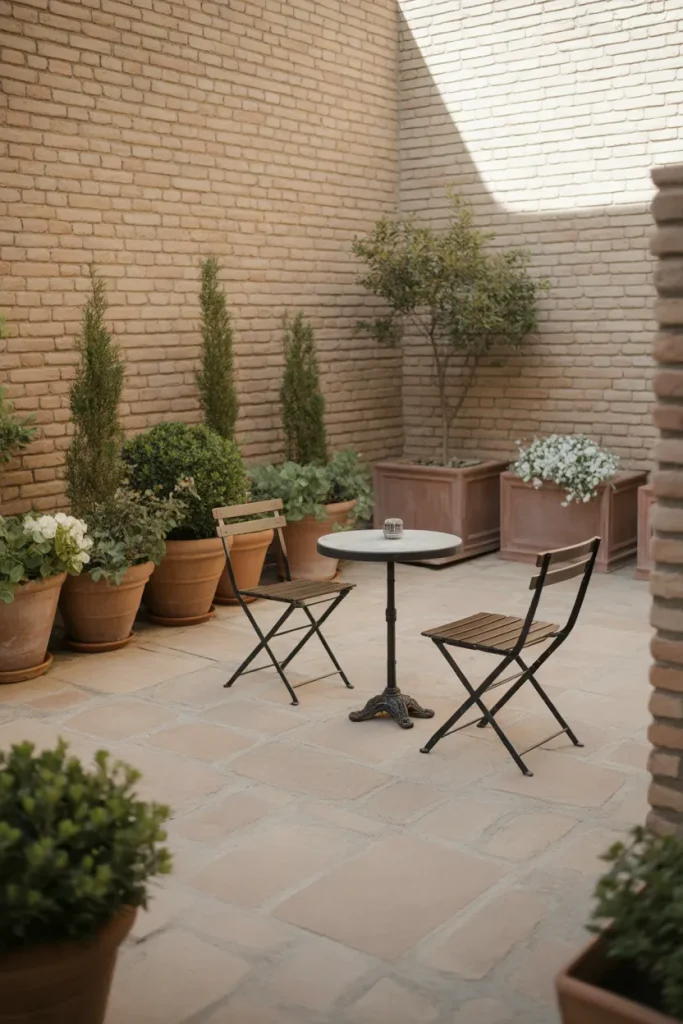
Quick Tip: Measure the furniture footprint before laying pavers, including room to pull chairs out. In a tight courtyard, choose slim-legged pieces and use vertical planters to keep the floor open.
A small courtyard feels more useful when the paving forms one continuous, easy-to-sweep surface. Choose a light stone tone to reflect daylight, then add greenery around the perimeter rather than scattering pots through the walking area. A folding bistro set can be tucked aside when you need extra room for gardening or carrying items through.
Paver Inlay Medallion
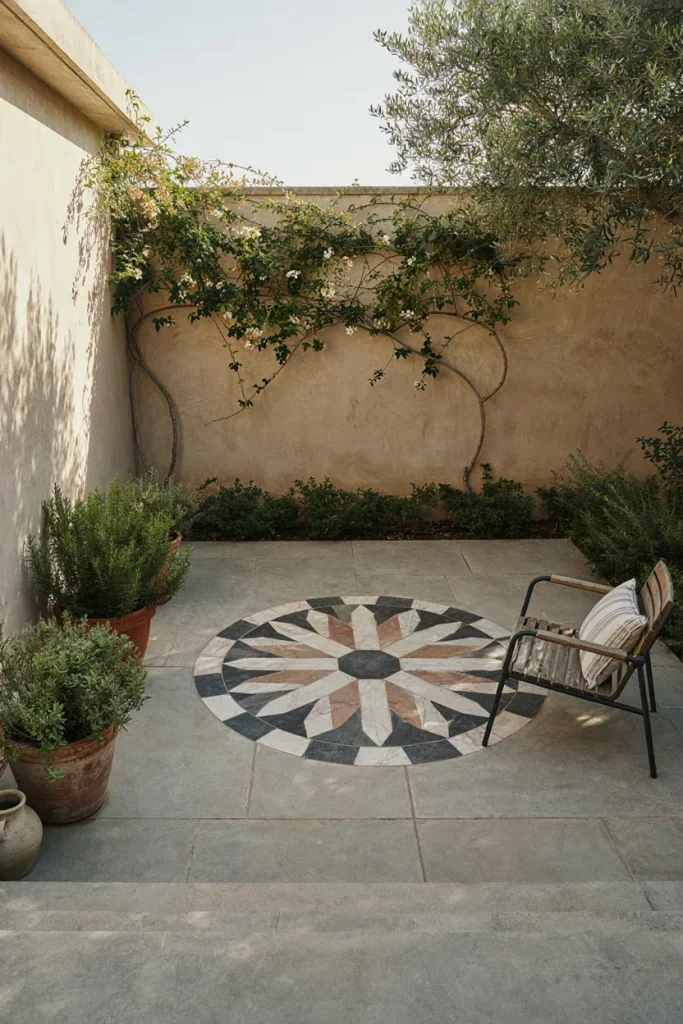
BEFORE: A broad patio can look like one uninterrupted sheet of stone, with no clear point for the eye to land. Furniture may feel scattered across the open surface.
AFTER: A small geometric inlay creates a focal point and gives the seating arrangement a natural center. Contrasting paver colors make the detail visible without adding bulky decor.
Choose a simple motif that fits the patio scale, such as a circle, star, or repeating square. Sketch it full size before cutting any stones, and keep the surrounding paver pattern straightforward. A compact inlay near a table or fire feature adds detail while leaving plenty of uninterrupted space for walking and moving chairs.
Covered Paver Lounge
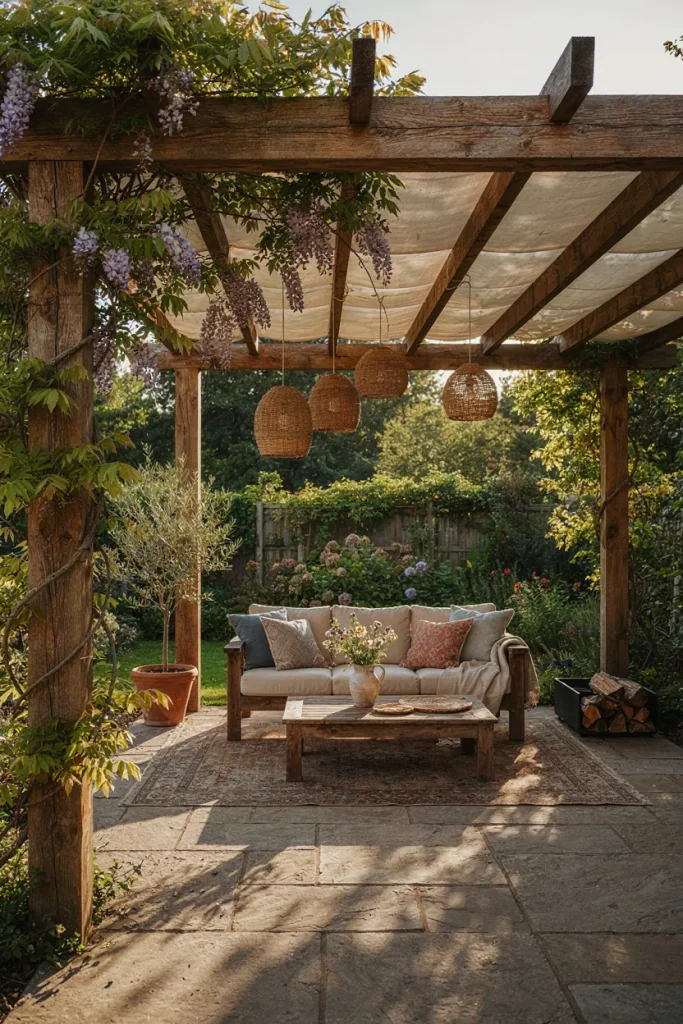
- Check the roof or canopy footprint, then mark the seating area below it.
- Pick pavers with a slip-resistant surface for a space exposed to windblown rain.
- Build a stable, well-drained base before setting the stones.
- Arrange seating with clear walking space between the house door and the yard.
- Add outdoor-rated cushions and lighting suited to the covered area.
A covered lounge extends the patio’s usefulness on hot afternoons and during light rain. Large pavers reduce the number of joints beneath furniture, which makes sweeping easier. Keep fabric and lanterns rated for outdoor use, and make sure the canopy or pergola is securely anchored for local wind conditions.
Grass-Joint Pavers
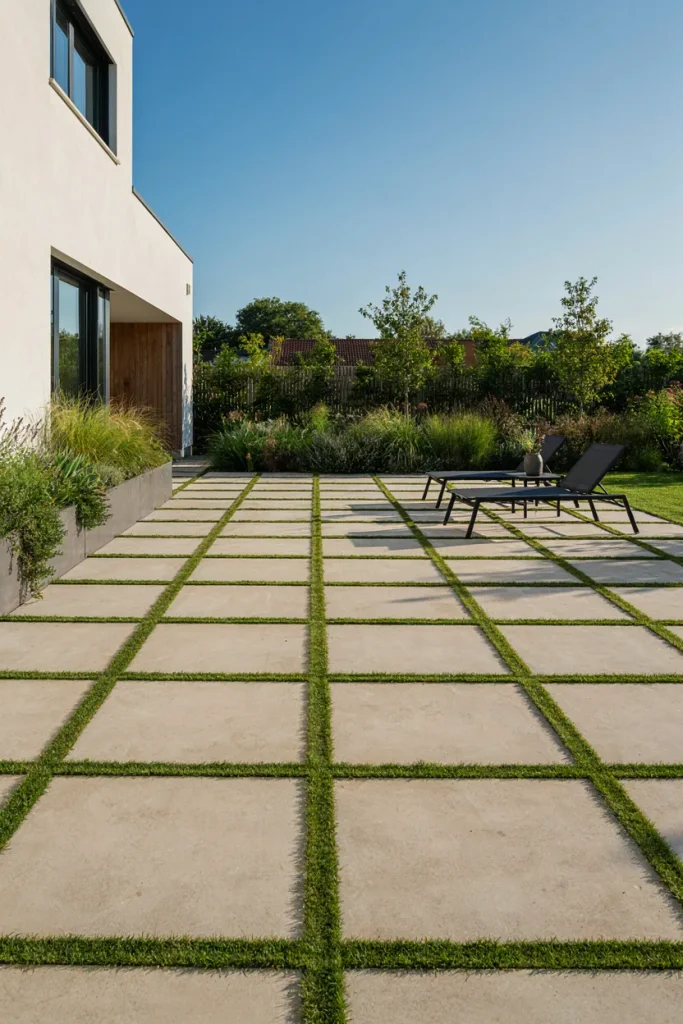
| Feature | Tight Paver Joints | Grass Joints |
| Look | Continuous paved surface | Green, open grid |
| Maintenance | Sweep sand into joints | Trim and water grass |
| Best location | High-use seating areas | Light-use garden paths |
Grass joints soften a paved area and connect it visually to the lawn, but they need sunlight, water, and occasional trimming. Keep the gaps wide enough for healthy growth and choose grass suited to your climate. For a patio used often for dining or entertaining, reserve the grass-grid treatment for a path or lower-traffic section.
These eco-friendly paver patio ideas bring natural greenery into your outdoor living space.
Warm Flagstone Mosaic
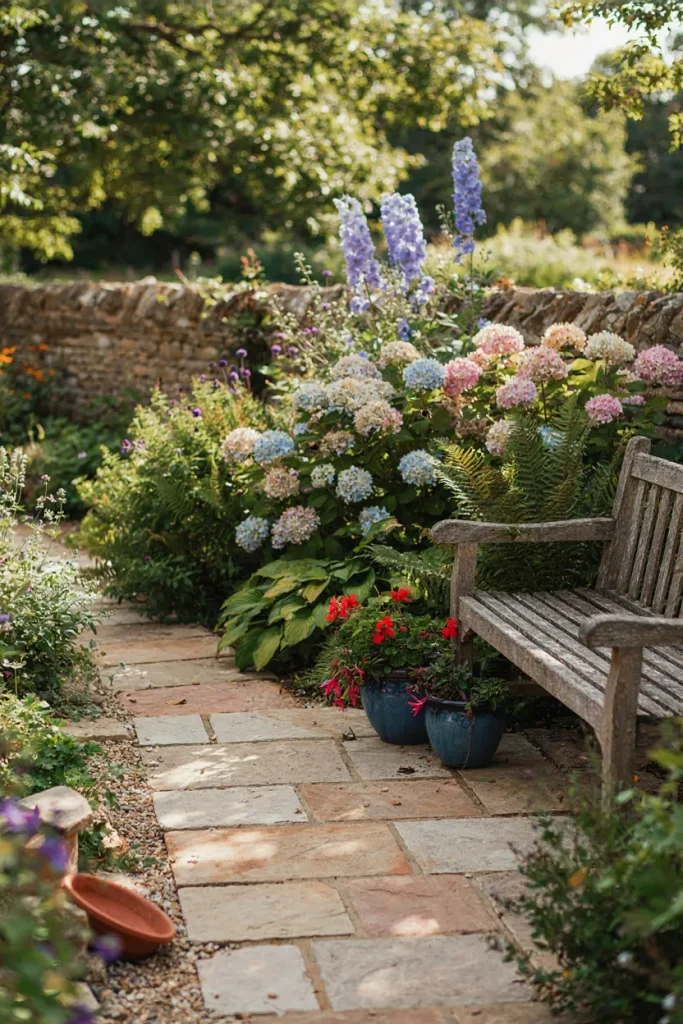
- Select flat flagstones with varied shapes but similar thickness.
- Arrange the stones on the ground first, leaving consistent gaps between pieces.
- Adjust the base beneath each stone until the surface feels stable underfoot.
- Fill joints with fine gravel or another suitable material for your climate and drainage needs.
Irregular stone brings a relaxed, natural feel to a garden patio. Sort pieces by thickness before laying them, since stones that rock can become a tripping hazard. Keep the largest stones near seating and walking routes, then fit smaller pieces toward the edges. A simple bench and a few pots let the varied stone remain the focus.
Paver and Timber Deck
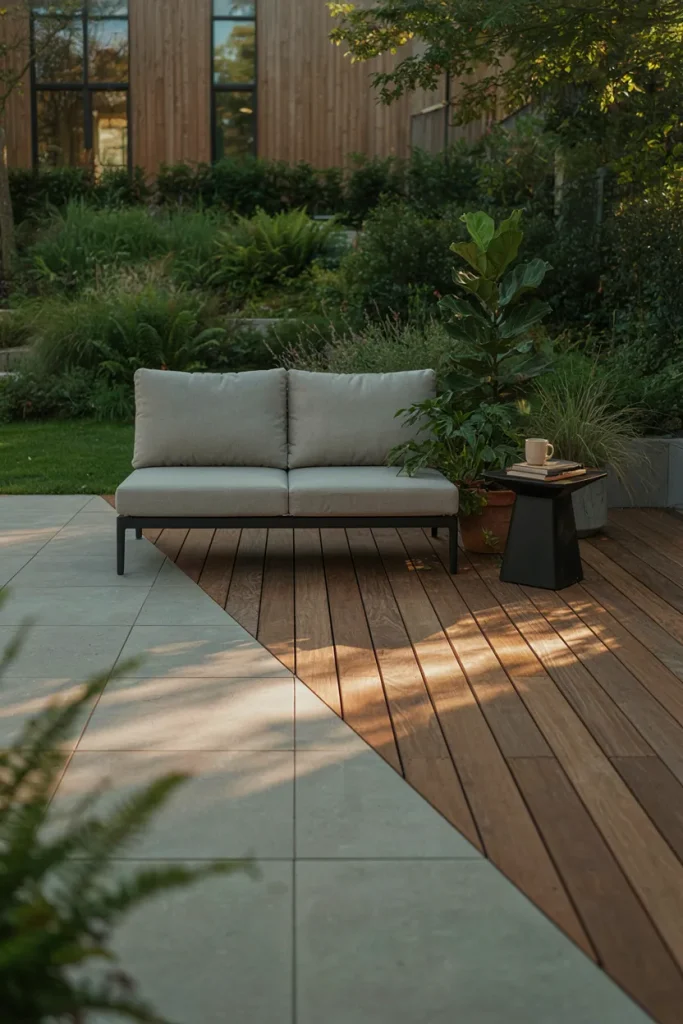
| Feature | Paver Area | Timber Deck |
| Surface feel | Cool, firm stone | Warm wood underfoot |
| Upkeep | Sweep and refresh joint material | Clean and maintain wood finish |
| Useful role | Dining or grill zone | Lounge seating or step-up area |
Pairing paving with timber can divide a backyard into useful zones without adding walls. Use pavers near a grill or dining table, then place the deck where you want a warmer lounge surface. Keep the transition flush or add a clear step, and plan drainage so water does not collect where the two materials meet.
Raised Planter Edge
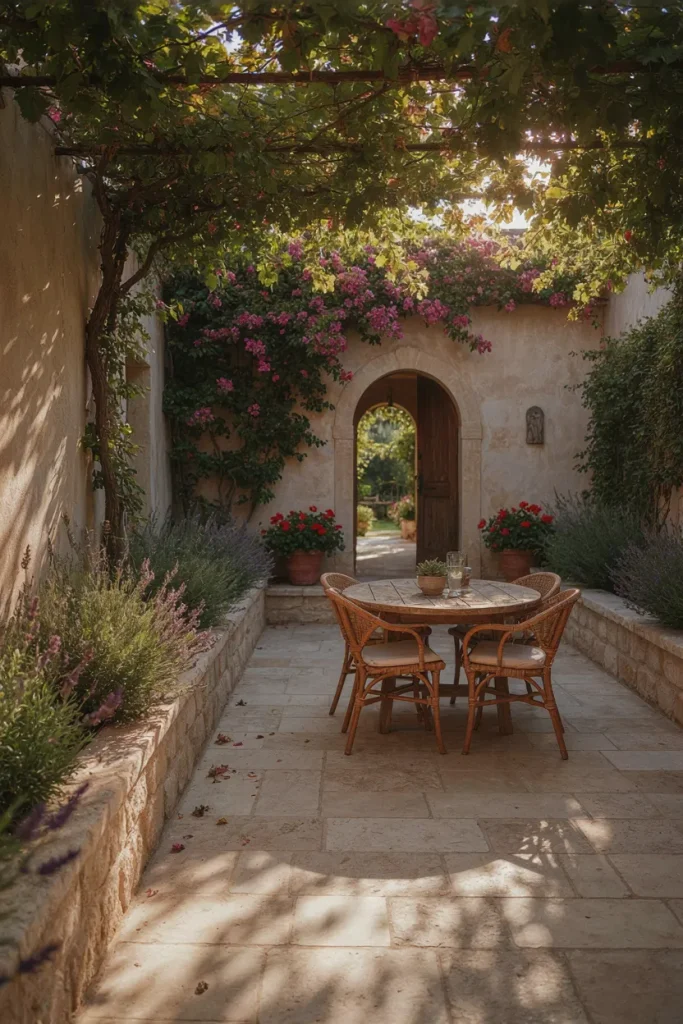
DO:
- Keep the planter edge low enough to preserve open views.
- Add drainage so water can escape from the soil.
- Choose plants suited to the amount of sun the patio receives.
- Leave a clear route around the seating area.
DON’T:
- Build the planter where it blocks a door or gate.
- Let soil spill across the paving joints.
- Choose shrubs that will quickly crowd the patio.
- Skip a stable base beneath the planter blocks.
A low planter edge adds greenery and defines the patio without taking up the center. Use compact herbs or flowering perennials where people sit, and taller grasses near an exposed corner for a little privacy. Leave access for watering and pruning, and keep the pavers just outside the planter easy to sweep.
Fire Pit Paver Ring
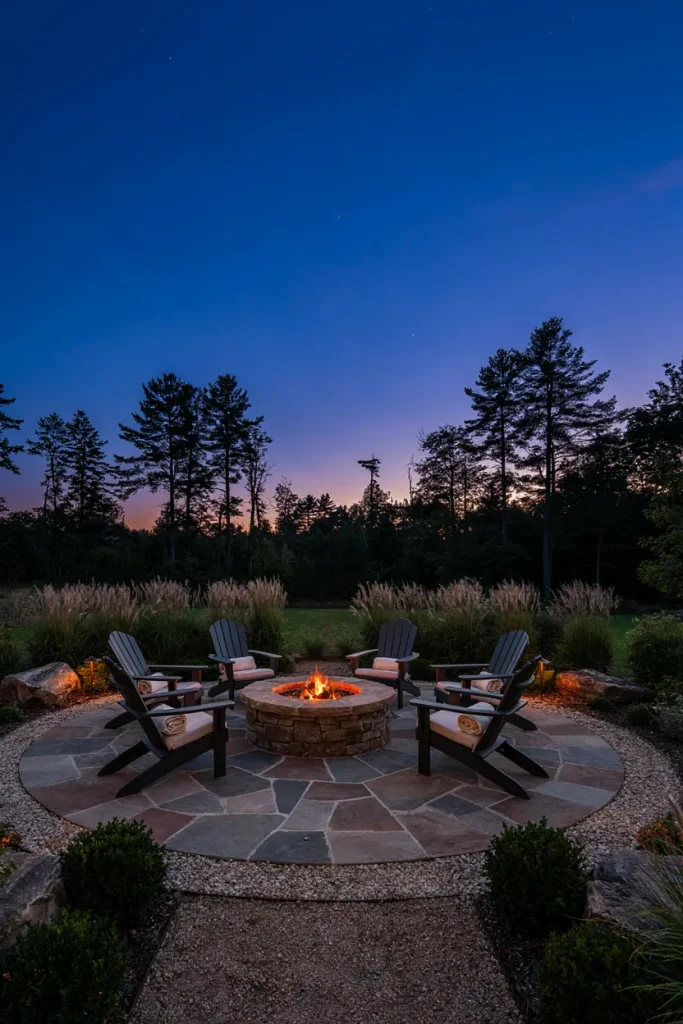
Cost: Moderate, with added expense for a fire pit and suitable base
Time: One to two days for a small, prepared area
Skill Level: Beginner to intermediate, depending on the pattern
Best For: A dedicated spot for evening gatherings
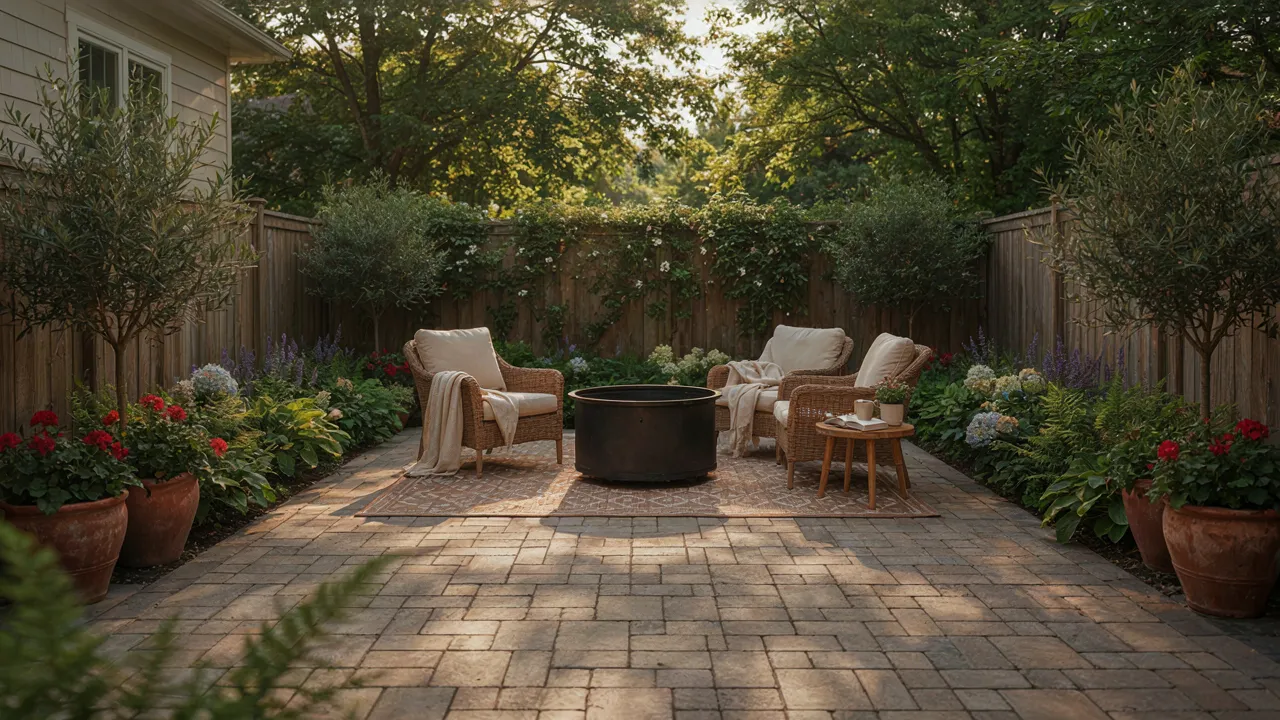
A circular paver ring gives a fire pit a clear home and keeps chairs on a stable surface. Check the fire pit maker’s clearance guidance before choosing the circle’s size, and use materials rated for the heat exposure in that area. Leave a comfortable walkway around the chairs so guests can move without stepping onto the lawn.
Inset Gravel Bands
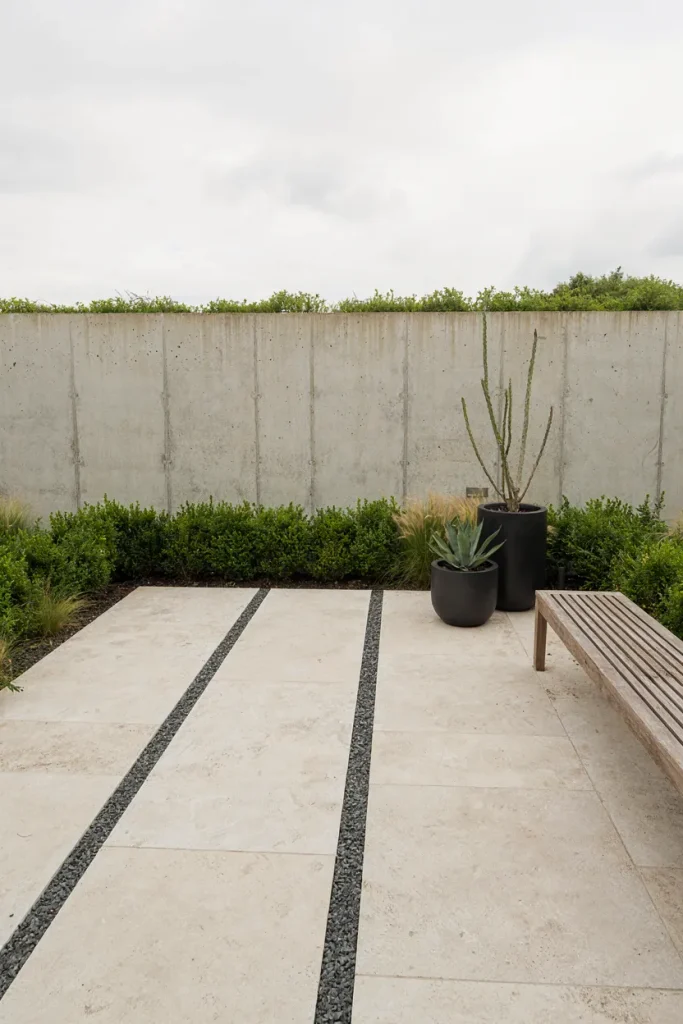
Gravel bands add contrast and break up a broad paved surface without introducing another paver color. Mark their positions before installation, then use edging beneath the surface to keep gravel from spreading into the joints. A few straight bands suit a modern layout, while a single border band can frame a smaller patio. Choose gravel that is comfortable to walk beside and easy to sweep back into place.
For a polished result, keep the paving pattern simple and repeat the gravel color in a planter or outdoor cushion. These paver patio ideas are easiest to maintain when the bands are wide enough for a small rake or broom. Check the area after heavy rain and refill any low spots so the contrast stays crisp over time.
Conclusion
A charming outdoor escape can start with one thoughtful choice: a useful layout, a welcoming pattern, or a small seating area with room to move. These paver patio ideas can help you see what might work in your yard and give you practical details to consider as you plan. Start with the way you want to use the space, then select pavers and features that fit your needs. Save this article on Pinterest so your favorite designs are easy to find later. Try one idea at a time, and share the inspiration with someone planning a patio of their own. Your outdoor retreat can take shape one paver at a time