23 Stunning Deck Planter Ideas for a Stylish Outdoor Retreat
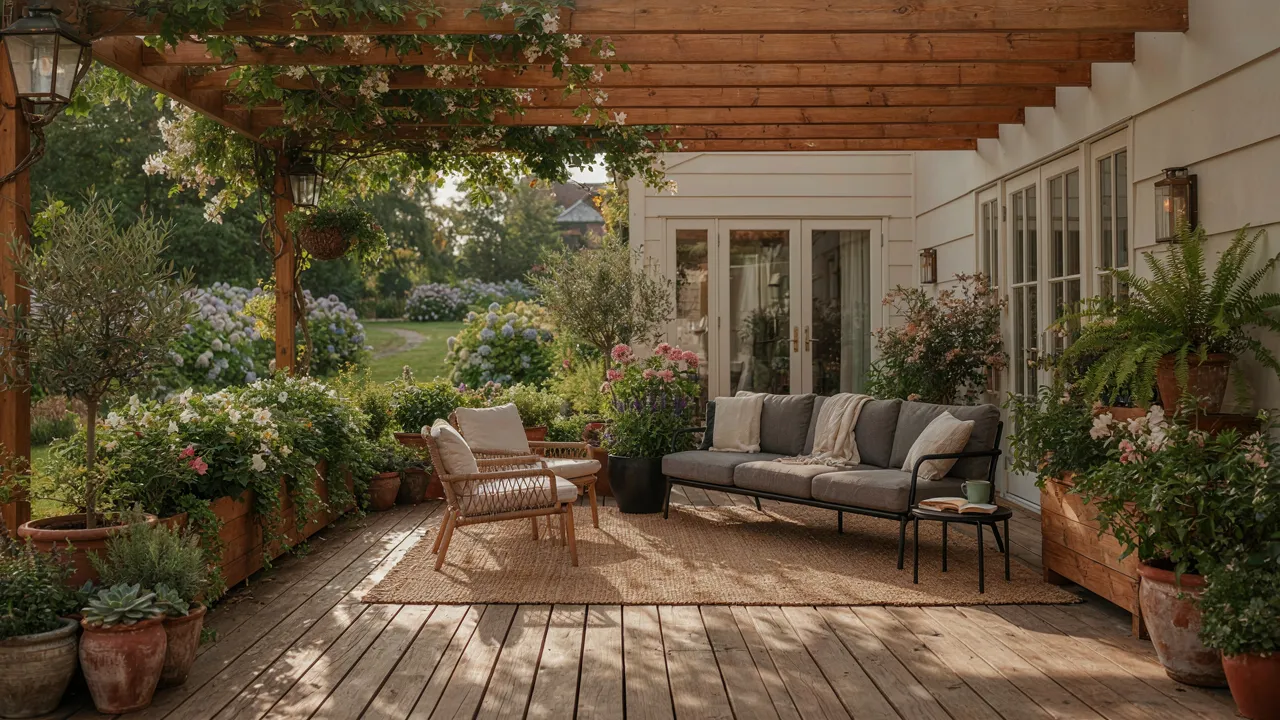
A plain wooden deck can feel empty, even when you have comfortable furniture and plenty of room to relax. The right planters can bring it to life with colorful flowers, lush greenery, and natural textures.
These 23 deck planter ideas will help you create an outdoor retreat that feels welcoming, stylish, and full of personality, whether you have a spacious backyard deck or a small area outside your back door. From rustic wooden boxes and railing-mounted containers to hanging baskets and modern statement pots, there are plenty of ways to add greenery without sacrificing valuable space.
In my experience, combining different planter heights, repeating a few colors, and choosing plants suited to your sunlight conditions can make a deck feel more thoughtfully designed. You will also find practical options for growing fresh herbs, vegetables, and low-maintenance greenery. Explore these ideas, find a style that suits your home, and discover simple ways to make your outdoor space more enjoyable.
If you’re comparing deck planter ideas for different layouts, begin with the amount of sunlight, the space available, and how much maintenance you prefer.
Wooden Deck Planter Boxes
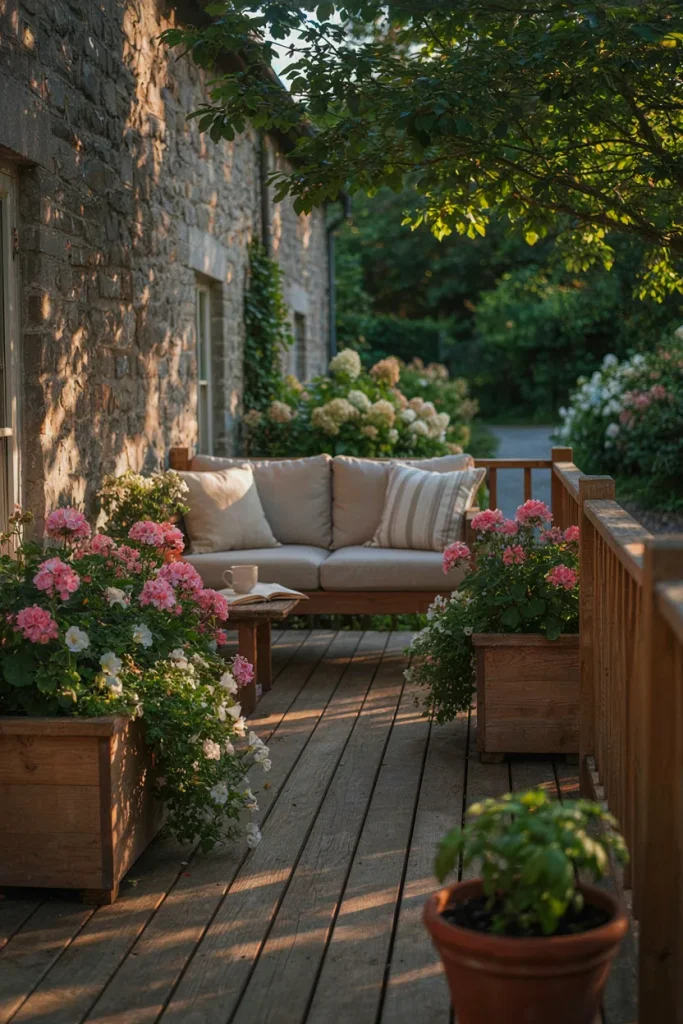
Wooden planter boxes add warmth and structure to an outdoor deck while keeping plants neatly organized. Cedar boxes pair beautifully with natural timber flooring, creating a coordinated look that feels welcoming and relaxed. Fill them with colorful flowers, leafy greenery, or fresh herbs to suit your outdoor style.
In my experience, grouping two or three boxes of different sizes creates more visual interest than scattering individual pots randomly. Position larger boxes near railings or empty corners, leaving enough room for chairs and walking paths. Choose weather-resistant wood, provide proper drainage, and check that the deck can support the weight of wet soil and mature plants.
Colorful Flower Containers
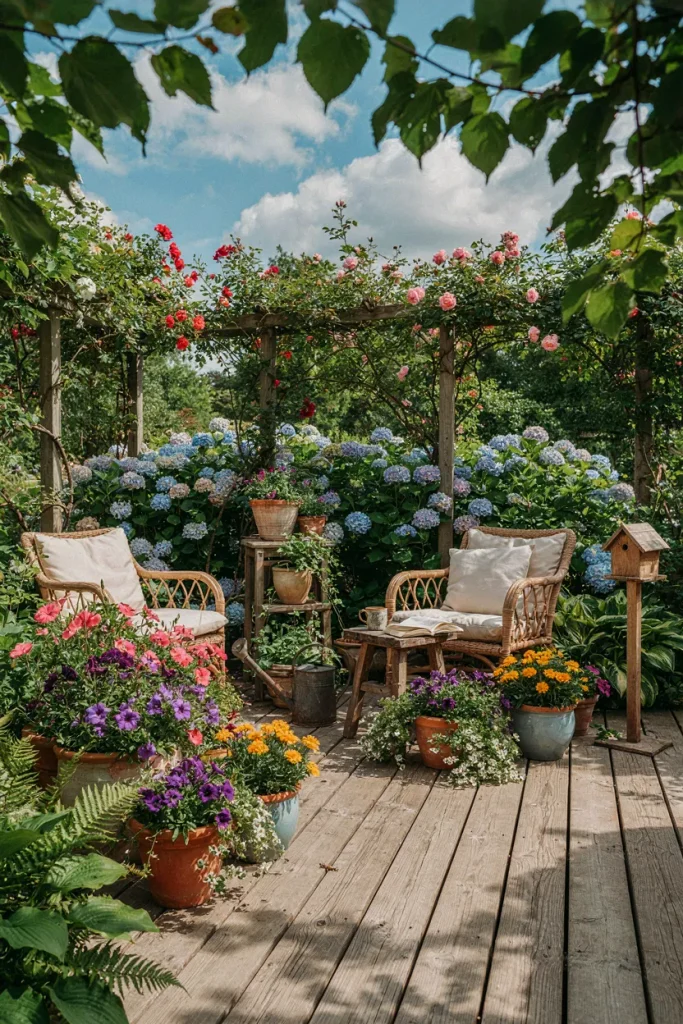
- Mix flower colors: Combine pink, purple, yellow, and white blooms for a cheerful display.
- Vary container heights: Place taller pots behind shorter ones to create depth.
- Repeat favorite shades: Use similar flower colors in several containers to connect the arrangement.
- Match plants to sunlight: Choose flowers according to how much direct sun your deck receives.
- Plan for watering: Group plants with similar moisture needs to simplify maintenance.
Colorful containers brighten plain decking and give your outdoor space a more personal feel. Start with three pots in different sizes and repeat two or three flower colors throughout the arrangement. Leave room for airflow between plants, and use quality potting mix that drains well to encourage healthy roots and abundant blooms.
Proper drainage and a suitable potting mix help keep container plants healthy. Read the University of Maryland Extension’s guide to growing vegetables in containers for practical advice on drainage, watering, and container placement.
Tiered Deck Planters

Quick Tip:
Choose a tiered planter with a stable base and enough room for plants to grow. Position sun-loving flowers on the brightest level, and select shade-tolerant foliage for areas receiving less direct sunlight. Ensure every container drains properly.
Tiered planters make excellent use of vertical space, especially on narrow decks where floor space is limited. Place trailing plants along the outer edges and upright flowers or herbs on higher shelves for a balanced display. Before planting, check the stand’s weight capacity and position it where watering, pruning, and harvesting are easy.
Also View: 20 Paver Patio Ideas for a Charming Outdoor Escape
Railing-Mounted Planters

BEFORE
An empty deck railing can make an outdoor seating area feel plain, especially when the surrounding yard offers little greenery. Floor-standing pots may also take up valuable space near chairs and walkways.
AFTER
Secure railing planters introduce flowers and foliage at eye level while keeping the deck floor open. Repeating matching containers along one section creates a tidy, coordinated display.
Choose planters designed for your railing’s width and shape. Check the mounting brackets, weight limits, and drainage before planting. Wet soil can become surprisingly heavy, so secure each container properly and ensure excess water will not damage the railing or drip onto people below.
Vertical Herb Planters

- Choose a sturdy rack. Select a weather-resistant stand with enough space between shelves for your herbs to grow.
- Group compatible herbs. Place rosemary and thyme together because they prefer well-drained soil, while basil and parsley generally need more consistent moisture.
- Use individual pots. Separate containers make watering and harvesting easier.
- Check sunlight. Most culinary herbs grow best with several hours of direct sunlight daily.
- Keep mint contained. Grow it separately because it spreads aggressively.
Fresh herbs make deck gardening practical as well as attractive. Position the rack near your outdoor cooking area, but leave enough room to reach each pot comfortably. Harvest small amounts regularly to encourage healthy growth, and check the soil before watering instead of following a rigid daily schedule.
Built-In Deck Planters
| Feature | Option A: Built-In | Option B: Freestanding |
|---|---|---|
| Appearance | Integrated and architectural | Flexible and decorative |
| Space | Uses planned deck edges | May occupy walking areas |
| Installation | Requires careful construction | Usually needs simple placement |
| Maintenance | Drainage access needs planning | Containers are easier to move |
| Best for | Permanent outdoor layouts | Renters and changing designs |
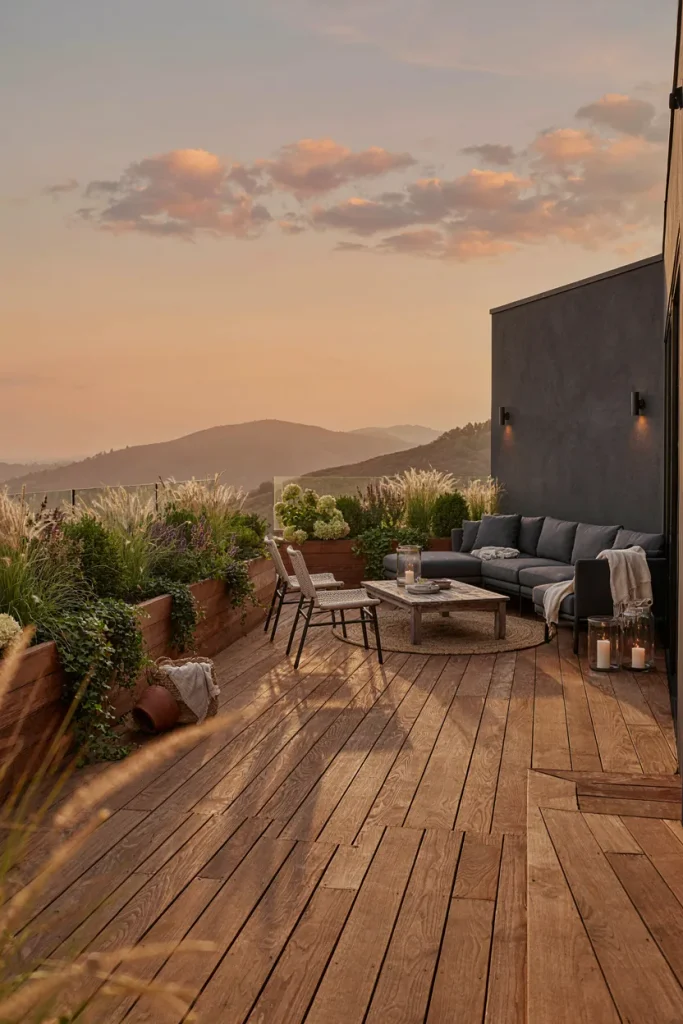
Built-in planters create a cohesive look by making greenery part of the deck’s original design. They work particularly well beside stairs, along seating areas, or at the ends of a spacious platform. Include suitable waterproofing, drainage outlets, and maintenance access, and ensure the deck structure can support the added weight of wet soil and mature plants.
Repurposed Crate Planters
DO
- Choose sturdy crates made from untreated or plant-safe wood.
- Add drainage holes and a breathable liner that allows excess water to escape.
- Stack crates securely if you want a tiered arrangement.
- Group flowers and herbs according to their sunlight and watering needs.
DON’T
- Use crates that previously held chemicals or unknown substances.
- Place untreated wood directly on constantly wet decking.
- Stack heavy, soil-filled crates without checking stability.
- Let standing water collect beneath the planters.
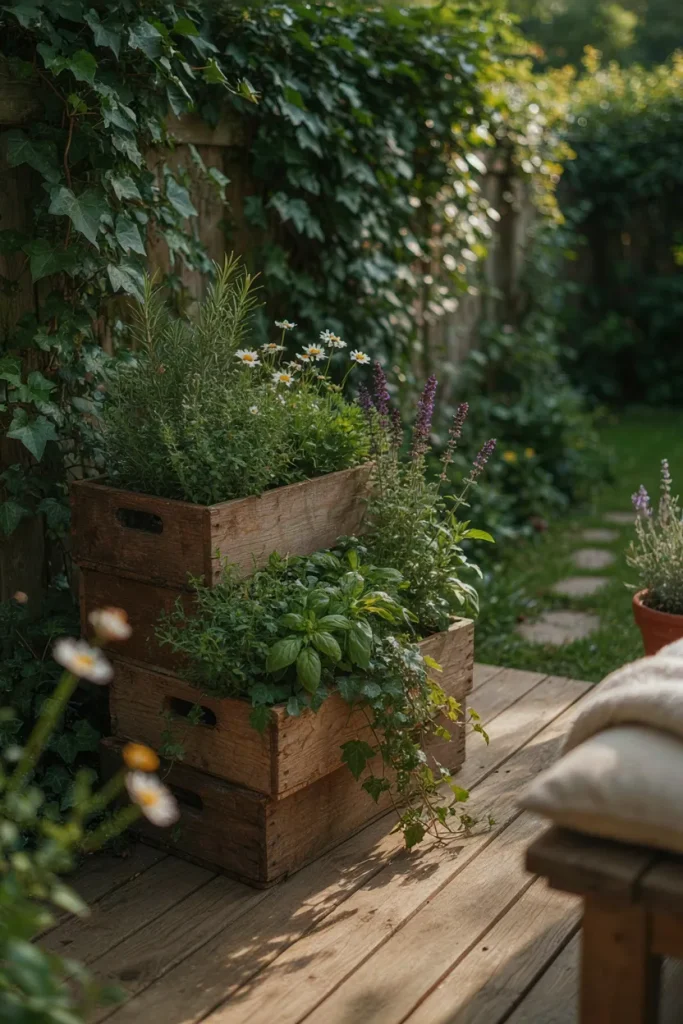
Repurposed crates offer an affordable way to add character to your outdoor space. Mixing one large crate with two smaller containers creates visual interest without making the deck feel crowded. Sand rough edges, check for loose nails, and protect the wood with a suitable outdoor finish before planting.
Oversized Statement Pots

Cost: Moderate to high, depending on material and size.
Time: Around 30 to 60 minutes for placement and planting, excluding larger shrubs.
Skill Level: Beginner-friendly with suitable lifting assistance.
Best For: Deck entrances, empty corners, and spacious seating areas.
Oversized pots create a strong focal point without requiring dozens of smaller containers. Choose a substantial planter for each side of a doorway or place one beside an outdoor sofa to balance the furniture. Before filling it, consider the mature size of the plant, the container’s weight, and whether you may need to move it later.
Hanging Basket Displays
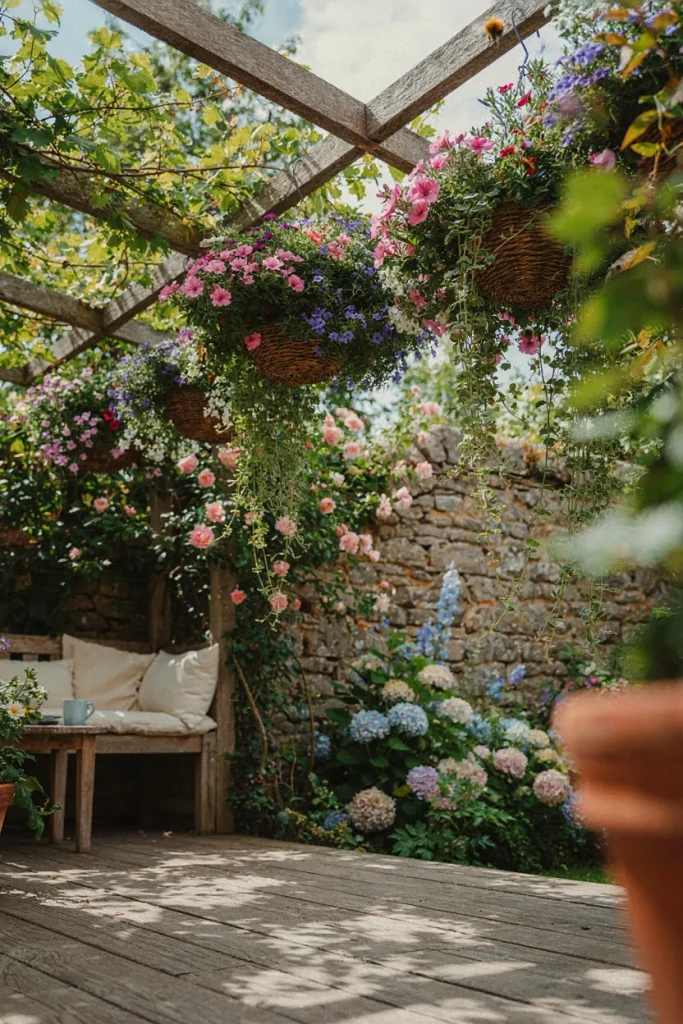
Hanging baskets bring greenery overhead while leaving the deck floor free for furniture and movement. Choose trailing flowers such as petunias or bacopa for a cascading effect, and vary the hanging heights slightly without obstructing doors or walkways.
Secure each basket to a structural beam or an appropriately rated support, not decorative trim alone. Hanging containers often dry out faster than ground-level pots, especially in hot or windy weather. Check moisture frequently, use a lightweight potting mix, and make sure excess water will not drip onto seating or walking areas.
Among practical deck planter ideas, hanging baskets add height and greenery without using floor space.
Modern Black Planters
- Choose matte finishes: Black planters with smooth or lightly textured surfaces create a refined, contemporary look.
- Add contrasting foliage: Combine bright green leaves, silvery plants, and white blooms to prevent the display from feeling too dark.
- Repeat the shape: Use matching rectangular containers along railings or beside outdoor seating.
- Check heat exposure: Dark containers can become hot in direct sunlight, so consider insulated pots or a lighter-colored inner container.
- Coordinate with furniture: Black planters pair well with charcoal metal frames, natural wood, and neutral cushions.
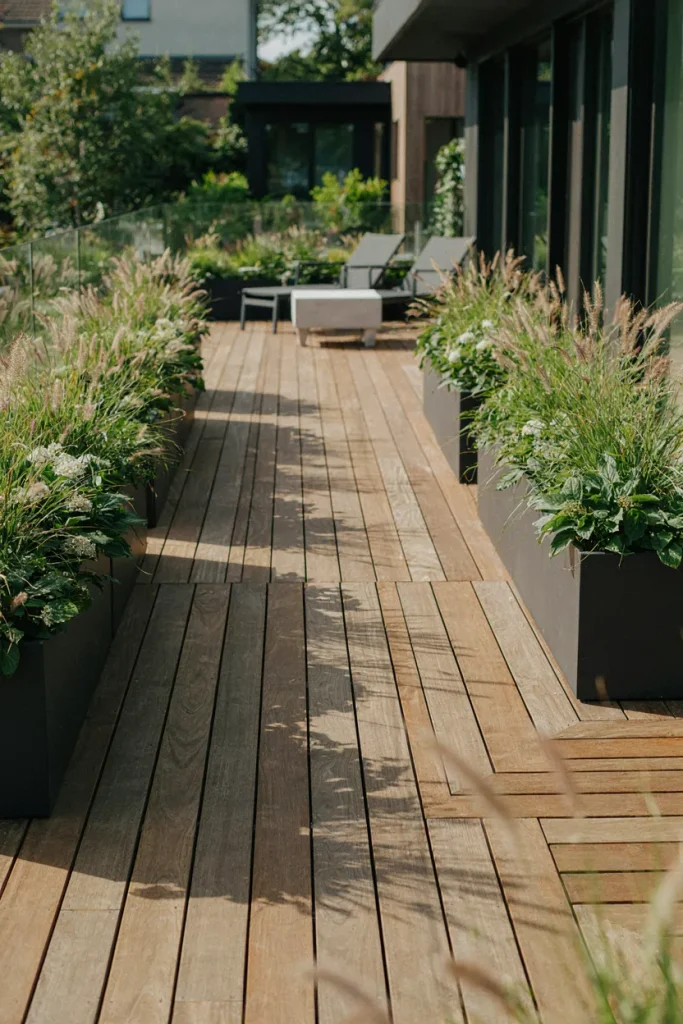
Modern containers make greenery stand out while giving a deck a clean, organized appearance. Place two matching planters at opposite ends of a seating area or line three along a spacious railing. Choose weather-resistant materials and ensure drainage holes allow excess water to escape without leaving persistent moisture on the decking.
These deck planter ideas work best when container color, plant size, and sunlight exposure are planned together.
Cascading Greenery Pots

Quick Tip:
Place trailing plants near the outer edges of elevated containers so their foliage can spill naturally over the sides. Keep hanging leaves clear of walkways, and choose plants suited to your local climate and the deck’s sunlight conditions.
Cascading greenery softens the straight lines of decking, railings, and outdoor furniture. Combine plants with different leaf shapes and shades of green for depth, using a taller upright plant in the center and trailing varieties around the edges. Check growth habits before planting, since vigorous vines may need regular trimming to keep the arrangement neat.
Privacy Screen Planters
BEFORE
A deck that faces neighboring windows or a busy yard can feel exposed. Lightweight furniture and scattered small pots may add decoration without providing much visual separation.
AFTER
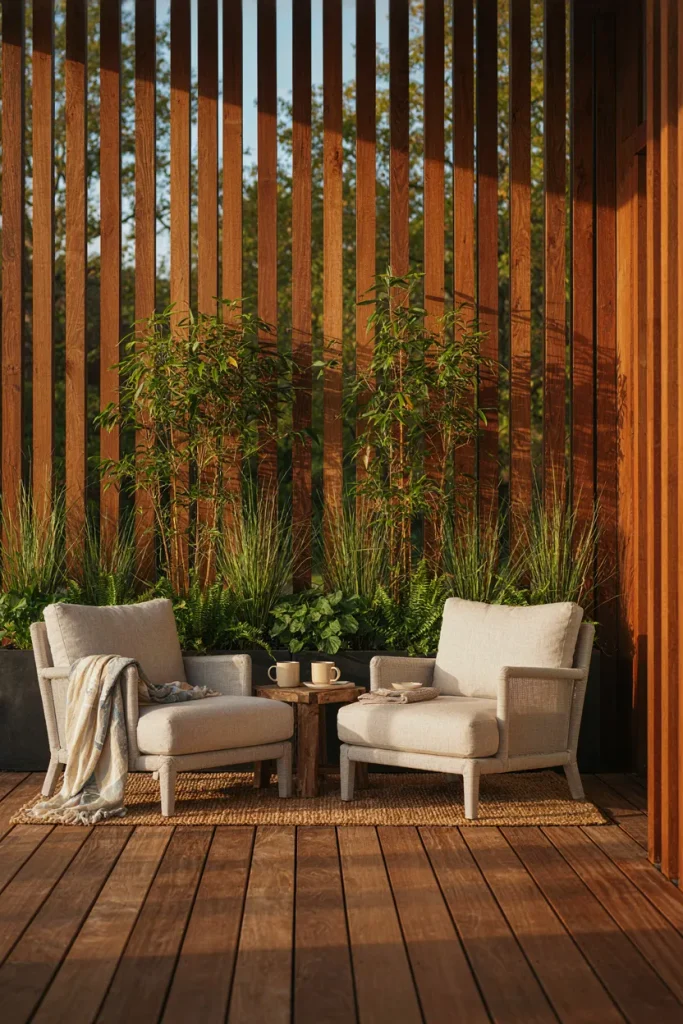
Tall planters filled with upright grasses or suitable compact shrubs create a greener boundary. Pairing them with a slatted screen adds height, texture, and a more private atmosphere without completely blocking natural light.
Measure the available space before choosing containers, and leave enough room for doors, chairs, and maintenance access. Select plants based on their mature height and local growing conditions rather than their size at purchase. For exposed decks, secure the planters against tipping and check that the screen and deck structure can handle wind loads.
DIY Pallet Planters
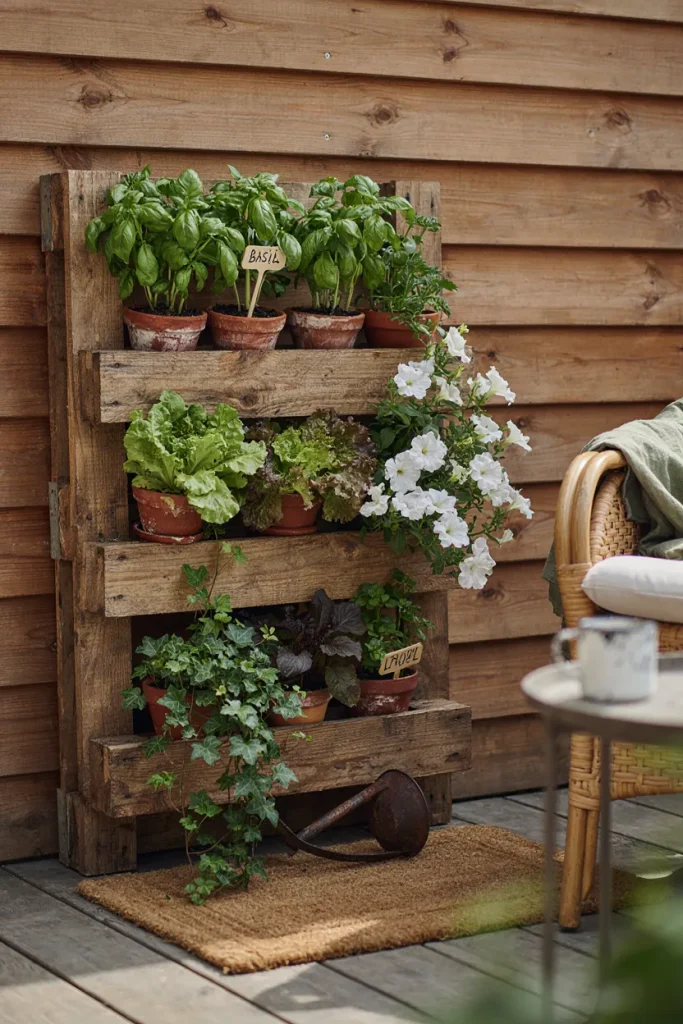
- Inspect the pallet. Choose clean, sturdy wood with a known history and check its treatment markings before using it for plants.
- Prepare the surface. Sand rough edges and remove loose splinters or protruding nails.
- Add containers. Fit suitable pots or lined planting pockets into the pallet openings, allowing water to drain freely.
- Secure the structure. Attach it firmly to a suitable support rather than leaving a tall, loaded pallet unstable.
- Select compact plants. Use herbs, small flowers, or shallow-rooted varieties suited to the available space.
Pallet planters make use of vertical space and can turn an unused deck wall into a productive growing area. Keep the arrangement light enough for its support, and avoid wood with unknown chemical contamination. If you grow edible plants, use food-safe containers and materials with a known, suitable history.
Mixed-Height Container Gardens
| Design Feature | Option A: Uniform Heights | Option B: Mixed Heights |
|---|---|---|
| Visual effect | Neat and symmetrical | Layered and dynamic |
| Container choice | Similar sizes | Tall, medium, and small pots |
| Plant placement | Even rows | Grouped in overlapping clusters |
| Space requirement | Works along narrow edges | Best in corners or wider areas |
| Maintenance | Easy to organize | Requires access to plants behind others |
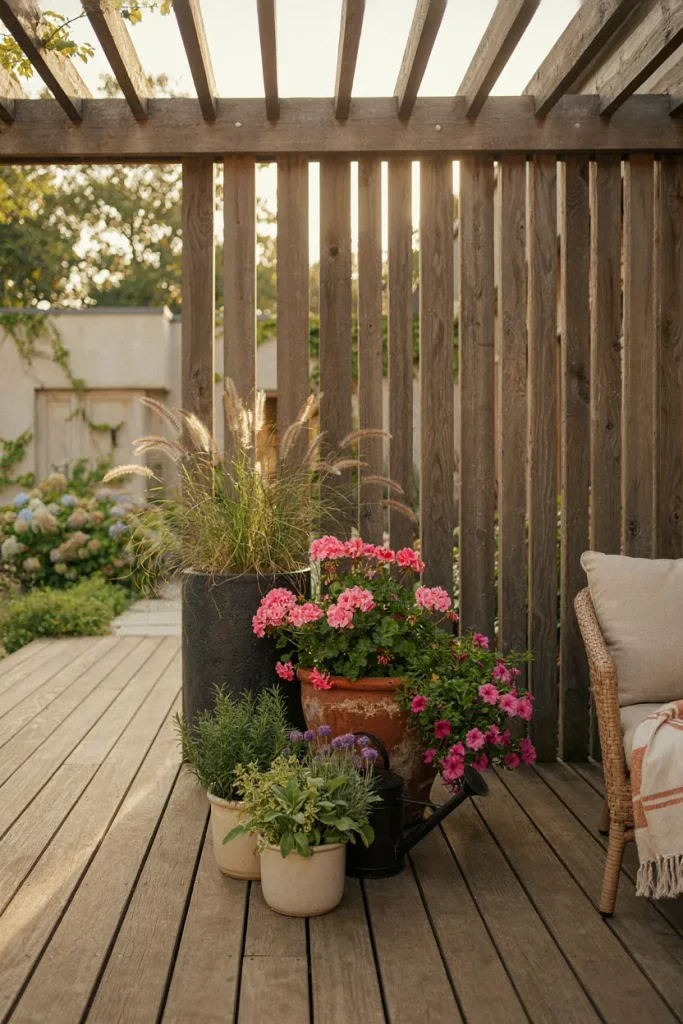
Varying planter heights creates a fuller display without needing more flowers. Start with one tall container at the back, add two medium pots in front, and finish with a smaller pot near the edge. Keep taller plants from blocking windows or views, and leave enough room to water every container comfortably.
Edible Vegetable Planters
DO
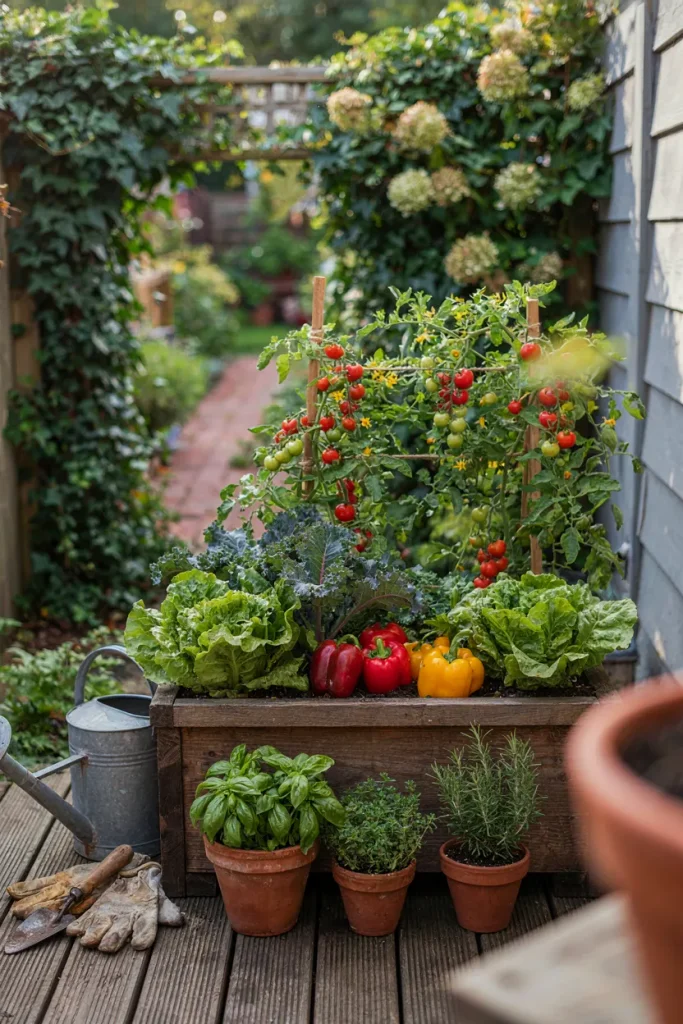
- Choose deep containers for tomatoes and peppers, checking the recommended root space for each variety.
- Use quality potting mix formulated for container vegetables.
- Position sun-loving crops where they receive sufficient direct sunlight.
- Add sturdy supports before tomato vines become heavy.
- Water the root zone consistently and check moisture during hot weather.
DON’T
- Use ordinary garden soil that becomes dense in containers.
- Overcrowd vegetables that need room for airflow.
- Let containers sit in standing water.
- Place heavy, soil-filled planters on a deck without checking its load capacity.
Edible planters bring fresh ingredients within easy reach of your kitchen or outdoor dining area. Start with compact tomato varieties, lettuce, or peppers suited to container growing. Check each plant’s sunlight and spacing needs, and harvest regularly to encourage continued production where appropriate. A little planning helps keep the garden useful without overwhelming your deck.
Rustic Barrel Planters
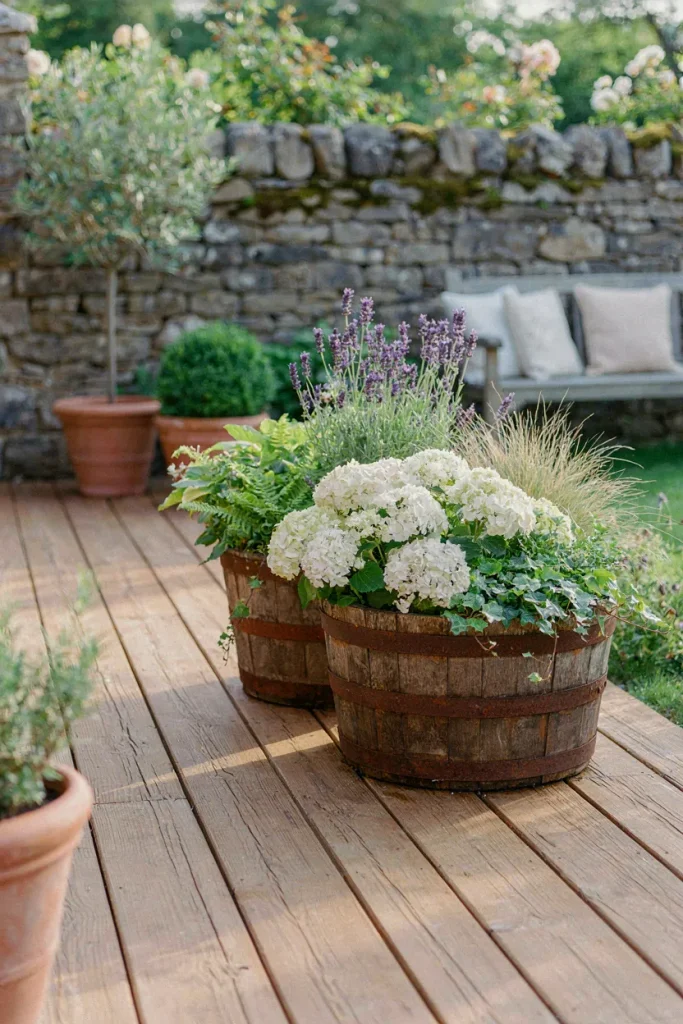
Cost: Moderate, depending on barrel size and material.
Time: Around 30 to 60 minutes for preparing and planting a ready-to-use container.
Skill Level: Beginner-friendly.
Best For: Deck corners, rustic seating areas, and cottage-inspired outdoor spaces.
Barrel planters add substantial texture and a classic garden feel to wooden decking. Their rounded shape contrasts nicely with straight railings and rectangular furniture, helping the arrangement feel less rigid. Choose a barrel made from plant-safe materials, drill drainage holes if needed, and raise it slightly on suitable feet to prevent water from collecting underneath.
Window Box Deck Gardens
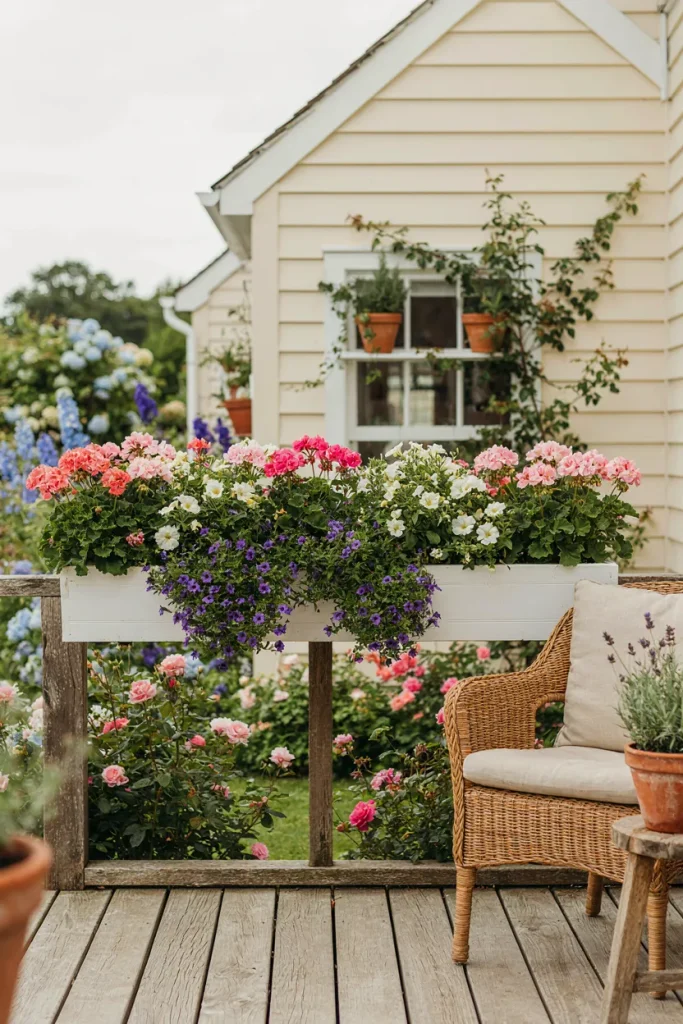
A window box can bring flowers closer to eye level without taking up much floor space. Although traditionally associated with windows, these narrow containers also work well on suitable deck railings, along the outside of a raised platform, or against an exterior wall.
Choose a box with adequate root depth and drainage, then secure it using compatible brackets. Combine upright flowers with trailing varieties to create a layered display, keeping the arrangement proportional to the railing. Before installation, check the mounting capacity and make sure watering will not stain the siding or create slippery patches on the deck.
Symmetrical Entrance Planters

Quick Tip:
Place matching planters at equal distances from the doorway, leaving enough room for the door to swing open and people to pass comfortably. Choose plants with similar mature heights and growth habits to maintain a balanced appearance.
Symmetrical containers make a deck entrance feel organized and welcoming with very little decoration. Use evergreen shrubs for year-round structure in suitable climates, or choose seasonal flowers if you prefer changing colors throughout the year. Keep both containers in comparable light conditions, and select weather-resistant pots that are stable enough to withstand outdoor exposure.
Concrete Geometric Planters
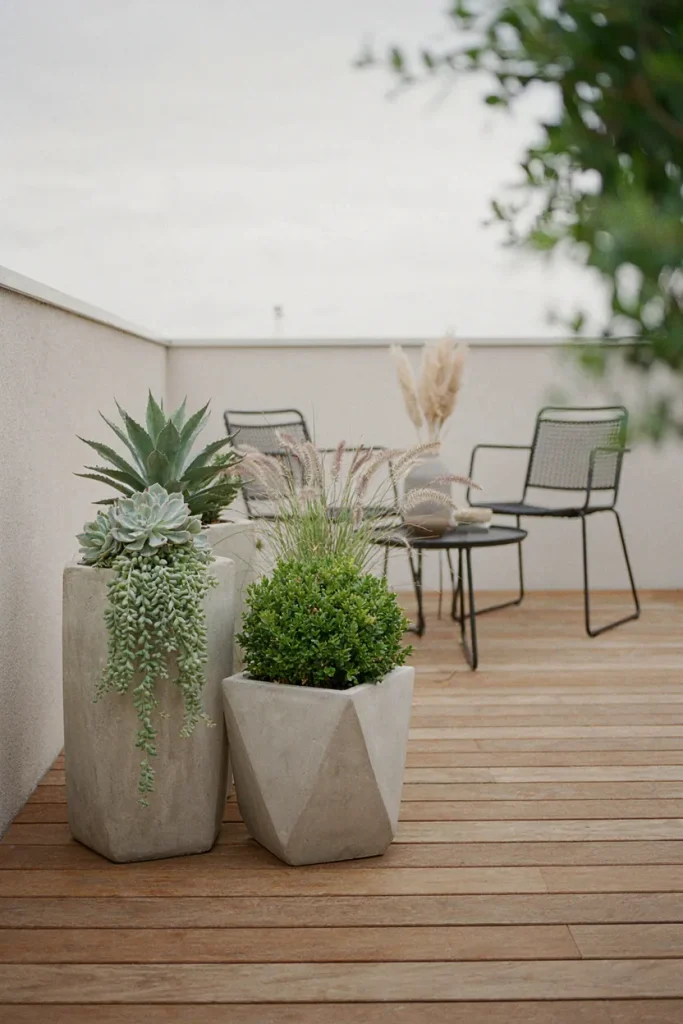
- Choose angular shapes: Square, hexagonal, and tapered containers add structure to contemporary decks.
- Mix concrete tones: Combine light gray with warm beige for subtle variation.
- Balance hard textures: Pair concrete with wooden furniture, woven cushions, or soft outdoor rugs.
- Select suitable plants: Compact grasses, succulents, and small shrubs complement the clean shapes.
- Protect the decking: Use stable feet or protective pads where appropriate, and allow drainage beneath each pot.
Geometric containers create a crisp contrast against the natural grain of wooden decking. Keep the arrangement simple by grouping two or three pots rather than filling every corner. Concrete can be heavy, so consider the combined weight of the containers, wet soil, and mature plants before placing them on an elevated deck.
Recycled Container Planters
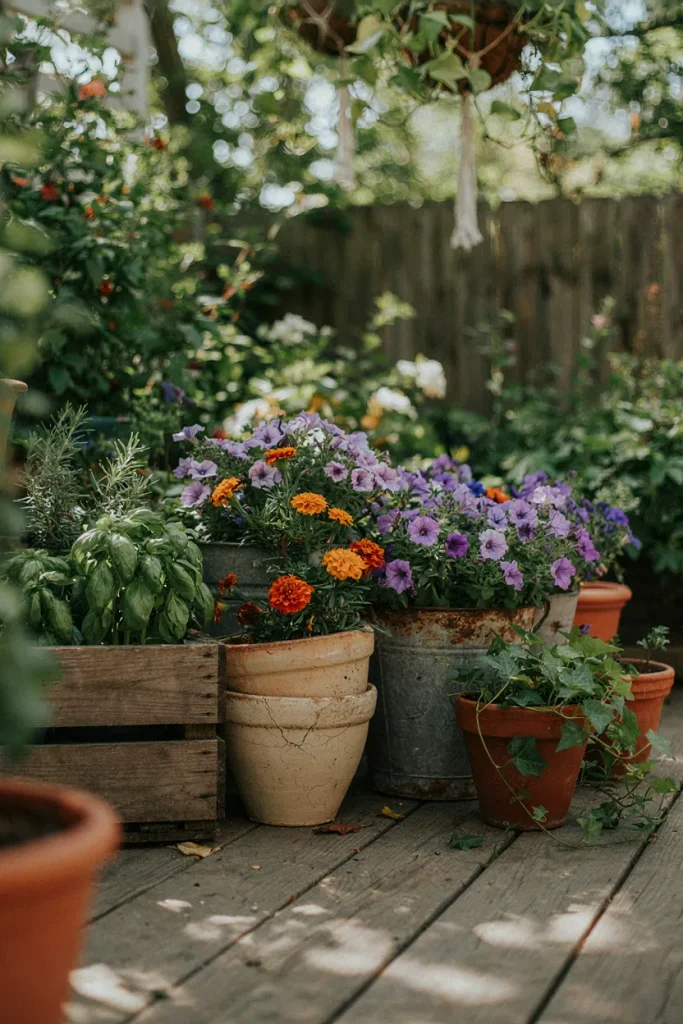
Cost: Low to moderate, depending on the containers you already own.
Time: Around 20 to 45 minutes per container for preparation and planting.
Skill Level: Beginner-friendly.
Best For: Budget-conscious gardeners, small decks, and eclectic outdoor designs.
Reusing suitable containers lets you create a personal deck garden without buying an entirely matching set. Old ceramic pots and clean buckets can work well when they have enough room for roots and proper drainage. For metal containers exposed to strong sun, monitor soil temperature and moisture carefully, and avoid vessels that previously held hazardous substances.
Succulent Deck Arrangements
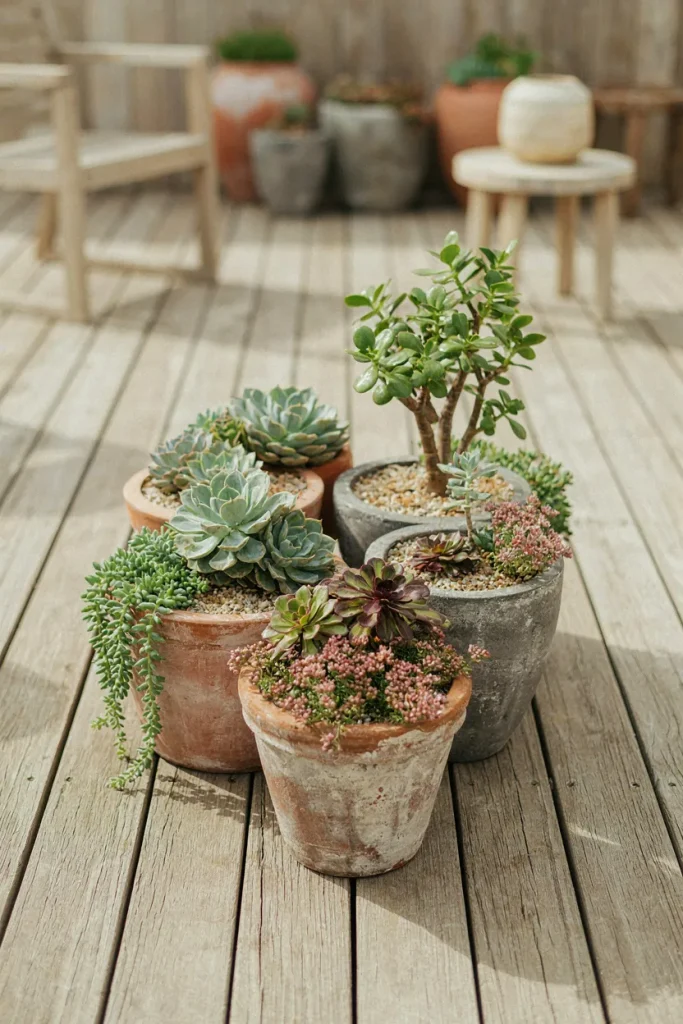
Succulents bring distinctive shapes and subtle colors to a deck without requiring the frequent watering that many flowering plants need. Group varieties with similar light and moisture requirements in containers with drainage holes, using a gritty potting mix designed for succulents.
Choose species suited to your local climate, since some tolerate frost better than others. In very hot weather, check whether containers need afternoon shade to prevent scorching. Arrange taller varieties toward the back and low-growing rosettes near the edges for a layered display that remains compact and easy to maintain.
Evergreen Corner Planters
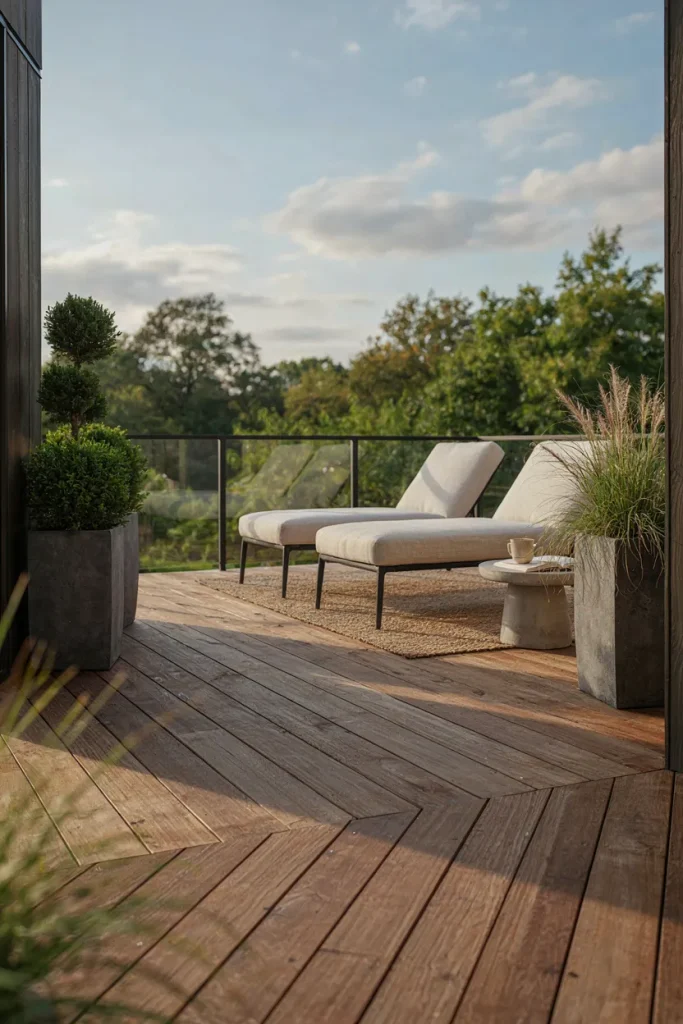
DO
- Choose compact evergreen varieties suited to your climate and container size.
- Place taller planters in empty corners to frame the seating area.
- Use well-draining potting mix appropriate for each plant.
- Check watering needs throughout the year, especially during hot or dry weather.
DON’T
- Assume every evergreen stays small without pruning.
- Block deck doors or narrow walking routes with bulky containers.
- Let roots sit in waterlogged soil.
- Ignore winter exposure, since containers can freeze more quickly than garden soil.
Evergreen planters provide structure when seasonal flowers fade, helping your deck feel connected to the garden throughout the year. Dwarf conifers and compact evergreen shrubs offer different textures, from soft needles to broad leaves. Check each variety’s mature size before planting, and choose weather-resistant containers that can handle your region’s seasonal temperatures.
Flower and Foliage Mixes

A mix of flowers and foliage gives your deck a fuller, more natural appearance than containers filled with a single plant variety. Combine upright blooms, leafy fillers, and trailing plants to create contrast in height, color, and texture without overcrowding each pot.
Choose plants that share similar sunlight and watering requirements, then leave enough space for them to reach their mature size. Repeat a few flower colors across several containers to connect the entire deck visually. The result is a cohesive garden display that feels abundant while remaining practical to water, prune, and maintain.
Conclusion
Creating a lush outdoor retreat does not require a complete deck makeover or an expensive landscaping project. With the right deck planter ideas, you can add color, privacy, fresh herbs, and natural beauty while making the most of your available space.
Start with one empty corner, a bare railing, or the area beside your favorite outdoor chair. Choose containers that suit your style, select plants for your local growing conditions, and build your arrangement gradually. Small changes can make your deck feel much more inviting. Save this article on Pinterest for inspiration, try your favorite ideas, and share it with someone who loves gardening and outdoor decorating. Your beautiful outdoor retreat can begin with just one planter.