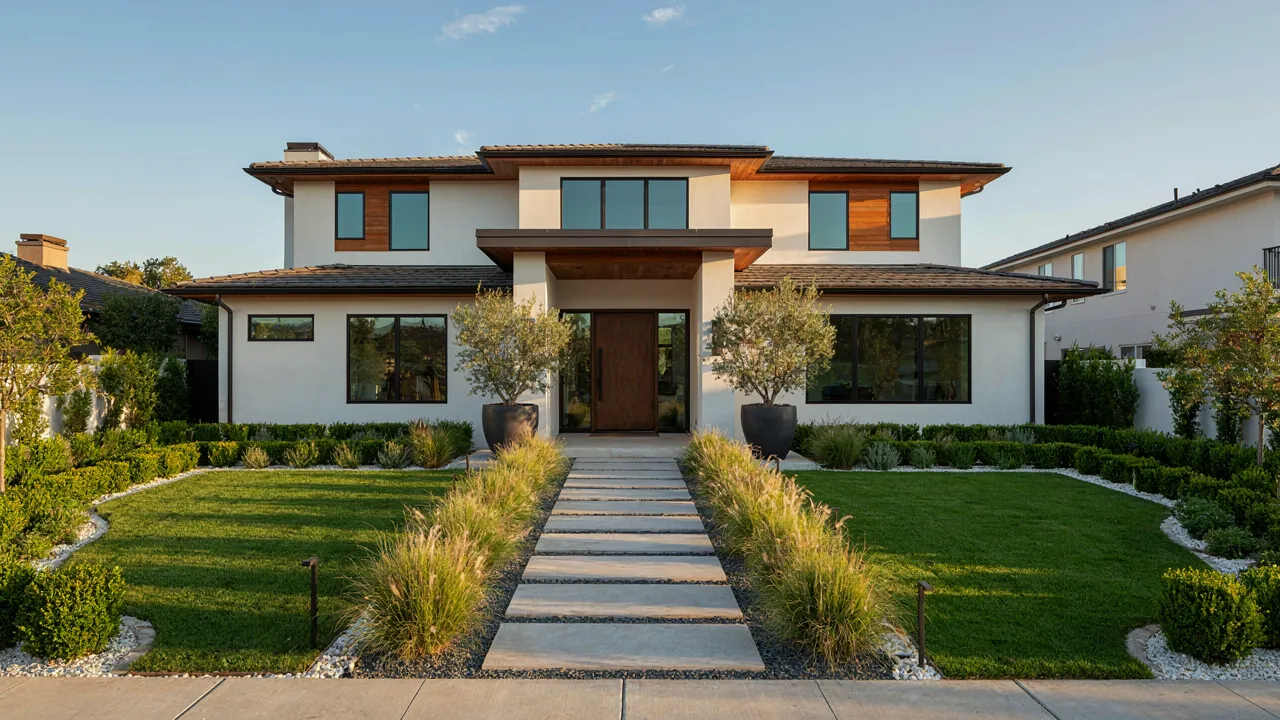
20 Modern Landscaping Ideas for Gorgeous Curb Appeal
Your front yard deserves to look just as beautiful as the inside of your home! With the right modern landscaping ideas, even a plain or outdated entrance can become a stylish, welcoming space that catches everyone’s attention.
A gorgeous front yard doesn’t always require a huge budget or a complete makeover. Sometimes, simple changes like geometric pathways, decorative gravel, sculptural plants, or sleek garden borders are enough to create a fresh, contemporary appearance.
The secret is combining clean lines, natural textures, and thoughtfully arranged greenery to make everything feel balanced and inviting. Whether you have a small front garden, a spacious lawn, or a sloped entrance, there are creative solutions for every layout.
These 20 inspiring ideas will help you discover practical ways to improve curb appeal, reduce unnecessary maintenance, and give your home’s exterior a polished look you’ll love coming home to.
Geometric Concrete Walkways
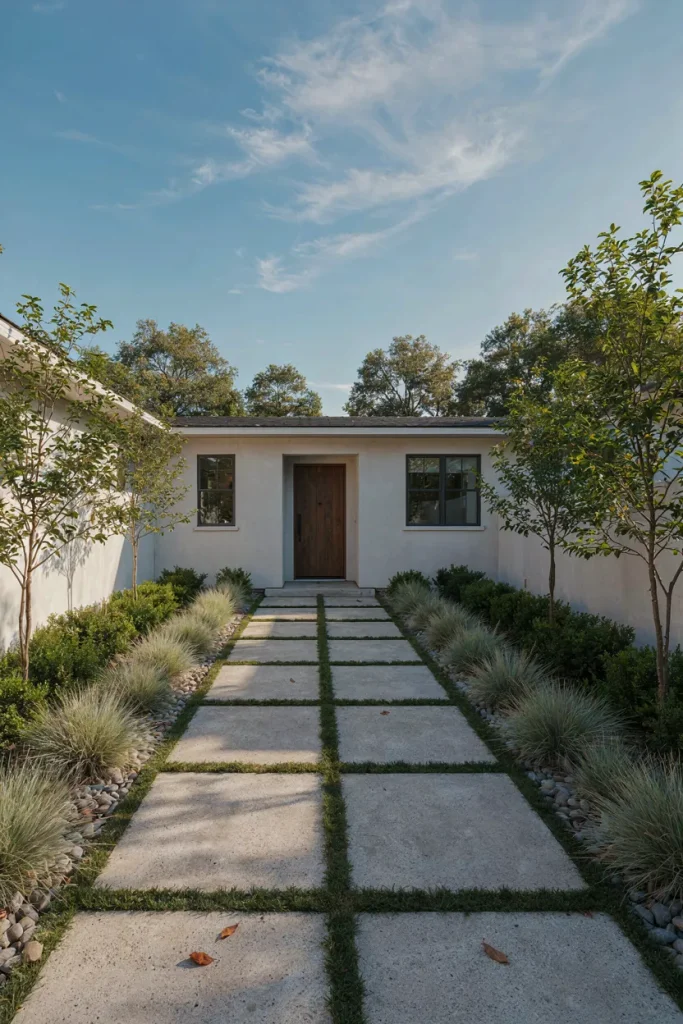
A geometric walkway instantly gives an ordinary front yard a polished, contemporary appearance. Large concrete slabs create a structured path toward the entrance while narrow grass or gravel joints soften the design. Choose rectangular pavers with consistent spacing to establish a balanced layout that complements your home’s architecture.
For a practical installation, use a properly compacted base and select pavers suitable for pedestrian traffic. Keep the walkway wide enough for two people to pass comfortably, ideally around four feet. This modern landscaping approach works especially well with white, gray, or dark exterior finishes.
Layered Ornamental Grass Beds
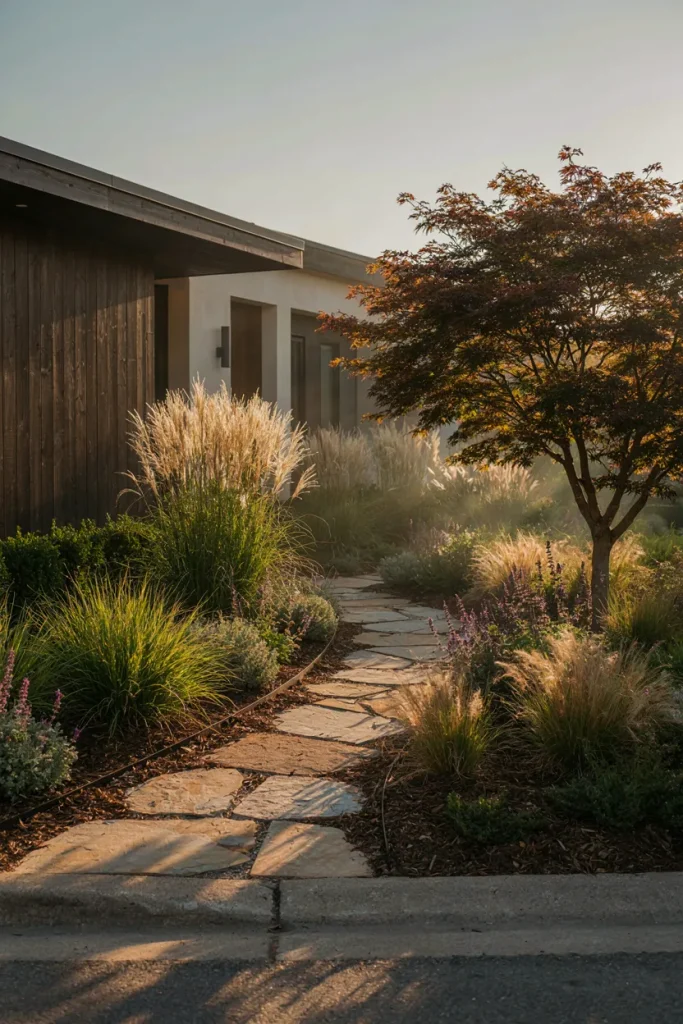
Soft, flowing grasses bring movement and texture to structured front yards without creating a cluttered appearance.
- Create height variation: Position taller ornamental grasses at the back of planting beds and shorter varieties near the walkway.
- Choose complementary colors: Combine blue green foliage with golden or burgundy toned grasses for visual contrast.
- Repeat plant groupings: Arrange grasses in clusters of three or five for a cohesive, intentional appearance.
- Control the edges: Install steel or concrete edging to keep planting beds neatly separated from lawns and pathways.
- Consider mature growth: Check each grass variety’s final height and spread before deciding on spacing.
For year round interest, combine grasses with evergreen shrubs that maintain their structure during colder months. Choose species suited to your local climate, and avoid invasive ornamental varieties. This layered planting style is particularly effective beside wide driveways, contemporary porches, and homes with simple architectural lines.
Also View: 20 Paver Patio Ideas for a Charming Outdoor Escape
Minimalist Gravel Gardens
Quick Tip:
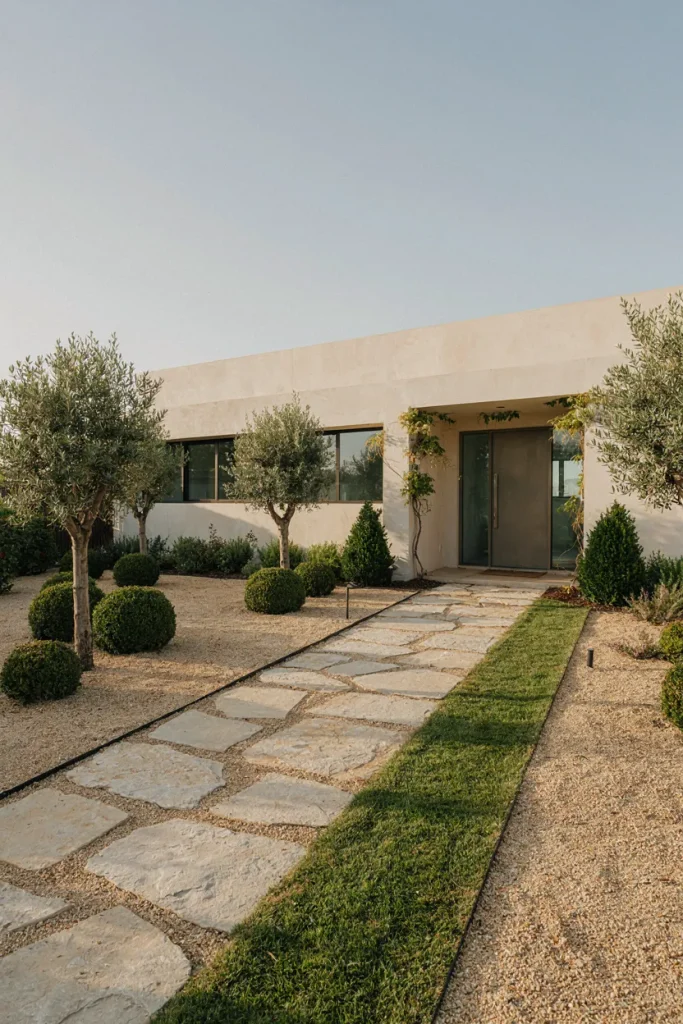
Choose angular, compactable gravel for walkable areas because rounded stones shift more easily underfoot. Install appropriate edging and prepare a stable base to prevent spreading and uneven surfaces. For planting areas, check drainage before using landscape fabric, since fabric can complicate future planting and maintenance.
A minimalist gravel garden creates a tidy, architectural look while reducing the amount of lawn that needs mowing. Arrange a few drought tolerant shrubs in spacious clusters rather than filling every corner. Pair pale gravel with darker foliage for contrast, and leave clear access around plants for occasional weeding and maintenance.
Floating Stone Steps
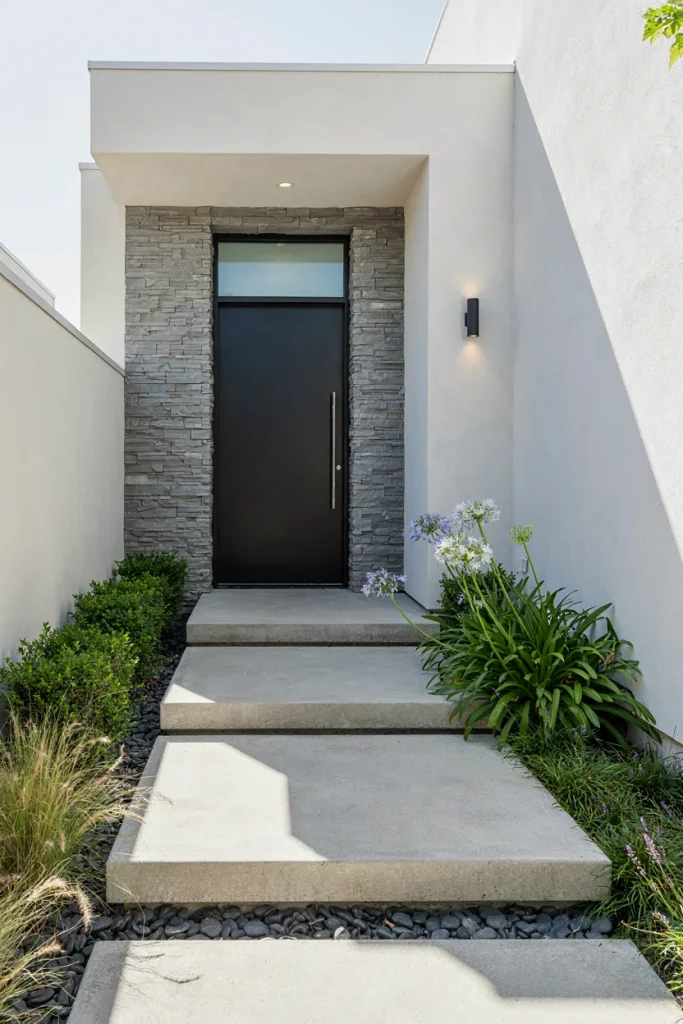
BEFORE: An outdated front entrance has narrow, uneven steps surrounded by overgrown plants. The pathway feels cramped, and the lack of structure makes the home’s exterior appear unfinished.
AFTER: Wide floating stone steps create a striking architectural entrance with clean horizontal lines. Carefully positioned gravel and low growing greenery emphasize the layered design, making the approach feel spacious and welcoming.
For a balanced appearance, choose concrete or natural stone that complements your home’s exterior colors. Keep step heights consistent and use slip resistant surfaces for safety. Where elevation changes require a handrail, incorporate a slim metal design. Proper drainage and professional installation are especially important for raised or cantilevered steps.
Modern Raised Planter Beds
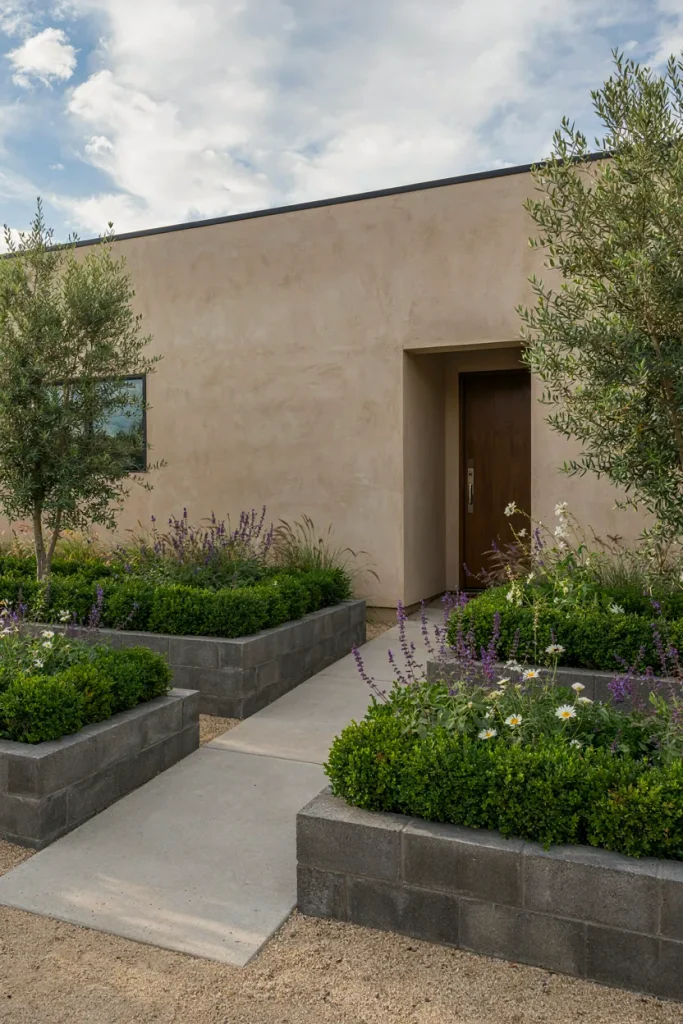
1. Choose a suitable location: Select an area beside the entrance, driveway, or front walkway that receives enough sunlight for your preferred plants.
2. Select durable materials: Use concrete blocks, natural stone, or weather resistant metal to create clean rectangular planters.
3. Prepare proper drainage: Provide drainage outlets and use well draining soil suited to the selected plants.
4. Arrange plants by height: Position taller shrubs toward the back and compact flowering plants along the front edges.
5. Finish with mulch: Add a thin, even layer of organic mulch to retain moisture and reduce weed growth.
Raised planter beds introduce structure and dimension to otherwise flat landscapes. Their defined borders keep greenery organized while creating attractive focal points near entrances. Match planter materials to your home’s architectural finishes, and leave enough space for mature plant growth. This approach works especially well in compact front yards.
Sleek Black Garden Edging
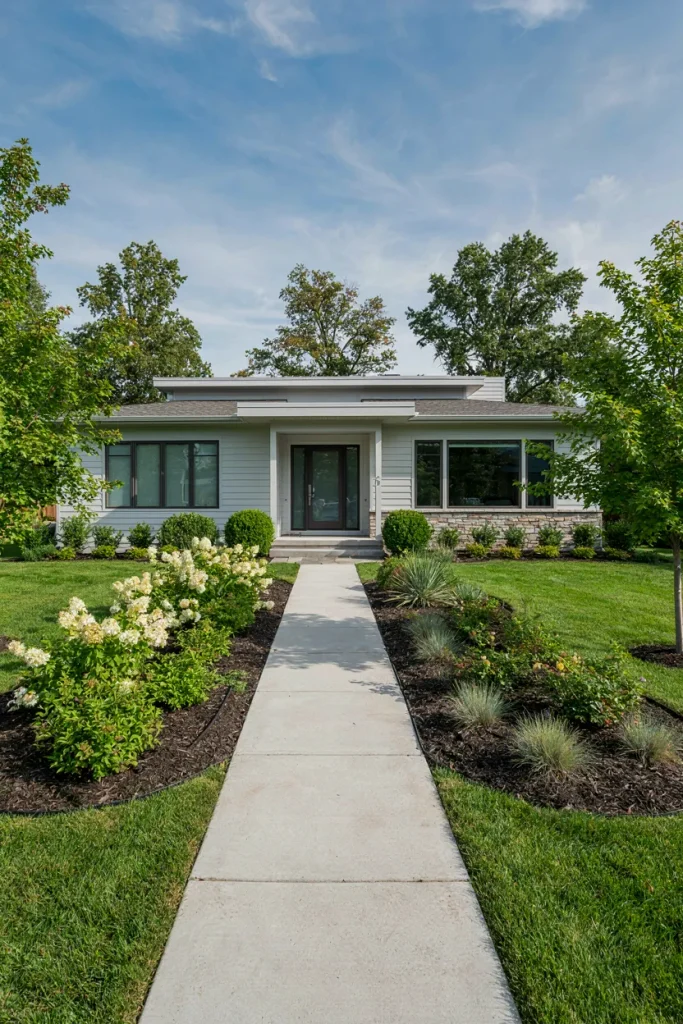
| Design Feature | Traditional Edging | Sleek Black Edging |
| Appearance | Rounded brick or stone borders | Thin, clean architectural lines |
| Visual Effect | Rustic and decorative | Minimal and contemporary |
| Best Pairing | Cottage gardens and colorful borders | Gravel beds and structured planting |
| Maintenance | Joints may collect weeds | Smooth edges simplify trimming |
Crisp garden borders can make even simple planting arrangements appear professionally maintained. Choose powder coated steel or aluminum edging designed for outdoor use, and secure it firmly at the manufacturer’s recommended depth. Black borders contrast beautifully with pale gravel and fresh greenery, creating definition without overwhelming smaller front yards.
Sculptural Evergreen Shrubs

DO:
- Choose compact evergreen varieties suited to your local climate.
- Arrange rounded shrubs in repeating groups for visual harmony.
- Maintain consistent spacing to accommodate mature growth.
- Combine different shrub heights to create depth and dimension.
DON’T:
- Overcrowd planting beds with too many shrub varieties.
- Select fast growing plants for spaces requiring precise shapes.
- Prune heavily during extreme heat or freezing weather.
- Ignore drainage requirements when preparing planting areas.
Sculptural evergreen shrubs provide year round structure and keep front yards looking organized through seasonal changes. For modern landscaping, combine rounded boxwood alternatives with upright junipers or compact conifers. Repeat similar shapes near walkways and entrances to establish rhythm. Regular light pruning helps preserve their clean, architectural appearance without excessive maintenance.
Linear LED Path Lighting
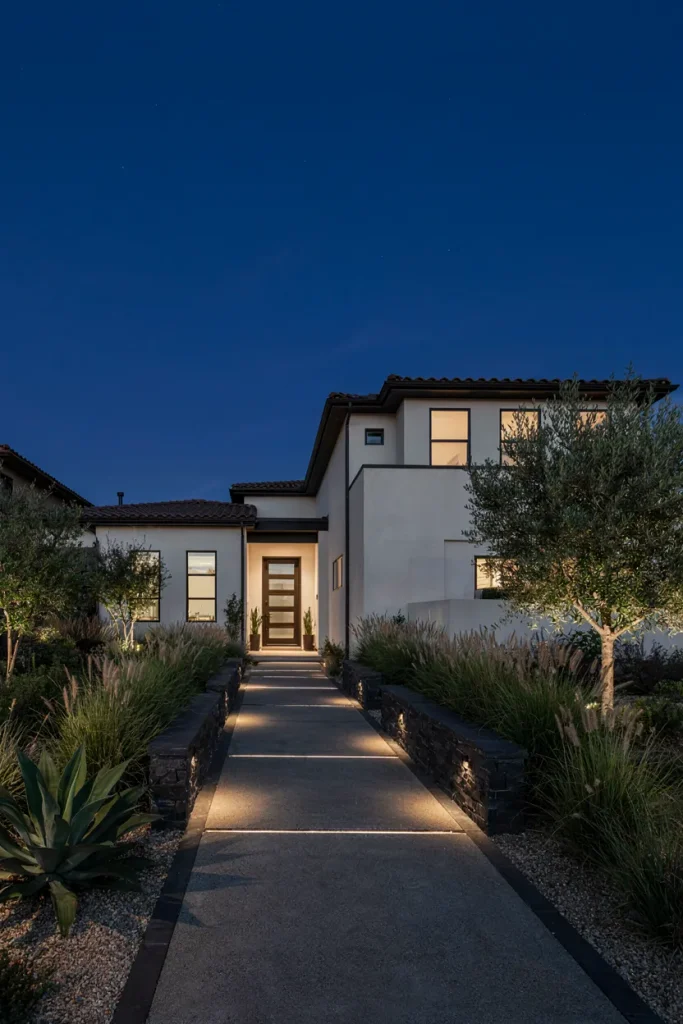
Cost: Moderate to high, depending on fixtures and installation.
Time: One to three days for a typical small pathway project.
Skill Level: Beginner for simple solar fixtures, professional installation recommended for wired systems.
Best For: Front walkways, entrance steps, and contemporary garden borders.
Outdoor lighting adds another layer of visual interest while making pathways easier to navigate after sunset. Choose warm white LEDs around 2700K to 3000K for a welcoming glow. Position fixtures to illuminate walking surfaces without shining into windows or pedestrians’ eyes. Weather rated, low voltage systems offer practical options for residential landscapes.
Symmetrical Entrance Planting

A balanced entrance creates an immediate sense of order, even when the rest of the front yard has a relaxed planting style. Matching planters, evenly spaced shrubs, and repeated foliage textures naturally guide attention toward the front door. This arrangement is especially effective for homes with centered entrances or symmetrical architectural features.
Start with two identical planters placed on opposite sides of the doorway. Choose upright evergreens for height or rounded shrubs for a softer appearance. Leave enough clearance for doors to open and visitors to move comfortably. Matching plants also simplify seasonal maintenance, keeping both sides attractive with similar watering and pruning routines.
Natural Stone Accent Walls

- Choose complementary stone: Select limestone, slate, or sandstone that coordinates with your home’s exterior finishes.
- Keep proportions balanced: Use low accent walls to define planting beds without blocking windows or entryways.
- Mix natural textures: Pair rough stone surfaces with soft ornamental grasses and compact evergreen shrubs.
- Add subtle lighting: Install warm landscape lights to highlight the stone’s texture during evening hours.
- Plan for drainage: Include appropriate drainage behind retaining walls to prevent water buildup and structural damage.
Natural stone walls introduce texture and architectural depth to front yard landscaping. Their earthy colors soften contemporary homes while creating clear boundaries around planting areas. For the cleanest appearance, choose consistent stone sizes and simple horizontal arrangements. Structural retaining walls should be designed for soil pressure and local site conditions.
Drought Tolerant Plant Borders

Quick Tip:
Group plants with similar sunlight and watering requirements to simplify maintenance. Choose drought tolerant species suited to your region rather than relying only on desert plants. Even established low water gardens may need occasional deep watering during prolonged dry weather.
Colorful, water conscious borders bring life to contemporary front yards without demanding constant attention. Combine upright grasses with low growing flowering perennials to create contrast in height and texture. Apply suitable mulch to reduce moisture loss, and allow enough space between plants for air circulation and healthy mature growth.
For additional guidance on water-efficient landscaping, explore the EPA WaterSense landscaping resources.
Decorative River Rock Beds
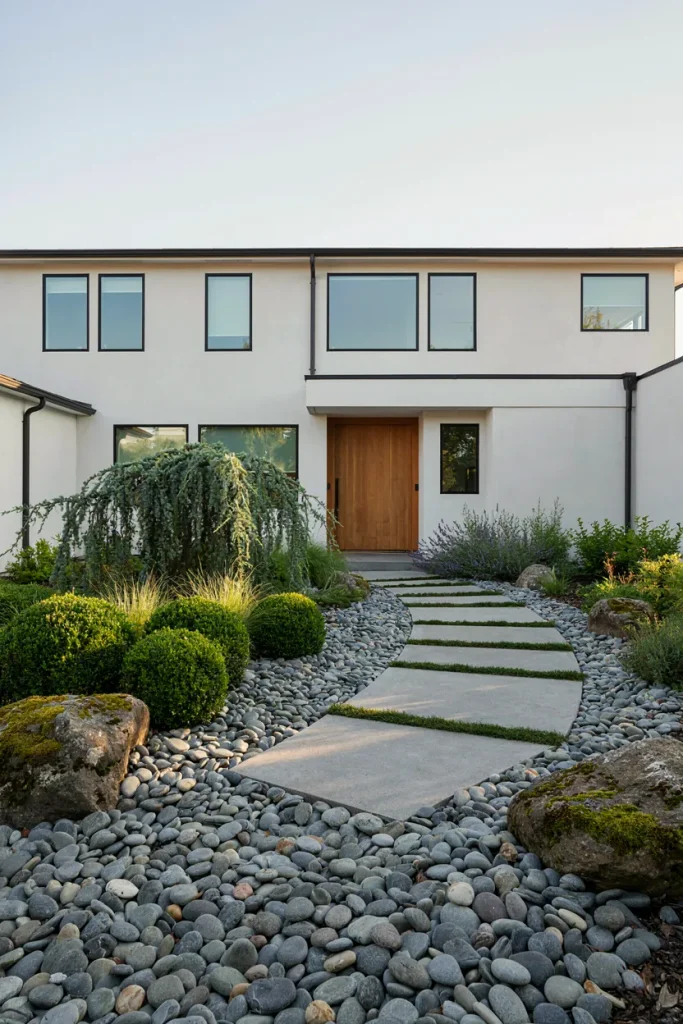
BEFORE: Bare soil around foundation shrubs looks uneven and develops weeds after rainfall. Loose mulch frequently washes onto walkways, leaving the planting area messy and difficult to maintain.
AFTER: Smooth river rocks create a defined decorative border with contrasting colors and natural texture. Carefully placed boulders and compact greenery give the front garden a structured appearance while reducing exposed soil and surface erosion.
Choose river rocks in coordinated gray, beige, or charcoal tones rather than mixing too many colors. Install sturdy edging to prevent stones from spreading onto lawns. Keep rock mulch shallow around plant stems and consider summer heat buildup, especially near south facing walls. Proper drainage remains essential beneath decorative stone beds.
Contemporary Wooden Privacy Screens

1. Choose the location: Position the privacy screen beside a front porch, seating area, or exposed entrance where additional screening would be useful.
2. Select durable materials: Use naturally rot resistant cedar, treated timber, or outdoor rated composite boards.
3. Plan the spacing: Arrange horizontal slats with consistent gaps to provide privacy while allowing natural airflow.
4. Secure the structure: Install sturdy posts with suitable foundations and check local height restrictions before construction.
5. Add complementary greenery: Place narrow planters with ornamental grasses or compact shrubs along the base to soften the wooden surface.
Wooden privacy screens introduce warmth and texture to contemporary exterior designs. Their horizontal lines visually connect with modern architecture while creating more comfortable outdoor spaces. Choose a stain that complements your front door or garage finish. For lasting results, inspect fasteners regularly and maintain protective coatings according to the manufacturer’s recommendations.
Oversized Concrete Planters
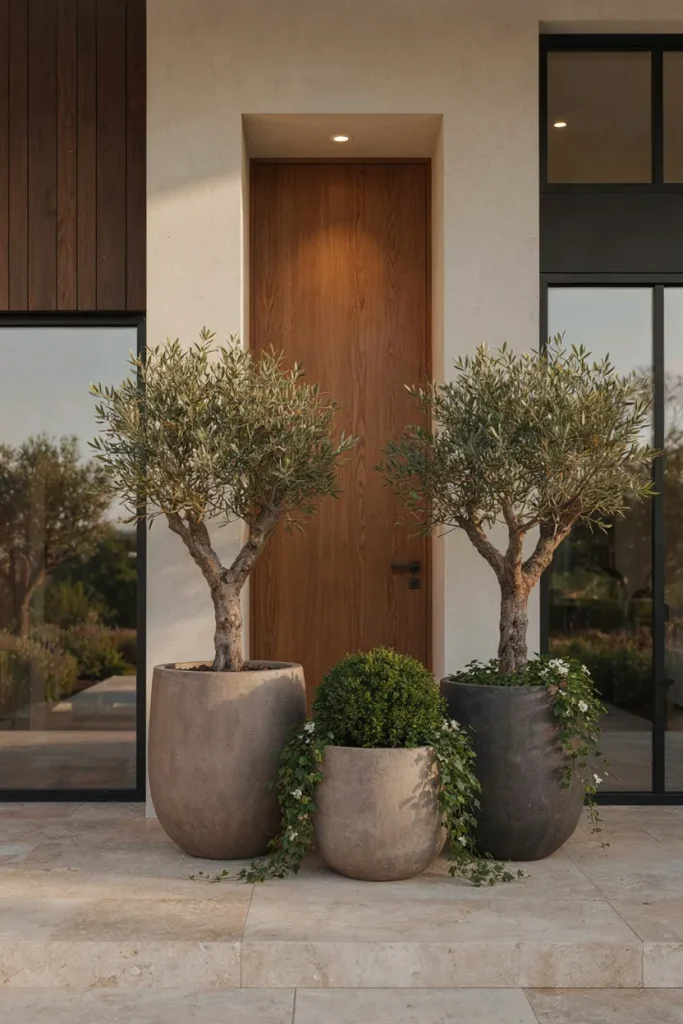
| Design Feature | Small Traditional Pots | Oversized Concrete Planters |
| Visual Impact | Subtle decorative accents | Strong architectural focal points |
| Planting Space | Limited root capacity | More room for suitable shrubs |
| Overall Style | Casual and decorative | Bold and minimalist |
| Best Placement | Narrow shelves and small corners | Wide porches and spacious entrances |
Oversized planters create striking focal points without requiring permanent garden beds. Select containers with drainage holes and enough soil volume for mature roots. Position heavier planters before filling them, and maintain comfortable walkway clearance. Matching concrete finishes with exterior walls or paving helps create a cohesive entrance that feels thoughtfully designed.
Tiered Front Yard Landscaping
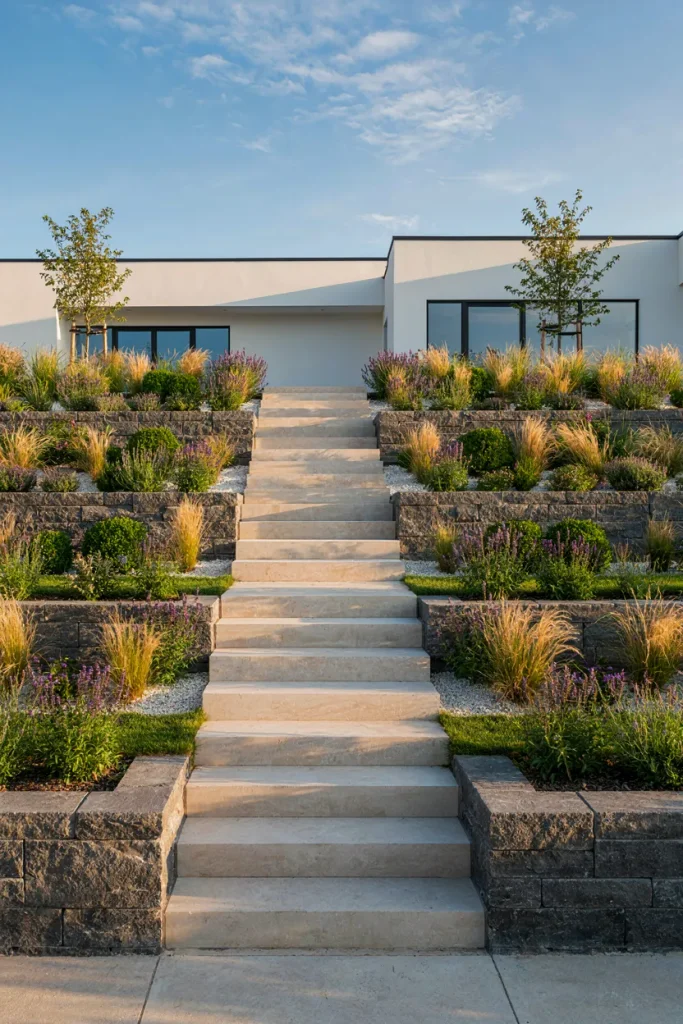
DO:
- Divide sloped ground into practical planting levels.
- Use durable retaining materials suited to the soil conditions.
- Choose plants with root systems appropriate for slope stabilization.
- Include drainage outlets to manage water behind retaining walls.
DON’T:
- Build tall retaining walls without professional structural guidance.
- Place heavy planters near unsupported wall edges.
- Allow irrigation water to collect behind retaining structures.
- Overcrowd narrow terraces with large mature shrubs.
Tiered landscaping turns challenging slopes into attractive, organized planting areas. Low retaining walls define each level, while repeated greenery creates visual continuity from the sidewalk to the house. Incorporate accessible steps and suitable drainage for long term performance. This approach is particularly effective for elevated homes with uneven front yards.
Modern Desert Garden Design
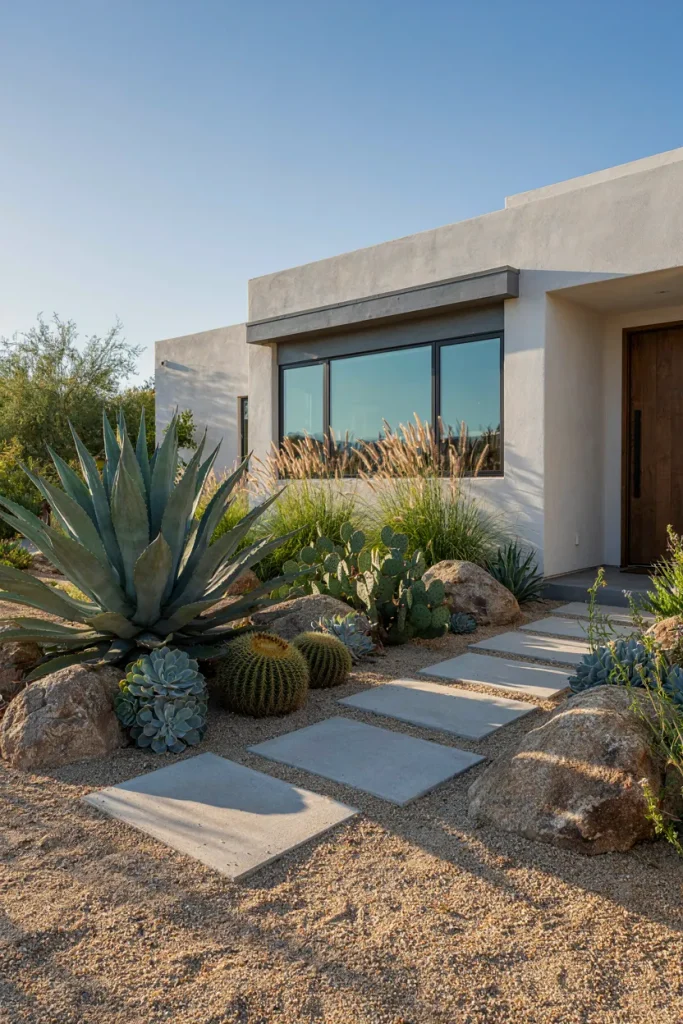
Cost: Moderate, depending on plant sizes and decorative stone choices.
Time: Two to four days for a small front yard installation.
Skill Level: Beginner to intermediate.
Best For: Sunny front yards in warm, dry climates.
Maintenance: Low to moderate after plants become established.
Desert inspired gardens create strong visual contrast through sculptural plants and natural stone textures. Arrange agave or climate appropriate succulents as focal points, leaving generous spacing between them. Use gravel mulch to complete the design, but prioritize well draining soil. In colder regions, select hardy alternatives suited to local winters.
Contemporary Front Yard Courtyard
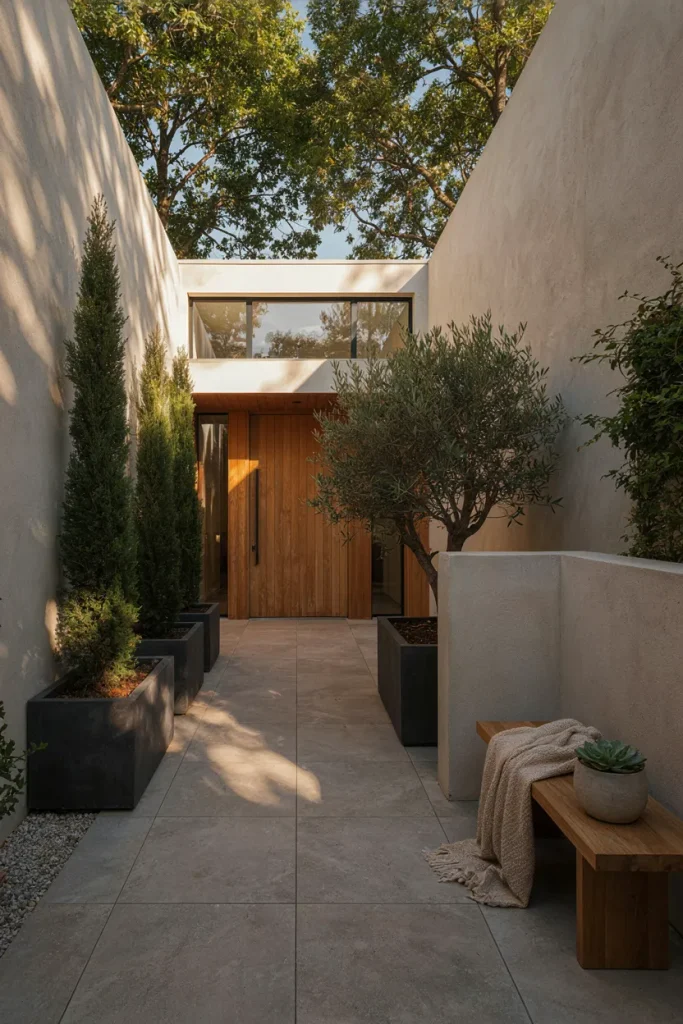
A front yard courtyard creates a welcoming outdoor retreat while giving your home’s exterior a distinctive architectural feature. Instead of filling the entire space with lawn, combine a paved seating area with carefully arranged greenery. Low privacy walls or decorative screens provide definition without completely closing off the front entrance.
Choose weather resistant seating and slip resistant paving for everyday comfort. Place planters around the courtyard edges to soften the hard surfaces, leaving the center open for movement. Include subtle lighting for evening use and check local setback requirements before adding walls. This layout suits homes with generous front setbacks.
Floating Wood Entry Deck
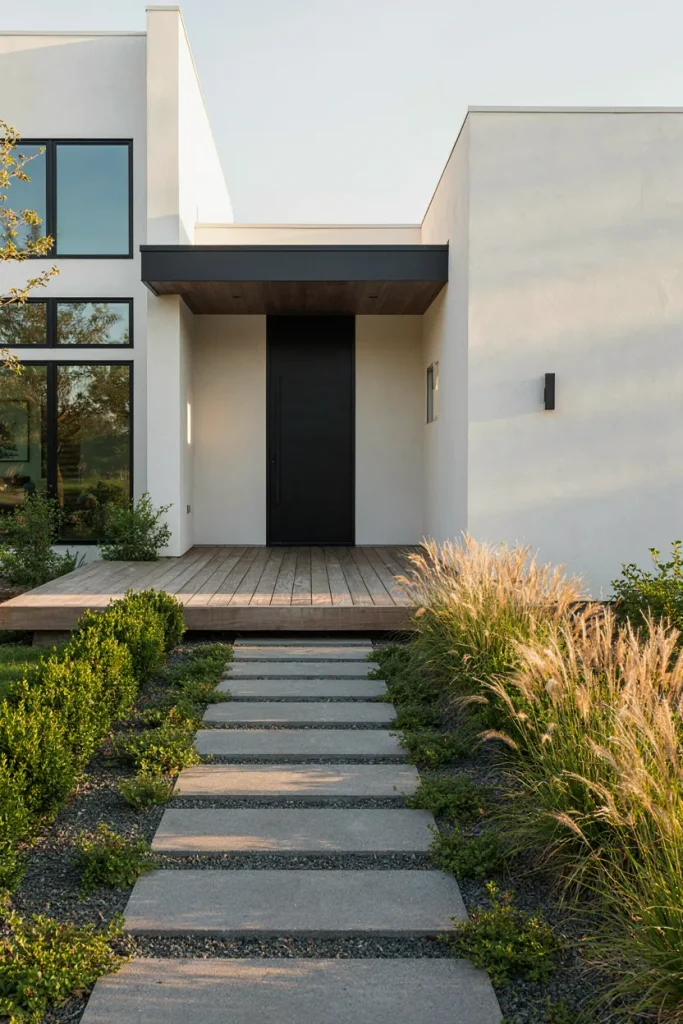
- Choose weather resistant decking: Select cedar, thermally modified wood, or exterior rated composite boards suitable for your climate.
- Keep the platform proportional: Build a modest deck that complements the entrance without overwhelming the front yard.
- Create clean transitions: Connect the platform to a concrete or stone walkway for a cohesive design.
- Add surrounding greenery: Plant low ornamental grasses and compact shrubs around the deck edges to soften its geometric shape.
- Prioritize drainage: Provide proper ventilation and drainage beneath the structure to prevent moisture buildup.
A floating entry deck adds warmth and visual dimension to homes dominated by concrete, stucco, or brick. Keep the platform low and incorporate safe, consistent steps where necessary. Choose a wood finish that complements the front door, and maintain the surface regularly to preserve its appearance.
Minimalist Water Features
Quick Tip:
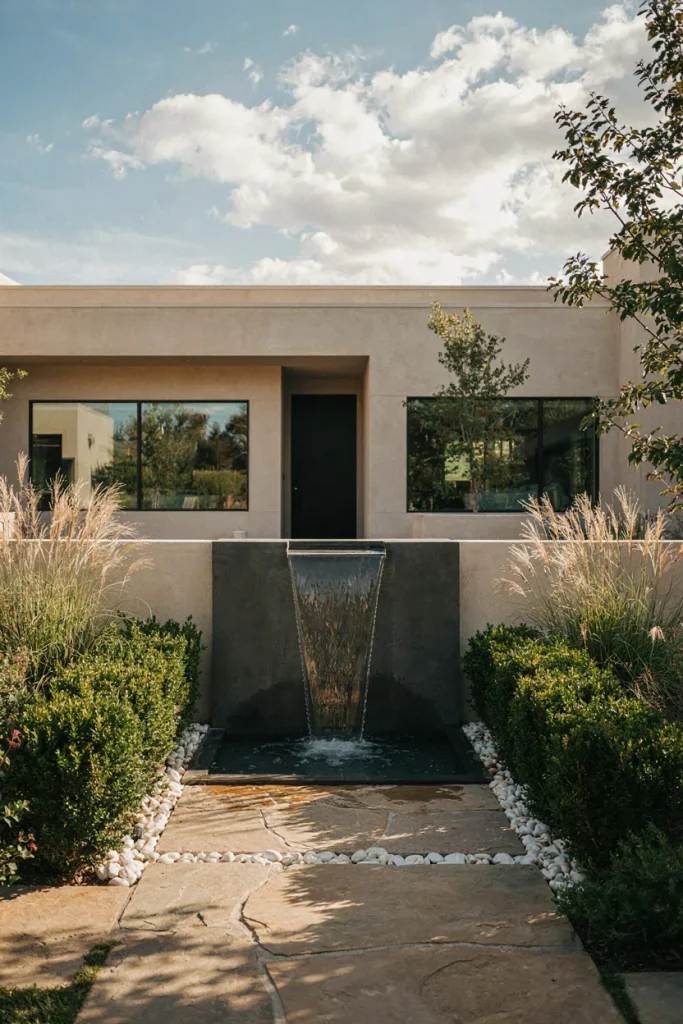
Choose a recirculating water feature with an accessible pump and removable filter for easier maintenance. Position it away from trees that frequently drop leaves, and ensure electrical components are rated for outdoor use. A simple rectangular design complements contemporary architecture without making the front yard feel crowded.
The gentle movement of water introduces a calming element to structured outdoor spaces. Pair a compact fountain with natural stone paving and low greenery for a balanced appearance. Keep the basin easy to clean, monitor water levels during hot weather, and consider a protective cover for colder seasons.
Modern Driveway Landscaping

BEFORE: A plain concrete driveway dominates the front yard, with uneven lawn edges and little greenery. The large paved surface makes the entrance appear bare and disconnected from the surrounding garden.
AFTER: Clean concrete sections, defined planting borders, and carefully arranged greenery create a polished driveway entrance. Low shrubs and ornamental grasses soften the hard surfaces while maintaining clear visibility for vehicles.
For a practical upgrade, install narrow planting beds along driveway edges and select compact plants that will not obstruct car doors or sightlines. Choose paving materials rated for vehicle loads, and plan adequate drainage. Consistent edging and subtle landscape lighting complete the design without creating unnecessary maintenance.
Conclusion
Creating gorgeous curb appeal starts with thoughtful details, not necessarily expensive renovations. From geometric walkways and decorative stone beds to elegant planters and subtle outdoor lighting, these modern landscaping ideas offer plenty of inspiration for every home style and budget.
Start with one area that needs attention, choose materials that complement your exterior, and build your design gradually. Even small improvements can make your entrance feel more welcoming and organized.
Save this post on Pinterest for future inspiration, try your favorite ideas, and share it with anyone planning a front yard refresh. Your dream entrance can begin with one simple change!